
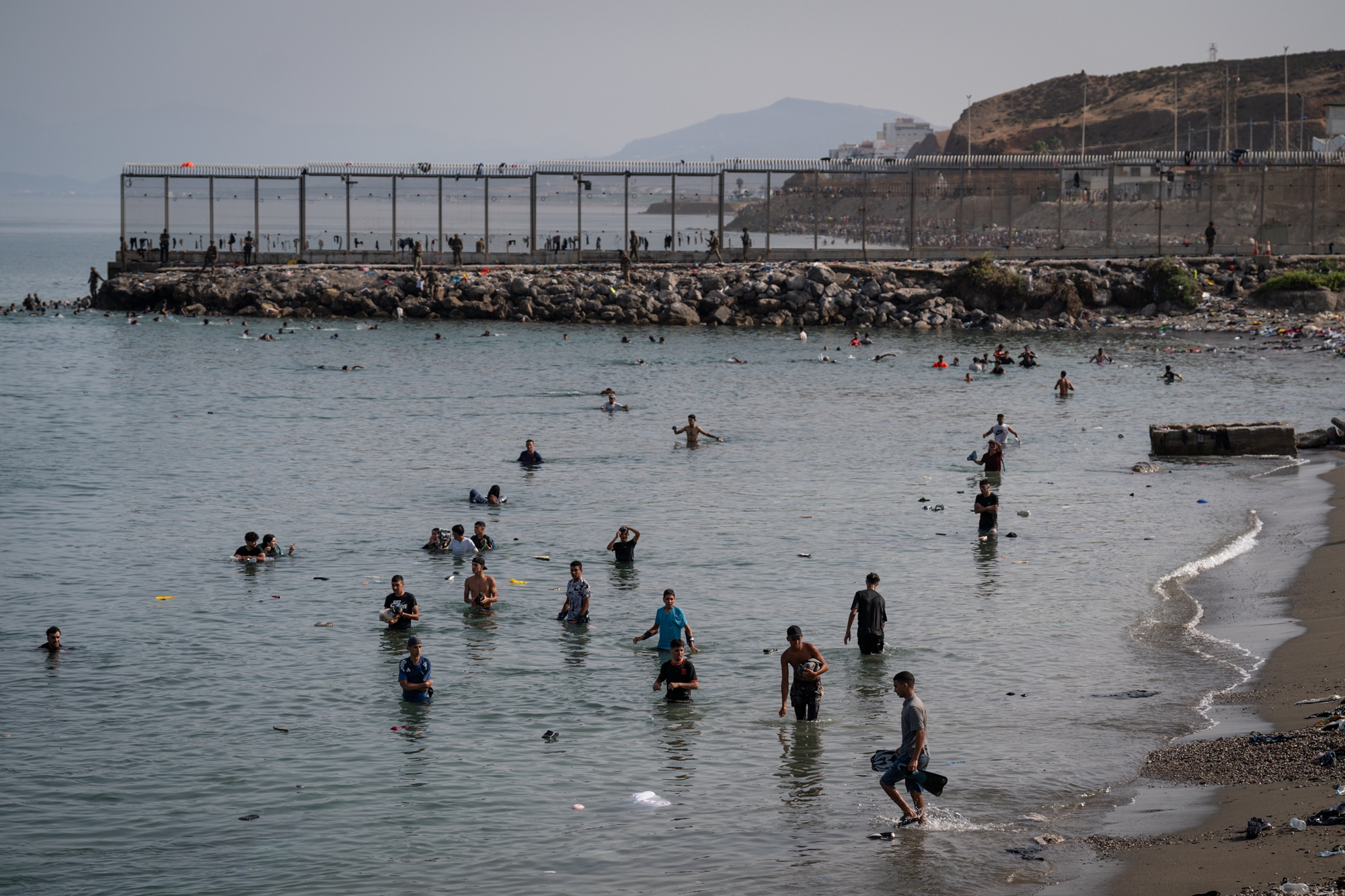
The illegal border crisis in the Spanish enclave of Ceuta in North Africa has escalated, with the death toll reaching 72 as of Sunday. Meanwhile, a large number of immigrants continue to leave Ceuta and return to Morocco. Spanish authorities reported that nearly 50,000 people have returned.
According to Reuters, Miguel Angel Perez Triano, the Spanish government’s representative in Ceuta, announced the latest death toll on Sunday, stating, “The most recent number of deaths we have is 72.”
He also mentioned that authorities have increased the number of border personnel in the region. “We have increased the number of police officers stationed in the city from 696 to 1,042, a 33.3% increase. Additionally, on the same Thursday, the armed forces were also mobilized, deploying 2,000 personnel. In theory, we have deployed nearly 3,000 officers in Ceuta over these days to restore order, and they will continue to be stationed as needed.”
Previously, up to 50,000 to 60,000 illegal immigrants broke through the border defenses, leading to severe casualties. Some victims tragically drowned, while others were crushed to death while attempting to climb the border fences.
Despite Spain implementing new control measures, a video released by Reuters on Sunday showed some immigrants still arriving in Ceuta by sea.
At the same time, many immigrants continue to return from Ceuta to Morocco, with security forces escorting them to the El Tarajal border crossing. The Spanish government stated that over 48,000 people have returned to Morocco within 48 hours.
Jalall Hdir, a 29-year-old immigrant, expressed before leaving, “There is no food here, no people; if the police don’t come, people just sit here, we all have to leave.”
The Spanish Civil Guard has set up a defense barrier at the Tarajal breakwater, a hotspot for forced sea crossings. The barrier is an air-operated barrier placed side by side with a row of anchored naval buoys, designed to be 30 to 70 centimeters (12 to 28 inches) above the water surface and extend one meter below the water surface. The waterway between the barriers will facilitate patrol boats of the Civil Guard in the area.
This large-scale border crossing incident has raised concerns within the European Union. Twenty-two member states jointly sent a letter to the EU, urging coordinated action to protect external borders and implement other measures.