
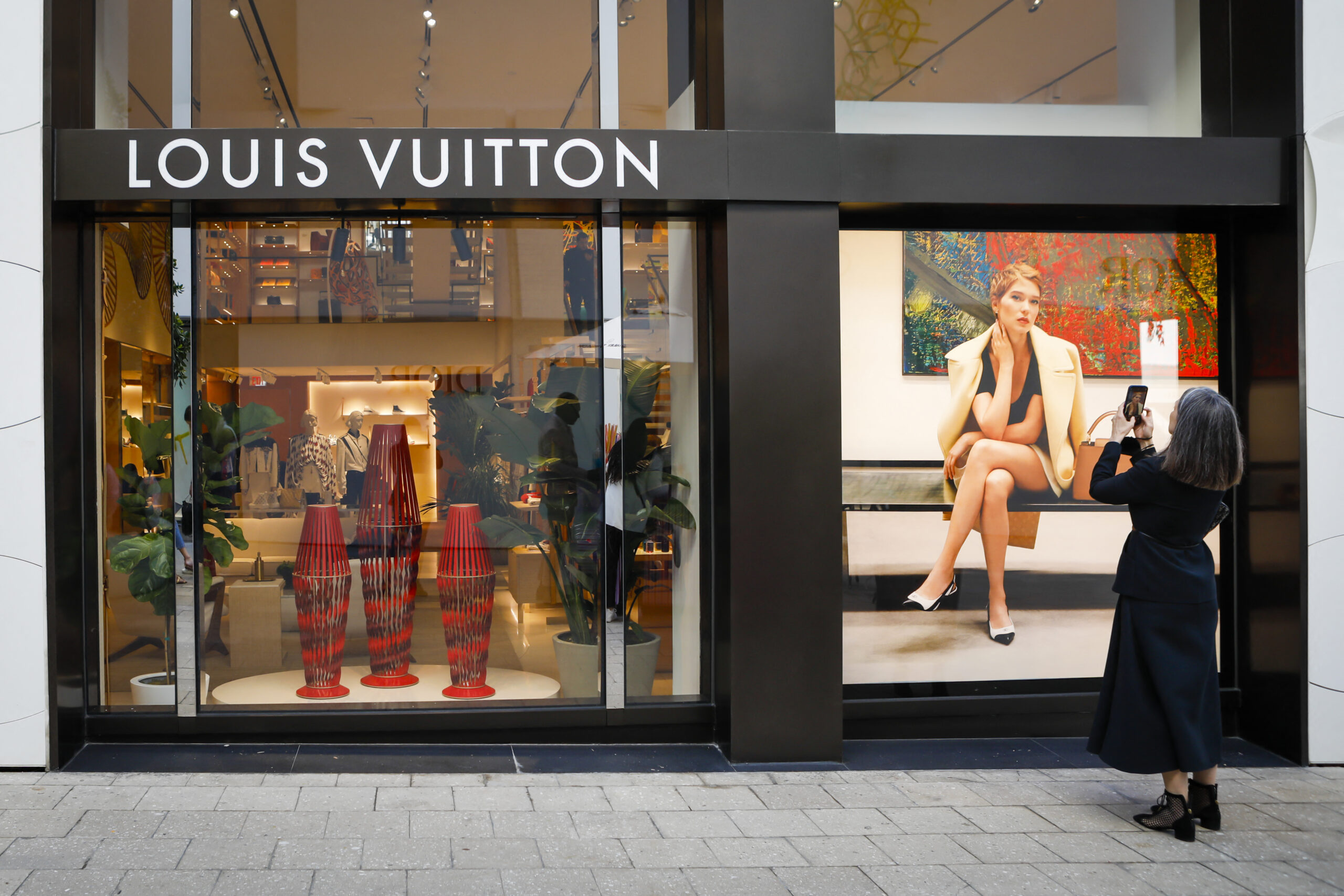
French luxury giant LVMH Group saw a modest increase in sales in the second quarter, mainly driven by strong demand from affluent consumers in the United States, offsetting the impact of weakened consumption due to the conflict in Iran.
According to data from Visible Alpha, LVMH Group, which owns brands like Louis Vuitton, Dior, and Moët & Chandon, saw its second-quarter sales increase by 3% to 19.5 billion euros (approximately 22.2 billion US dollars) after adjusting for exchange rates, in line with analysts’ general expectations.
LVMH stated that the growth was primarily driven by the U.S. market. Sales in the U.S. market grew by 3% in the first quarter and surged by 6% in the second quarter. LVMH pointed out that the strong demand mainly came from the wealth generated by emerging sectors like artificial intelligence and technological prosperity.
Among them, the watch and jewelry division was the fastest-growing business for LVMH, with sales increasing by 11%, exceeding the 7% growth in the previous quarter. Sales at Tiffany and Bulgari both achieved double-digit growth, as affluent consumers continue to favor luxury jewelry.
Cecile Cabanis, the CFO of LVMH, stated during a conference call that despite the ongoing macroeconomic instability, trends in all regions improved in the first half of the year, with some wealth-surging regions continuing to exhibit strong demand for luxury goods.
The fashion and leather goods division, which contributed most of LVMH’s operating profit, achieved a 1% growth, mainly driven by the robust performance of American consumers. This is the first quarterly growth for the division in two years, but it fell below analysts’ expectations of 1.7%. European luxury brands have increased their investment in the U.S. market by opening stores and hosting fashion events.
The group’s sales in Europe remained flat in the second quarter, after a slight decline in sales in the first three months of the year due to the impact from the conflicts in the Middle East, stabilizing thereafter.
Analysts at RBC Bank Canada stated in a report that this is a satisfying performance report, especially with profit margins and earnings better than expected. However, given the increasing base from the same period in 2025, whether the second half of the year can meet the general expectations remains to be seen.
The share price of this French group has fallen by 28% year-to-date, making it one of the worst-performing large-cap stocks in Europe.