
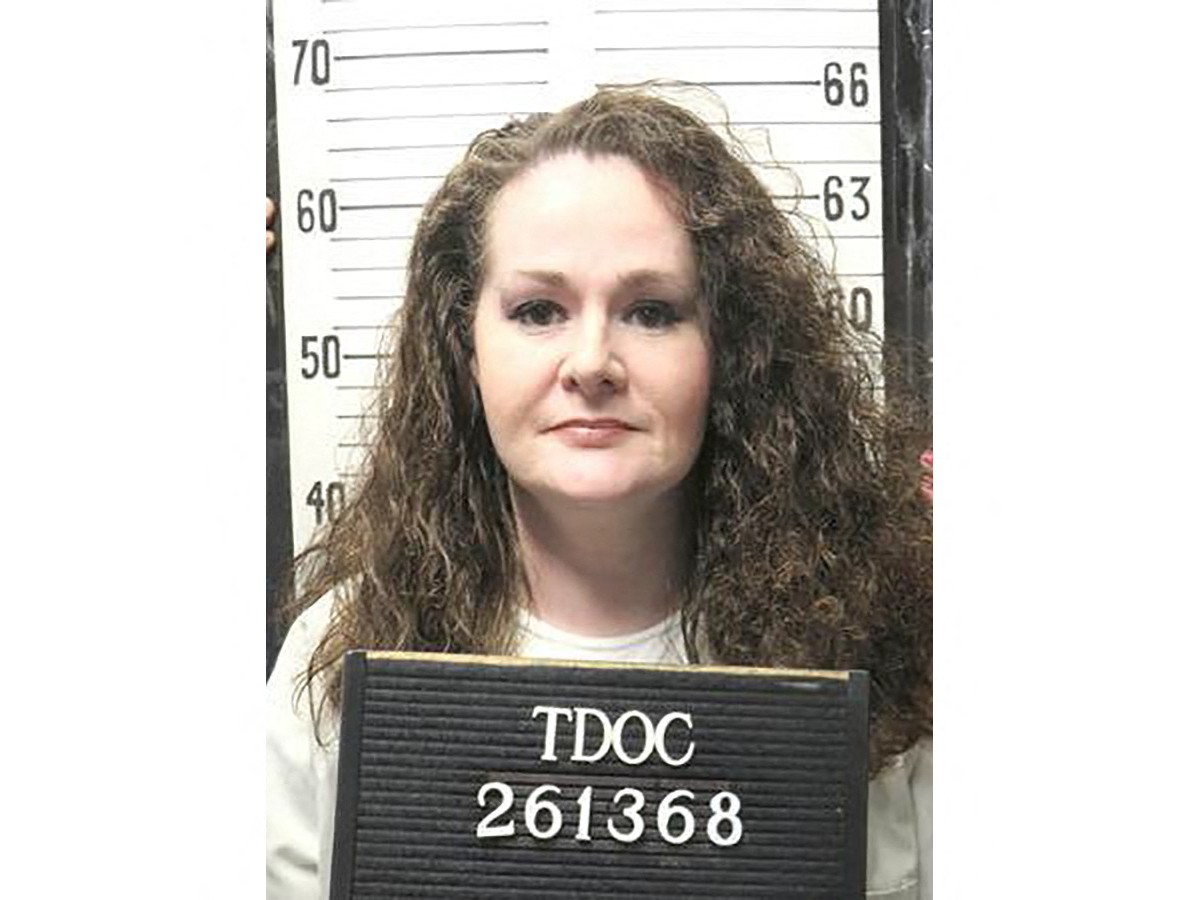
Tennessee Governor Bill Lee announced on Saturday that Frank Strada, the commissioner of the Department of Correction, will resign later this month. This comes as the first major personnel change in the state following a botched execution of female death row inmate Christa Pike that resulted in her being hospitalized for emergency treatment.
In a statement, Strada expressed that his resignation is in the “best interest of the people of Tennessee” amid an independent review to determine what went wrong during the execution process on Wednesday. He stated that he believes the state followed protocol but looks forward to assisting in the review process to uncover the truth.
The incident occurred on Wednesday evening at the Riverbend Maximum Security Institution in Nashville, Tennessee. Despite administering two lethal doses of pentobarbital through intravenous injection, the execution ultimately failed.
Christa Pike’s legal team filed an emergency motion on Friday with the Tennessee 20th Judicial District Chancery Court, stating that Pike was rushed to the hospital in a comatose state and on life support due to the execution failure.
The lawyers claimed that due to the highly alkaline and corrosive nature of pentobarbital, there was a mistake in placing the IV lines, causing the medication to seep into the surrounding tissue rather than entering the bloodstream, resulting in Pike’s arms swelling, burning, and blistering.
They accused correction officials of disregarding warnings from Pike’s attending physician that her small veins and the blood disorder thrombocytosis would make IV placement extremely difficult.
The legal team highlighted that the execution team failed to notice any issues with the IV placement or ruptured veins throughout the process. Witnesses on-site described Pike as “crying, gasping, and breathing loudly” during the entire ordeal.
As of late Thursday, hospital staff were still working to clear the pentobarbital from Pike’s system in an effort to save her life.
Pike’s legal team welcomed Strada’s resignation but emphasized that “it does not help the current Christa” and pointed out that Wednesday’s tragedy reflects systemic failures that go beyond a single official.
Governor Bill Lee has ordered a comprehensive independent review of the incident and announced a suspension of all remaining executions in 2026 in Tennessee. This is the second botched execution in the state this year.
Pike’s lawyers have urged the court to order the Department of Correction to preserve relevant evidence to prove that prison personnel subjected Pike to cruel and unusual punishment, violating her constitutional rights.
Christa Pike, 50, was convicted of first-degree murder in 1995 for the brutal torture and killing of her 19-year-old vocational school classmate Colleen Slemmer on the University of Tennessee Knoxville campus. Pike, who was 18 at the time of the crime, became one of the youngest women on death row in modern American history and the first woman to be executed in Tennessee in two centuries.
Before the execution, Pike’s lawyers had filed a clemency petition citing severe neglect in her childhood, sexual abuse, brain damage from prenatal alcohol exposure, and untreated mental illness, seeking a commutation to life imprisonment without parole, which was denied by Governor Bill Lee. The U.S. Supreme Court also overturned a last-minute stay issued by the federal appeals court on Wednesday, allowing the execution to proceed.