
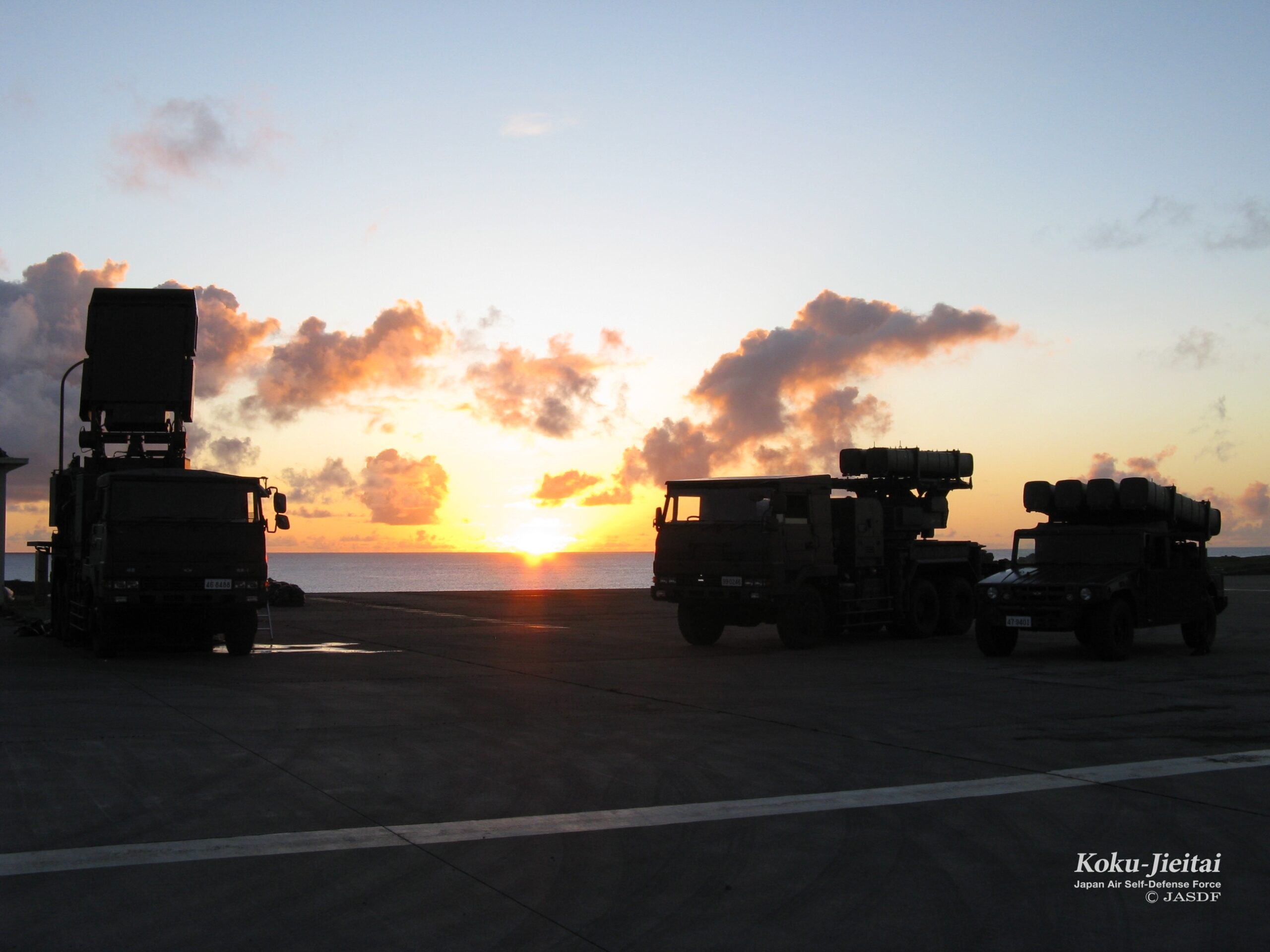
The United States and Japan have recently been strengthening missile deployments and joint exercises in the southwestern islands of Japan and Kyushu. The U.S. military is deploying the mobile Coastal Defense Missile System NMESIS to Yonaguni Island, about 110 kilometers from Taiwan for the first time. Japan will also introduce the new Type 25 Ship-to-Ship Guided Missile in the “Keen Sword 27” exercise, and the U.S. military plans to store Typhon and HIMARS at Kadena Air Base in Okinawa.
According to a report by Kyodo News on October 2nd, during the Japan-U.S. joint exercise “Keen Sword 27” scheduled for October 19-29, the U.S. military will deploy the anti-ship missile launch system “NMESIS” and the short-range air defense system “MADIS” to Yonaguni Island in Okinawa Prefecture, located at the westernmost point of Japan.
This system is equipped with the NSM Naval Attack Missile of the U.S. Marine Corps, with a range of 210 kilometers primarily used to attack surface vessels, carrying out maritime interception missions. Yonaguni Island is about 110 kilometers from Taiwan, and from a geographical standpoint, its range can extend to certain areas around Taiwan’s waters.
NMESIS employs a vehicle-mounted launch platform with the capability for mobile deployment. The U.S. Marine Corps emphasizes that such systems can be rapidly deployed to different islands, supporting troops in carrying out maritime interception missions.
At the same time, the Japan Ground Self-Defense Force will incorporate the Type 25 Ship-to-Ship Guided Missile deployed at the Kenkon Barracks in Kumamoto City by the end of March into the “Keen Sword 27” exercise. The Japan Ministry of Defense has designated the relevant capabilities as part of strengthening “counterattack capabilities,” with this exercise marking the Type 25’s first participation in a large-scale Japan-U.S. joint exercise. Relevant units will maneuver from Kumamoto to other exercise locations in Kyushu, conducting joint training with the U.S. military.
Additionally, the U.S. military plans to store the Typhon medium-range missile system and HIMARS withdrawn from the Kagoshima Kanoya Base at Kadena Air Base. Typhon can carry Tomahawk cruise missiles, belonging to land-based medium-range firepower with a longer range than NMESIS. The Japan Ministry of Defense clarified that this arrangement does not involve the permanent deployment of operating forces.
According to the announcement made by the Integrated Staff of the Japan Ministry of Defense on September 29, “Keen Sword 27” will take place from October 19-29, covering the Self-Defense Forces, U.S. military facilities in Japan, civilian airports and ports, as well as the airspace and waters surrounding Japan. The Japan Self-Defense Forces will deploy approximately 45,000 personnel, 6,100 vehicles, 40 vessels, and 260 aircraft, with exercise items including air defense, joint ship-based operations, amphibious warfare, and mobile dispersed utilization.
In addition to the core military capabilities of the U.S. and Japan, countries such as Australia, Canada, France, Germany, the Netherlands, Singapore, and the Philippines will also send forces or personnel to participate in the exercise.
According to Kyodo News, the U.S. military reorganized its Okinawa forces in November 2023, establishing the 12th Marine Corps Marine Operations Regiment responsible for rapid response to off-island threats, and officially deployed NMESIS and MADIS in June this year.
The Japanese government is also enhancing the defense of the southwestern islands, with coastal monitoring teams and electronic warfare units already deployed on Yonaguni Island, and plans to deploy a ground-to-air missile unit by the fiscal year 2030. With the continuous addition of anti-ship, air defense, and long-range firepower, the deployment projects in the southwestern islands now cover various combat functions such as surveillance, electronic warfare, air defense, and anti-ship operations.