
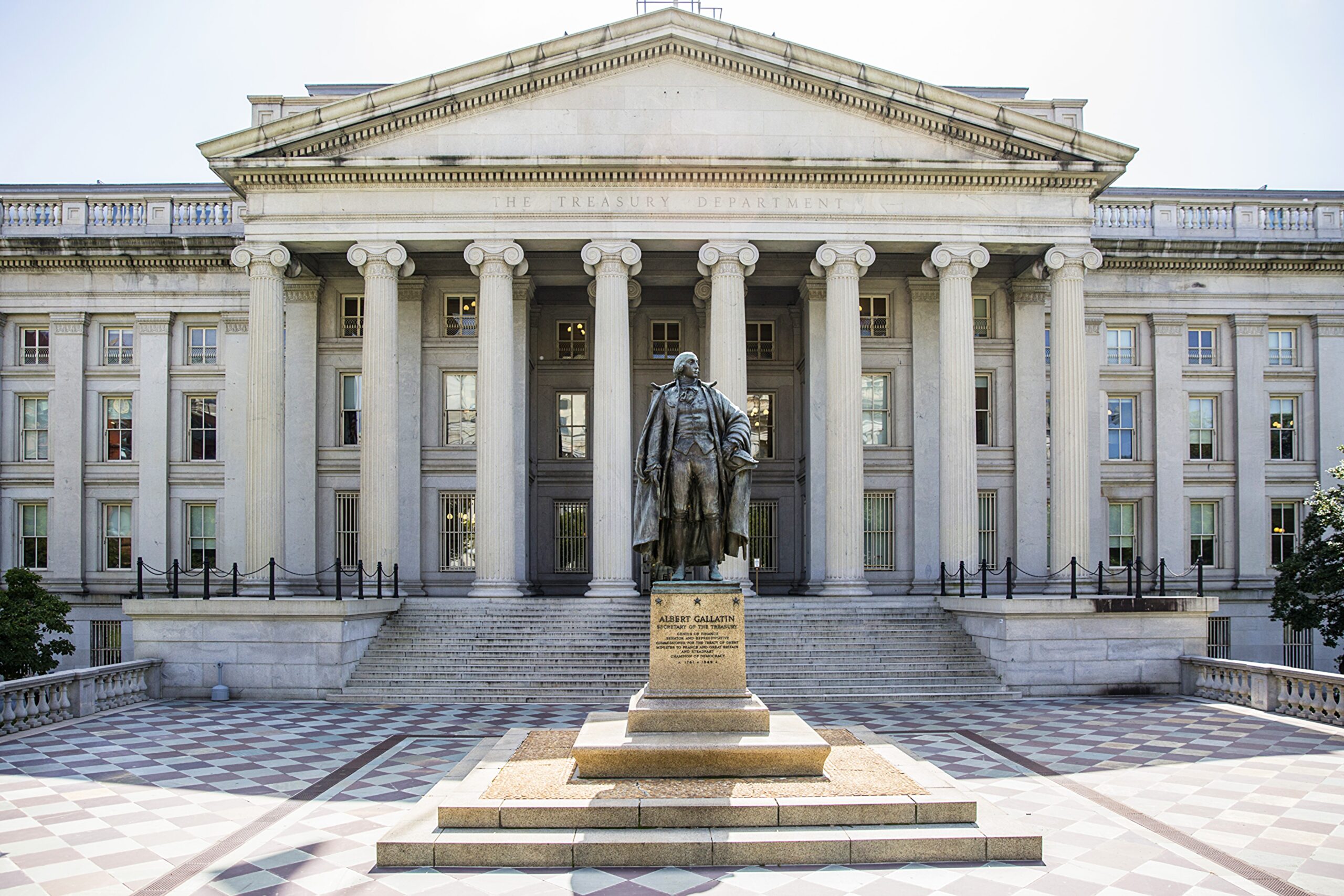
The U.S. Department of the Treasury announced on Thursday (October 1st) the launch of a new round of extensive sanctions against Iran under the “Operation Economic Outcast”. The sanctions target not only Iran’s domestic automotive and railway industries but also extend to the transnational supply chains, entities in China and Hong Kong, and the “A7 Network” shadow banking system linked to Russia which assist Iran in evading sanctions. This demonstrates the U.S.’ strong determination to sever the financial lifeline and industrial backbone of Tehran.
Following the U.S. military’s naval blockade in the Strait of Hormuz, Iran’s oil export revenues have sharply declined. To sustain economic operations and the transportation of goods, the Tehran regime has heavily relied on the automotive and railway sectors. The U.S. Treasury highlighted that these industries are controlled by the Iranian regime and the Islamic Revolutionary Guard Corps (IRGC), using funds for warfare, missile development, cyber attacks, and money laundering.
U.S. Treasury Secretary Scott Bessent stated, “Through ‘Operation Economic Outcast,’ the Iranian regime’s ability to fund its war machine and spread terror worldwide has been severely weakened. Today’s action targets supporters of Iran directly, laying a foundation to permanently drain the regime’s income for the United States and our allies.”
On the domestic industrial front, the U.S. Office of Foreign Assets Control (OFAC) sanctioned Iran Khodro Company (IKCO) and SAIPA, which dominate over 90% of Iran’s domestic automotive market, as well as the state-owned Islamic Republic of Iran Railways (RAI) and several rail freight companies. Manufacturer Niroo Motor Shiraz was sanctioned for using prison labor and supplying thousands of patrol motorcycles to intelligence agencies.
The U.S. also targeted foreign procurement networks supporting Iran, including several companies in China and Hong Kong:
– Hessenberg Co., Limited (also known as Jedburgh Co., Limited) and Tanex Global Trading Hong Kong Limited, based in Hong Kong, were sanctioned for supplying parts to major Iranian auto companies like IKCO and SAIPA.
– Middle East heavy machinery manufacturer HEPCO was sanctioned for assisting the Islamic Revolutionary Guard in constructing military bases and underground facilities. Its subsidiary “HEPCO Shanghai Co., Ltd.” in China was also included as a controlled entity.
Apart from industrial supply chains, the Treasury exposed a vast money laundering and commodity trading network carried out through shell companies in Hong Kong and Chinese firms.
Iranian and Dominican businessman Ramin Keshvardoust and accomplice Mehnoosh Poursaraf Hamedani, based in Hong Kong, were accused of facilitating tens of millions of dollars worth of Iranian steel and oil transportation and laundering money through the Iranian shadow banking system using controlled companies and bank accounts.
Since early 2025, Farab Soroush Afagh Qeshm, a representative of the Bank Shahr under Iran’s shadow banking system, transferred tens of millions of euros and dollars through several Hong Kong shell companies controlled by Keshvardoust, including KGT Trading Limited, Dominion Trading Group Limited, Bonasol Group Co., Limited, Meizi Co., Limited, and East Concord Development Limited.
Furthermore, Keshvardoust’s two steel companies in mainland China and Hong Kong – Shanghai Ruimi Import and Export Trade Co., Ltd. and M and R Steel Co., Ltd., along with his steel company in Iran, were fully sanctioned for their involvement in Iran’s metal sector trading or being directly controlled under Executive Order 13871.
On the other hand, regarding cross-border financial networks, the U.S. Treasury’s Financial Crimes Enforcement Network (FinCEN) and OFAC jointly conducted unprecedented enforcement actions against the closely linked Russian “A7 Network”. OFAC designated the A7 Network as a significant transnational criminal organization, while FinCEN introduced new regulations to prohibit financial institutions from processing fund transfers involving its global “Sub-Agents”.
“The Treasury is dismantling these financial infrastructures that allow Iran and other adversaries to evade sanctions, launder illegal funds, and disrupt the integrity of the global financial system,” said Treasury Secretary Scott Bessent. “Today’s action against A7 continues the Treasury’s unprecedented efforts to isolate Iran and its financial supporters, sending a clear message: if you facilitate illicit financing for America’s adversaries, you will lose access to the U.S. financial system.”
Led by convicted fraudster Ilan Mironovich Shor, the A7 Network’s global sub-agent network specializes in forging trade documents and invoices, disguising sanctioned transactions as normal business activities. Investigations revealed that as of January 2026, the A7 Network processed over 2,000 transactions daily, with a total transaction volume of 7.5 trillion rubles (about $915 billion), accounting for approximately 13% of Russia’s foreign trade.
The network not only assists Russia but also enables the Central Bank of Iran, the IRGC, Hamas, and Iran’s “shadow fleet” to transfer large sums of money, sell oil, and acquire weapons.
The United States emphasized that assets of sanctioned entities located within U.S. borders or controlled by Americans will be frozen, and any foreign financial institution facilitating illicit transactions on their behalf will face severe secondary sanctions by being cut off from the U.S. financial system.