
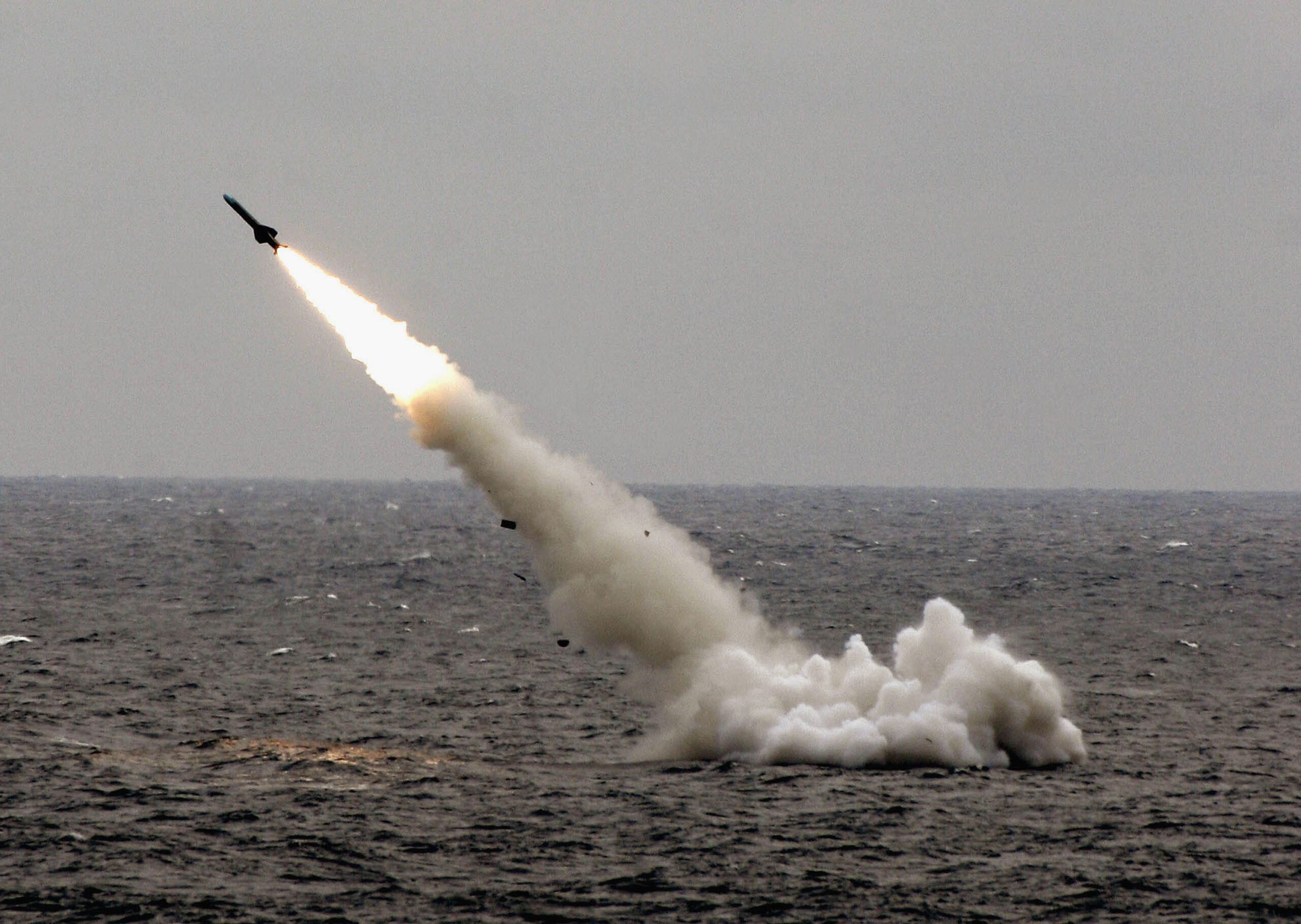
In July, the Chinese Communist Party test-launched an intercontinental ballistic missile capable of carrying a nuclear warhead in the Pacific Ocean, causing international security concerns due to insufficient prior notification. On Tuesday (August 11), the United States and 41 other countries issued a joint statement urging all countries that conduct intercontinental ballistic missile (ICBM) and submarine-launched ballistic missile (SLBM) tests to provide at least 24 hours advance notice.
According to US officials, Beijing did not notify all potentially affected countries this time. Even for those that received notification, “at most it was only two hours in advance.”
The joint statement, released by the United States, Australia, Canada, France, Germany, Japan, South Korea, the United Kingdom, and 41 other countries, although not directly naming China, clearly pointed out that recent missile testing activities in the Pacific region did not adhere to the standards of launch notification and conflict avoidance followed by most countries.
The statement warned that conducting tests of ballistic missiles capable of carrying nuclear weapons without providing sufficient advance notice and detailed information is dangerous and disrupts the peace and security of neighboring countries.
“This increases the risk of miscalculation, undermines global stability and security, and is not in line with the responsibility that comes with possessing long-range missile capabilities.”
According to Bloomberg, US State Department official Victoria Nibarger criticized China’s missile test on July 6 during a disarmament meeting in Geneva.
Nibarger stated, “Beijing did not provide transparent information and adequate prior notification but instead chose a confusing and provocative approach.”
She said that China did not notify all potentially affected countries in advance; even for those that received notification, “at most it was only two hours in advance.”
There is a significant discrepancy between this and the 24-hour advance notification standard proposed in the joint statement by 41 countries. The statement calls on all relevant countries, especially nuclear-armed states, to provide at least 24 hours’ notice before launching ICBMs, SLBMs, and space launch vehicles (SLVs).
The notification should include the general category of the missile or space launch vehicle, the planned launch time window, the launch area, and the intended direction. The launching country should also issue clear warnings to aviation and maritime personnel following international standards, including the expected impact or landing areas, to mitigate related risks.
The statement pointed out that currently, 145 countries participate in mechanisms such as the Hague Code of Conduct against Ballistic Missile Proliferation (HCOC), a pre-notification mechanism.
In response to US criticism, Beijing denied insufficient notification and claimed to have provided full notice before the test launch.
According to CCP state media reports, Li Chijiang, deputy representative of China’s mission in Geneva, stated at the same meeting: “China consistently conducts intercontinental ballistic missile test activities in a safe, regulated, and responsible manner.”
He claimed that Beijing had notified the United States and other countries in advance, demonstrating “goodwill and responsible attitude.”
Taiwan’s Minister of National Defense Chiu Kuo-cheng previously stated that China’s launch of the submarine-launched missile into the Pacific was the “JL-2” model and condemned the act for destabilizing the region.
The joint statement by 41 countries emphasized that a structured and transparent missile launch notification arrangement does not limit any country’s military development or operational needs but helps reduce miscalculation and build mutual trust.
The statement stated, “We remain committed to working with all countries to strengthen the implementation of existing notification frameworks and expand their scope, while holding accountable any country that fails to fulfill its obligations.”
This dispute has once again drawn attention to China’s rapid expansion of nuclear weapons and long-range missile capabilities, as well as issues such as transparency in related military activities.
In recent years, the United States has continuously called on Beijing to increase the transparency of its nuclear arsenal and long-range missile programs and seeks to establish more risk control mechanisms between the two nuclear-armed countries.
A Bloomberg analysis in May this year indicated that China seems to have significantly accelerated missile production by 2025, with the increase being the largest since Xi Jinping became the leader of the CCP in 2012. As Beijing continues to expand its nuclear and long-range missile capabilities, the notification method before this test launch has further raised concerns about the risk of miscalculation and regional security.