
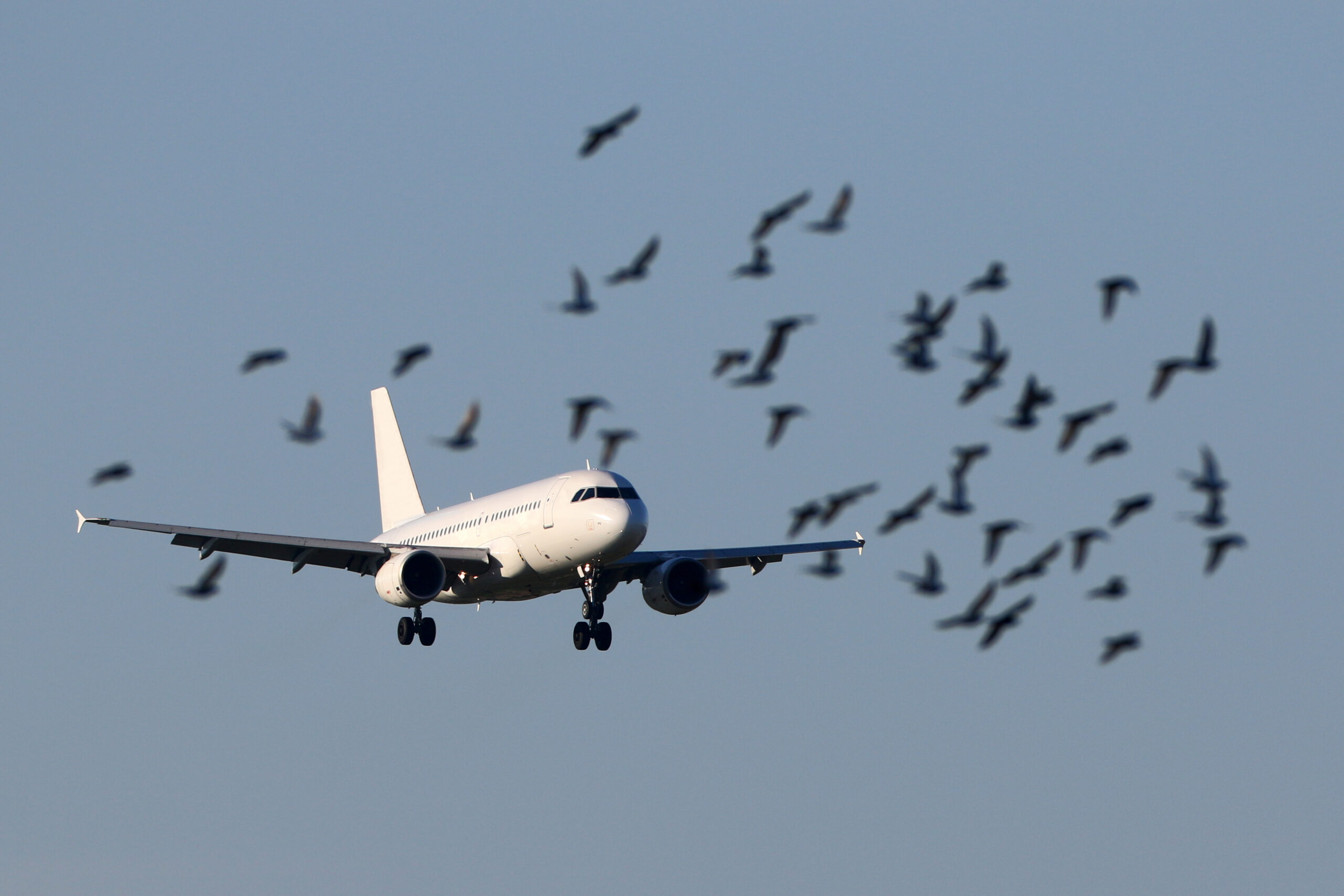
On Monday, August 10, an American Airlines Boeing 737 plane carrying 181 people collided with a flock of birds shortly after taking off from Myrtle Beach, South Carolina, leading to flames erupting from the engine and prompting an emergency landing.
The Boeing 737 plane (flight number 1760) was en route from Myrtle Beach, South Carolina to Charlotte, North Carolina, with 172 passengers and 9 crew members on board. Shortly after takeoff, the left engine of the aircraft sucked in a bird, causing flames to shoot out and the plane to experience severe vibrations and popping sounds.
Passenger Patrick Gotwalt captured a dramatic moment on camera as the plane flew over the water with the engine on fire and shared it on social media. On the ground, other observers saw orange flashes emanating from the wing.
According to recordings from the aviation audio website LiveATC.net, the captain urgently declared a distress call to the control tower after takeoff, saying, “Mayday, mayday, mayday. We have an issue with the engine here.” The captain of another nearby plane also confirmed over the radio that the left engine of flight 1760 had ingested a bird.
After circling in the air for about 15 minutes, the aircraft safely returned to Myrtle Beach Airport. Ground staff cleared a significant amount of bird debris from the runway.
Fortunately, there were no casualties or injuries in this incident, and passengers praised the crew for remaining calm during the intense turbulence in the air. A spokesperson for American Airlines confirmed that the preliminary report indicated the flames were caused by burning birds and that there was no internal fire in the engine. The aircraft has been taken out of service for maintenance inspections, and the airline has arranged alternative flights for passengers.
The Federal Aviation Administration (FAA) has initiated an investigation into the incident. The recovered bird remains will be sent to the Smithsonian Institution laboratory in Washington, D.C. for species identification to aid in preventing bird strike incidents in the future.
According to FAA data, in 2025, there were over 24,000 reported cases of wildlife-aircraft collisions in the United States.