
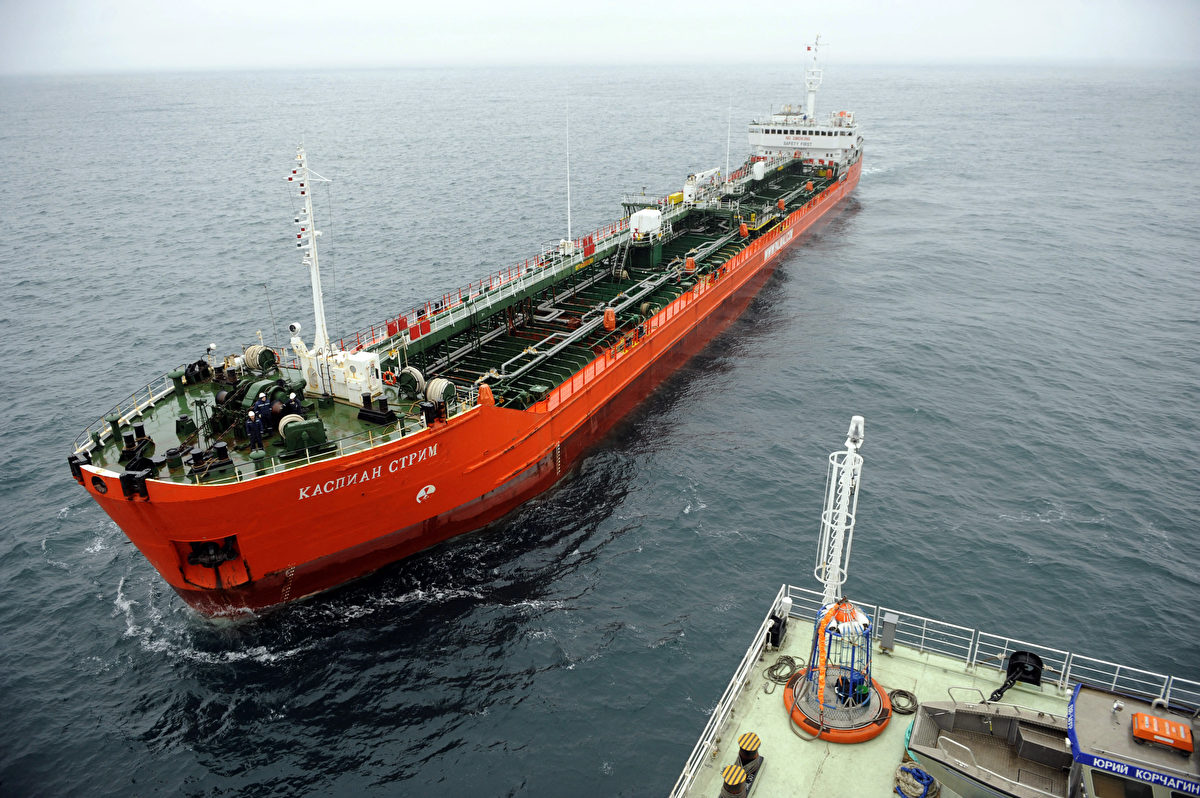
The latest news indicates that the Chinese enterprise “China Petrochemical Corporation” (Sinopec) has significantly increased its procurement of Russian Far East crude oil to cope with the reduction in Middle Eastern crude oil supply caused by the war in Iran.
According to Reuters, citing informed sources, Sinopec has purchased 30 to 40 shipments of East Siberia-Pacific Ocean (ESPO) blend crude oil, with delivery dates from July to September, equivalent to approximately 241,000 to 320,000 barrels per day. This accounts for 5% to 6% of the company’s daily refining capacity of 5.2 million barrels.
Emma Li, Chief Analyst of the China crude oil market at Vortexa, a UK-based energy data analysis company, stated that Sinopec received around 7.4 million barrels of ESPO crude oil in July, with most of it shipped to Shandong Rizhao Port. In August and September, they procured at least 10 more shipments each.
Sinopec has not responded to inquiries regarding specific procurement details, only stating that the company does not discuss daily operational matters publicly.
Prior to the outbreak of the war in Iran, almost half of Sinopec’s crude oil came from the Middle East, with Saudi Arabia being one of its largest customers. Trade sources revealed that Sinopec did not purchase any Saudi crude oil in June and July, with August’s procurement volume only around 2 million barrels, much lower than the levels of approximately 20 million barrels per month in March and April, and less than one-fifth of the pre-war average of around 11 million barrels per month.
Following the eruption of the Iran war, China’s overall crude oil imports have significantly decreased. According to Vortexa statistics, imports in June dropped by 41% compared to the same period last year. However, with the relaxation of export quotas for refined oil products in July and August, refining companies began adjusting their procurement strategies, leaning towards purchasing lower transportation cost and more stable supply crude oil.
Market analysts indicated that ESPO crude oil shipped in September is priced $1 to $2 per barrel lower than Brent crude oil, and about $10 cheaper than Middle Eastern Oman crude and Brazilian Tupi crude oil, demonstrating a clear price advantage.
The report mentioned that Sinopec had temporarily suspended Russian oil purchases after the United States sanctioned Russian oil companies Rosneft and Lukoil in October 2025. During the temporary waiver period in March to April this year, Sinopec resumed purchases, and subsequently expanded procurement on a larger scale due to the supply tension caused by the Iran war.
Multiple sources revealed that Sinopec’s recent procurement of ESPO crude oil did not directly involve entities sanctioned by the United States but was completed through intermediaries. Since the outbreak of the Russia-Ukraine war, Sinopec’s purchases of Russian oil have mostly been settled in Chinese yuan.