
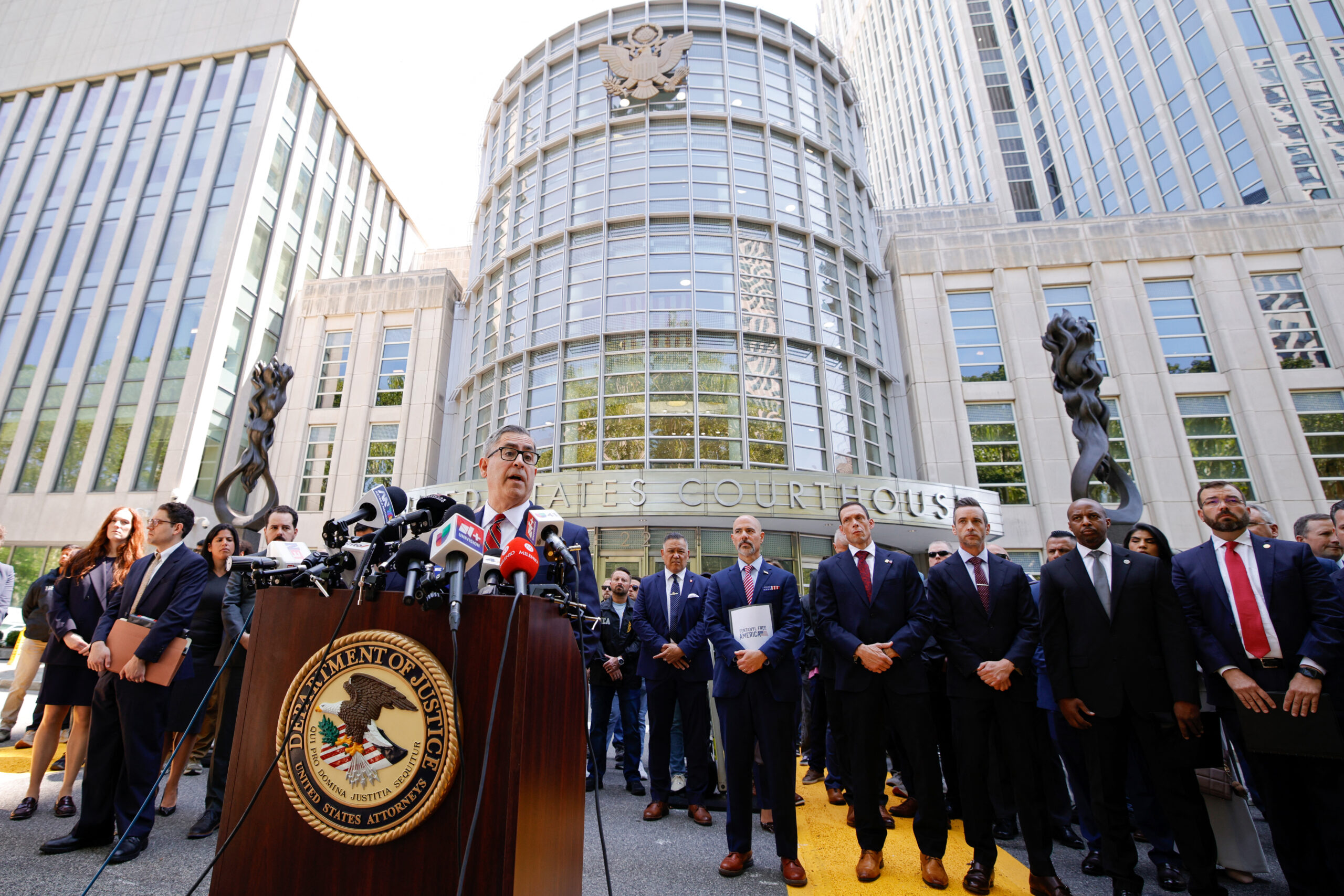
Ismael “El Mayo” Zambada Garcia, known as “Mayo”, the notorious Mexican drug lord, has been sentenced to life in prison without parole by the Eastern District Federal Court in New York on Monday, July 20th. He was convicted on charges of being a major leader of a continuing criminal organization, violating the Racketeer Influenced and Corrupt Organizations Act (RICO), and was also ordered to forfeit $15 billion in criminal proceeds.
At 76 years old, Mayo pleaded guilty in August 2025, admitting to his long-time leadership of the powerful Sinaloa cartel in Mexico and violating RICO laws. In addition to a life sentence, the court also ruled to seize his $15 billion in assets as part of the plea agreement.
Mayo and another top leader of the Sinaloa cartel, “El Chapo” Guzmán, who was sentenced to life in prison in New York in 2019, are considered the highest leaders of the cartel. They transformed the cartel into one of the largest drug trafficking organizations globally. Currently, El Chapo is serving his sentence in a high-security prison in Colorado, USA.
The US Department of Justice stated that for nearly 40 years, Mayo controlled the Sinaloa cartel and oversaw the trafficking of tons of cocaine, heroin, methamphetamine, and recently a significant amount of fentanyl into the US. He maintained his criminal empire through money laundering, bribery, kidnapping, torture, and murder.
The Sinaloa cartel began transporting drugs to the US in the late 1980s, primarily cocaine. As Colombian drug cartels withdrew from the US market, Sinaloa gradually took over the drug trafficking network from South America through Central America to the US. They established a large-scale drug trafficking system covering land, sea, and air transport.
After El Chapo’s conviction in 2019, Mayo assumed full control of the Sinaloa cartel, introducing fentanyl into the core drug business, significantly increasing the organization’s profitability and becoming a key player in the US fentanyl crisis.
The group purchased fentanyl precursor chemicals from Chinese companies, produced drugs in secret labs in Mexico, smuggled them into the US, and used money laundering networks to transfer billions of drug profits back to Mexico, expanding their criminal activities.
Joseph Nocella Jr., a federal prosecutor in the Eastern District of New York, stated that Mayo had been poisoning American communities for almost forty years, amassing billions in profits and ordering the killings of anyone hindering his criminal enterprise. The verdict signifies that he will spend the rest of his life in a US prison, bringing a measure of justice to the countless individuals affected by the drug and violence crimes of the Sinaloa cartel.
Nocella added that for nearly 40 years, Mayo profited billions by poisoning American communities and ordering the killings of anyone obstructing his path. “Today, this chapter of history finally comes to a close,” he said. Mayo and El Chapo spent over thirty years building the Sinaloa cartel into the world’s largest drug trafficking organization. After El Chapo’s incarceration, Mayo incorporated fentanyl as a primary drug, making the organization deadlier and more profitable than ever.
Mayo has long been one of America’s most wanted drug lords, with the US government offering a $15 million reward for his capture. He operated discreetly, rarely appearing in public and leaving little trace, which allowed him to evade capture numerous times. It wasn’t until his arrest in July 2024 that the decades-long US manhunt finally came to an end.
The Department of Justice mentioned that Zambada was initially indicted in six federal judicial districts, including the Eastern District of New York, the Western District of Texas, the District of Columbia, the Northern District of Illinois, the Southern District of California, and the Central District of California. According to the plea agreement, he agreed to have the Texas case transferred to the Eastern District of New York for combined pleas and sentencing, while the remaining cases will be gradually withdrawn.