
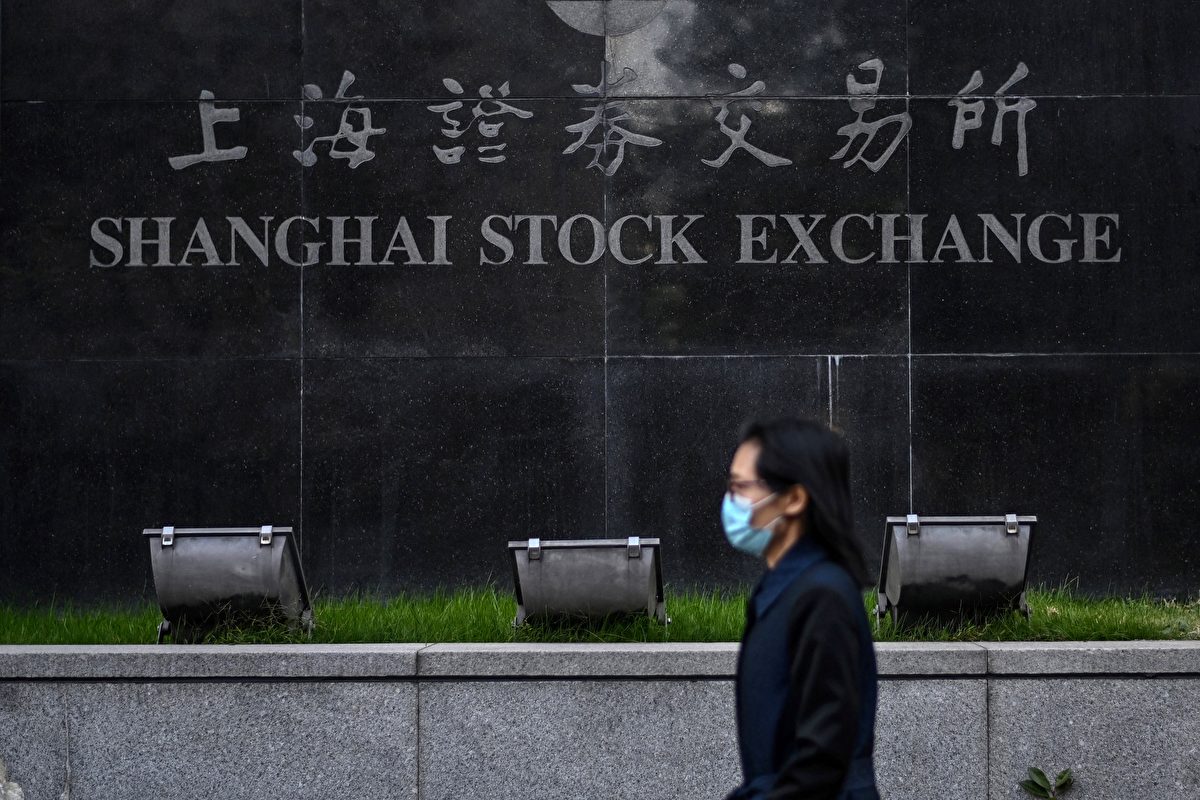
On September 30, Blue Arrow Aerospace, China Aerospace Science and Technology Corporation (CASC), and Micro-Nano Sky, three commercial aerospace companies, had their application for listing on the Science and Technology Innovation Board (STAR Market) of the Shanghai Stock Exchange changed to “suspended (financial report update)”.
Based on the information from the market review, the direct reason for the suspension of Blue Arrow Aerospace was that the financial data stated in its listing application had expired and needed to be supplemented. This is the second time this year that Blue Arrow Aerospace has suspended its IPO review due to financial report updates.
These three companies are not isolated cases. On September 30, a total of 58 IPO projects on the main board and the STAR Market of the Shanghai Stock Exchange entered the “suspended (financial report update)” status, including 11 on the main board and 47 on the STAR Market. At that time, there were a total of 177 IPO projects in the market in a “suspended” state.
In other words, the temporary halt of commercial aerospace IPOs is just a microcosm of the recent cooling trend in IPO reviews.
It is worth noting that the policies themselves have been opening up capital market financing channels for cutting-edge technology companies in artificial intelligence, commercial aerospace, and low-altitude economy.
In June 2025, the reform of the STAR Market clearly stated the expansion of the scope of the fifth set of listing standards to support more cutting-edge technology companies in areas such as artificial intelligence, commercial aerospace, and low-altitude economy to apply the fifth set of listing standards of the STAR Market.
In December of the same year, the Shanghai Stock Exchange specifically issued review guidelines for commercial rocket companies to apply the fifth set of listing standards of the STAR Market, supporting quality commercial rocket companies with certain income scales that have not yet been formed to go public on the STAR Market.
This policy orientation has actually provided a capital market entry channel for a large number of technology companies that are still in the early stages of research and commercialization.
This “leap-forward” style IPO for technology companies means that commercial aerospace companies can enter the capital market without starting to generate profits, leaving investors to bear significant investment risks.
From new energy, photovoltaics, lithium batteries, to artificial intelligence, humanoid robots, and now commercial aerospace, an increasing number of new technology industries are being promoted by the official Chinese government policies and attracting capital.
The policy sets the direction, local governments have new projects, capital chases the trend, companies raise funds for expansion, and ultimately attract more capital into industrial development through IPOs.
This new round of development in the new technology industry has turned into a “leap-forward for industries”.
“Blue Arrow Aerospace,” “CASC,” and “Micro-Nano Sky” are currently in the high investment in research and early commercialization stages.
Commercial aerospace requires a large amount of capital and time for research, commercialization, but as more companies driven by policies enter this field, the concentration of capital within the industry is inevitable.
The Shanghai Stock Exchange’s own review guidelines point out that commercial rocket products are highly complex in technology, require large investment, and have long development cycles, currently at a critical stage of large-scale commercialization.
The problem lies in the fact that the capacity of the capital market is not unlimited. If a large number of technology innovation companies go public for financing, once the companies’ technological development and profitability do not meet expectations, the accumulated risks in the capital market will eventually be released, making investors the “bagholders.”
The recent massive “suspension” of related companies’ IPOs by the Chinese regulatory authorities clearly indicates the potential dangers, but the “suspension” contradicts the top-level policy and is only a short-term expedient measure.
Because from the perspective of policy direction, supporting emerging industries and future industries, promoting the development of cutting-edge technologies such as artificial intelligence, commercial aerospace, and low-altitude economy, remains an important aspect of the STAR Market reform.
Therefore, this round of IPO suspension appears to be more of a cooling for rapidly expanding technology companies and the capital market, rather than a fundamental change in industrial policy direction.
What really needs time to verify is whether these companies can achieve technological breakthroughs, realize commercialization, and ultimately develop genuine profitability.