
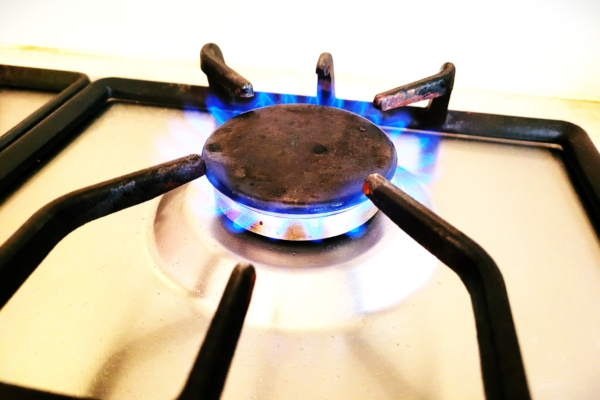
On Tuesday, August 11, the United States Federal Fifth Circuit Court of Appeals ruled to overturn the energy efficiency regulations regarding stoves, ovens, and other cooking appliances left by the Biden administration.
The judges of the Fifth Circuit Court of Appeals determined that the Department of Energy (DOE) under the leadership of then-President Joe Biden unlawfully refused to withdraw these standards despite objections from states regarding the DOE’s failure to fulfill necessary public notice and comment obligations.
In a unanimous decision, a panel of three judges stated that the Biden administration had introduced regulations that made household appliances more expensive and impractical. The judges have directed the matter back to the U.S. Department of Energy to proceed in accordance with the court’s ruling.
The dispute originated in February 2024 when the DOE issued energy standards for gas stoves and induction cooktops without prior public notice and comment, issuing a “Direct Final Rule.”
The judges wrote in the ruling, “Following a failure in the notice and comment phase, the DOE chose to completely bypass the notice and comment procedure.” The ruling pointed out that the new regulations sparked strong public backlash, but the Biden administration attempted to circumvent the controversy rather than address it.
The Federal Appeals Court stated, “While the DOE has the authority to regulate in the customary manner, it cannot ignore the strong public opposition and choose to disregard these comments after allowing post-submission of comments from the public.”
During the Biden era, the Department of Energy argued that a statement of support submitted by industry groups, energy efficiency advocates, and representatives of California, Massachusetts, and New York agencies fairly represented stakeholders’ interests. However, these states’ opinions were not expressed by their official leaders but by affiliated representatives of state agencies.
The Fifth Circuit Court of Appeals refuted this, stating that these three states cannot claim to “fairly represent” the overall position of all states in the U.S., and the Department of Energy itself acknowledged that this was merely the “lightest of fictions” put forward.
Despite facing “numerous negative comments” within the 110 days after implementation, the Department of Energy deemed that “no comments from any state provided a reasonable basis for withdrawing the rule.”
Twenty-two states jointly signed a letter urging the DOE to provide states and consumers with an opportunity to comment on the regulations before they take effect.
Subsequently, Mississippi, Louisiana, Montana, Nebraska, Tennessee, Texas, and Utah officially filed lawsuits against these rules.
The states submitted a petition for review to the Fifth Circuit Court of Appeals, which was approved. The court also rejected the DOE’s request to dismiss the petition, criticizing the agency’s actions as an “attack” on the authority of the court’s review.
Louisiana Attorney General Liz Murrill welcomed the ruling, criticizing the Biden administration for proposing extensive regulations on household appliances such as stoves and ovens, making them more expensive and impractical, which she described as an “attack on consumers.”
The Department of Energy’s jurisdiction over household appliances stems from the 1975 Energy Policy and Conservation Act. The law explicitly allows the DOE to establish efficiency standards, requiring new standards to demonstrate “technological feasibility and economic justification,” ensuring through cost-benefit analysis that the “benefit of the standard exceeds its burden.”
If this threshold is met, the DOE has two implementation pathways: the traditional “notice-and-comment period” and the “Direct Final Rule,” which has strict regulations.
Initially, the DOE attempted to promote efficiency standards for cooking appliances through the traditional route, effectively banning gas stoves and ovens, but failed to pass the public comment period.
Subsequently, the agency shifted to the “Direct Final Rule” approach. According to regulations, this pathway requires a 110-day period for public comments, and if “One or more” negative comments are received within 120 days of publication, the rule must be repealed.
However, the DOE chose to ignore the overwhelming opposition, leading to this lawsuit and ultimately losing the case.
At the time of publication, the U.S. Department of Energy had not responded to requests for comment.