
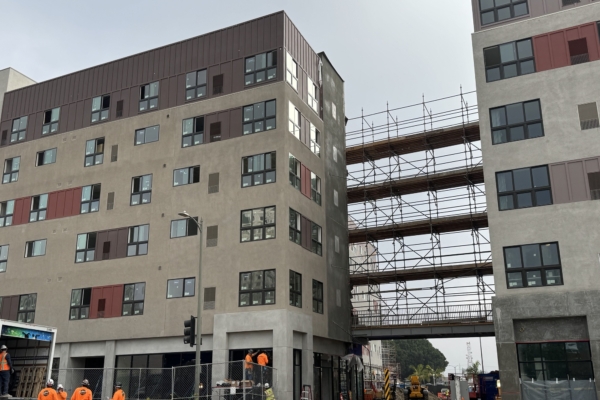
The report released by the University of Southern California (USC) on Tuesday revealed some progress in expanding affordable housing in Los Angeles County. The issue of homelessness is stabilizing, but the severe shortage of housing continues to drive up housing costs for renters, making it difficult for many aspiring homeowners to enter the market.
According to City News Service, the second annual “State of Los Angeles County Housing and Neighborhoods” report from USC Lusk Center found that the construction of accessory dwelling units (ADUs) reached a new high in 2025. Additionally, the proportion of newly built rental housing affordable for low-income families nearly doubled from the previous average of around 10% to 19%.
Researchers cautioned that despite the progress made, the housing construction in Los Angeles County still falls far below the state government’s housing construction goals.
The report also noted a significant decrease in housing construction in Los Angeles County since the 1950s, while the county’s population has continued to grow.
Jared Schachner, the lead researcher of the study, stated, “This year, we have some noteworthy highlights.” He emphasized that when voters and local leaders make housing construction easier and invest in expanding affordable housing, there are positive outcomes. However, he acknowledged that the housing shortage issue in the county has been accumulating for decades, and the progress this year is just a drop in the bucket, though there is hope for improvement.
The report found that the population in Los Angeles County increased by approximately 100,000 people in 2024, marking the first sign of population growth since the decline began in 2015. Meanwhile, the number of households continues to rise, further exacerbating the housing supply pressure.
From 2014 to 2024, researchers observed that the rate of population decline among those under 24 in Los Angeles County was nearly double the national average, and the percentage of families with children dropped from above the national average to below it.
The report highlighted that homeownership rates in Los Angeles County remain significantly lower than other areas in California and the national level. Over the past decade, homeownership rates across all income levels have declined, with the most significant decrease seen in middle-income families.
An increasing number of high-income households are choosing to rent due to various obstacles in homeownership. More than half of tenants (57%) spend over 30% of their income on rent, and in the past decade, the proportion of middle-income tenants spending over half their income on rent has doubled.
Researchers also found that after over a decade of increase, the homeless population in Los Angeles County has stabilized. The homeless population decreased by 5% in 2025, totaling less than 67,800 people, and remained relatively constant in 2026.
The report noted a growing trend where more homeless individuals are living in vehicles rather than on the streets, in tents, or makeshift shelter structures. The majority of homeless individuals were already residents of Los Angeles County before losing housing.
Schachner noted, “One of the most significant trends in this year’s data is that tenants who could potentially afford homeownership are being excluded from the housing market.” He emphasized that this finding reflects the numerous housing challenges facing the county and how the limited housing supply has led to a stagnant housing market, hindering many prospective homebuyers from opportunities to own a home.
The report also examined naturally occurring affordable housing, which refers to rental housing that is not subsidized by the government but remains relatively affordable compared to newly built market-rate housing.
Researchers categorized Los Angeles County’s 1.08 million multi-unit rental properties (buildings with five or more units) into three groups: small and most affordable units accounted for 43%, medium units for 23%, and large units for 9%.
In Hollywood-Studio City, the county’s highest concentration of naturally occurring affordable housing, approximately 155,000 units across all three categories, with these units making up 61% of the local rental housing.
However, the report highlighted that even for tenants renting the most affordable housing, they typically have to allocate 35% of their income towards rent.