
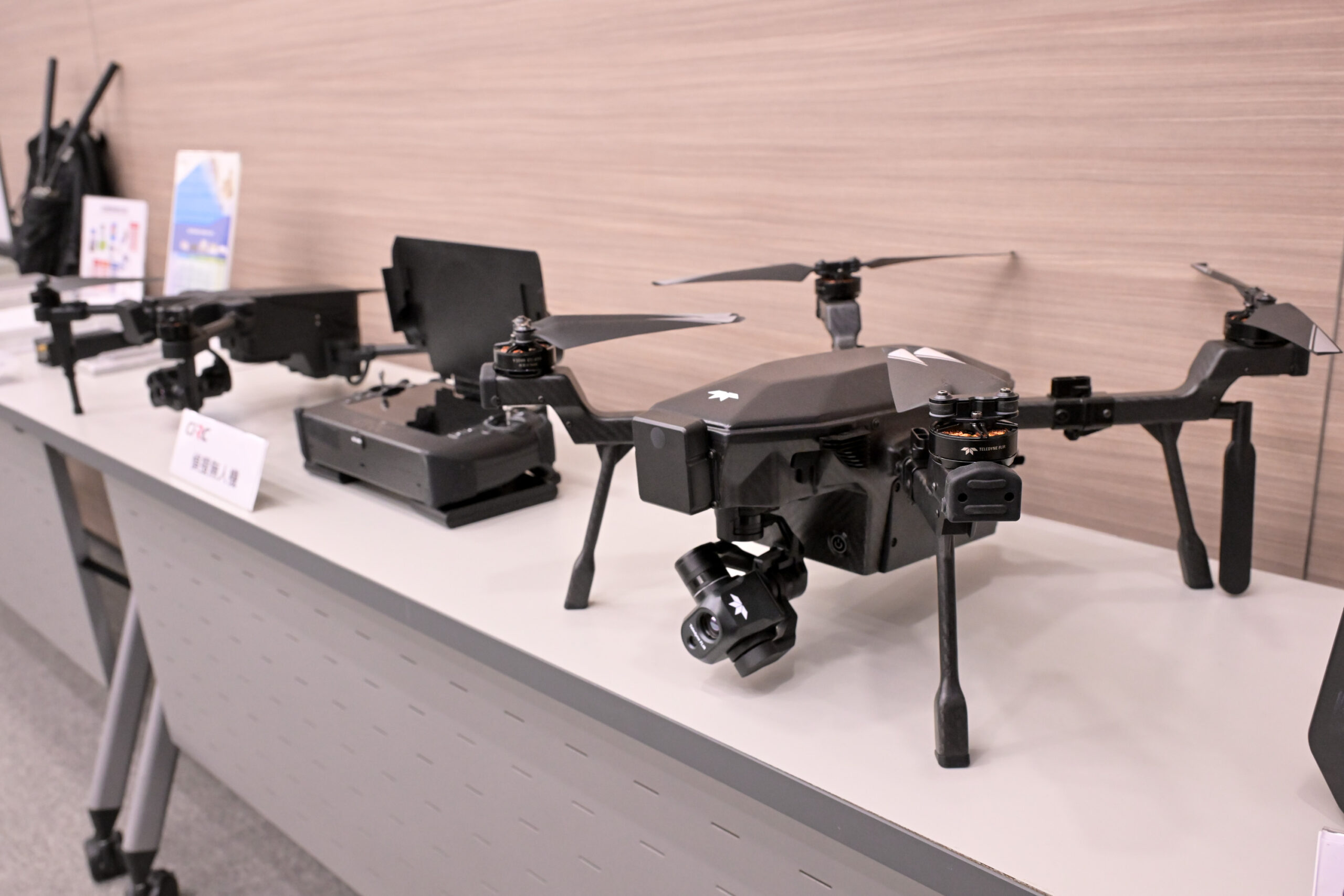
The Civil Aeronautics Administration (CAA) of the Republic of China (Taiwan) announced today that the development of unmanned aerial vehicles (UAVs) in the country is rapidly progressing. As of the end of June 115 (2026), the total number of registered UAVs has reached 42,016, with 23,518 professional operation licenses issued (held by a total of 17,343 individuals), indicating an increasing number of professionals entering the UAV industry.
The CAA held the “First Annual County and City Government Remote UAV Management Work Conference for the Year 115” today, bringing together representatives from central government agencies and local governments for discussions. During the meeting, an overview of the inventory and planning of UAV testing sites was presented for the first time. Discussions were also held on enforcement against violations and the promotion of Critical Infrastructure (CI) No-Fly Zones, aiming to collaboratively create a safe and competitive environment for UAV development.
According to the CAA’s press release, as of the end of June 115, the total number of registered UAVs has reached 42,016, with 23,518 professional operation licenses issued. The top three counties or cities with the highest number of operation licenses are Kaohsiung City, Taichung City, and New Taipei City, reflecting the establishment of significant UAV industry clusters and corporate activities in southern, central, and northern metropolitan areas.
The CAA stated that there are currently 895 qualified legal entities across Taiwan eligible to apply for activities, with a total of 31,613 approved activity cases. A majority of these activities (84.75%) are related to aerial photography, while agricultural pesticide spraying (4.51%) and data monitoring (2.71%) activities are also on the rise.
In terms of cargo logistics, the CAA has approved 10 pilot programs and three are currently in operation. These programs mainly focus on the delivery of essential goods and medical supplies to remote areas. Based on the experiences gained from these pilot programs, the CAA plans to gradually formulate commercial logistics regulations.
The CAA emphasized that qualified legal entities approved by the CAA can apply for “Test Flights” in locations nationwide through the information system. Currently, 567 applications have been fully approved. Additionally, in line with the Ministry of Economic Affairs’ “Coordinated Development Plan for UAV Industry,” the CAA has identified 18 small to medium-sized UAV testing sites and streamlined the application process through the Remote UAV Management Information System.
Regarding the need for large-scale UAV testing, the CAA has coordinated with Chiayi Seaplane Base and Pingtung Hengchun Airport to provide testing sites for domestic operators conducting research and development tests in high-altitude, long-duration, wind-resistant, and specialized payload scenarios, aiming to establish a complete industrial verification environment.
In response to UAV intrusions and violations, the CAA reiterated that areas designated as no-fly zones (red zones) are strictly off-limits. Violators who enter these zones without permission could face a fine of up to NT$300,000 and possible confiscation of their UAVs.
The CAA emphasized that county and city governments are responsible for designating local no-fly zones and enforcing regulations on the front lines, while the CAA will continue to enhance cross-sector collaboration with the central government and local authorities to establish standardized enforcement procedures, ensuring aviation safety.
During the meeting, representatives from various counties and cities put forward practical suggestions such as setting standards for map design and establishing advance notice periods for red zone designations. The CAA addressed each suggestion and pledged to continue strengthening governance capacities through regulatory revisions, technical support, management processes, and information system integration to provide frontline law enforcement with more consistent and efficient tools and processes.
The CAA emphasized its commitment to further deepen cooperation networks between the central government and local authorities, garnering experiences and needs through regular work meetings and cross-agency cooperation platforms to enhance the management system. While safeguarding airspace safety and public interests, the CAA will fully support the innovative development of the UAV industry, aiming to create a safe, orderly, and reliable development environment.
Finally, the CAA urged all UAV enthusiasts and industry professionals to utilize the CAA’s Remote UAV Management Information System website or download the “DRONE MAP” mobile app to check real-time airspace control status at their locations before takeoff. They also encouraged the public to join the official Line account “Civil Aeronautics Administration – Remote UAV Section” to stay informed about the latest regulatory updates and safety information, collectively contributing to the maintenance of Taiwan’s high-quality aviation safety environment.