
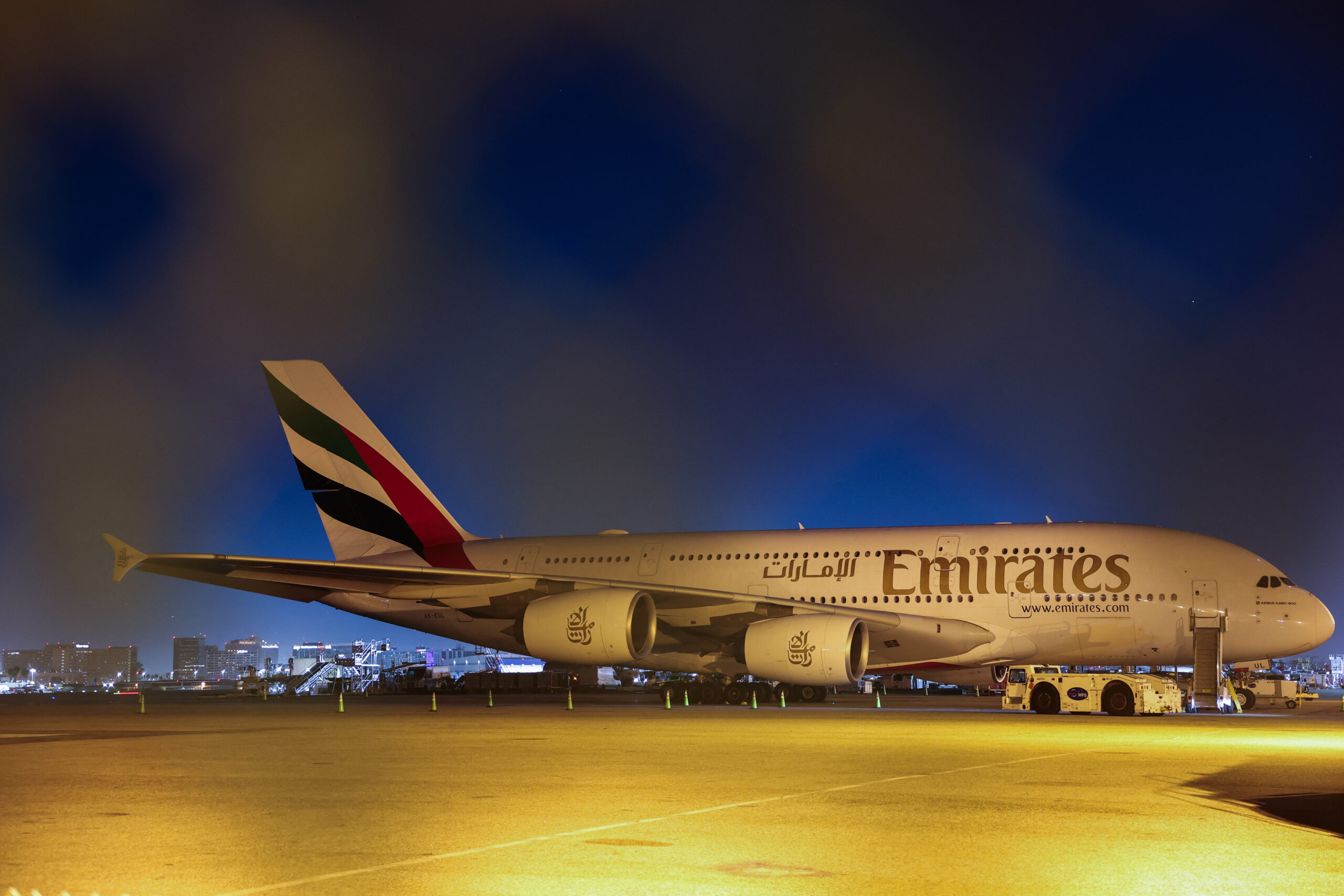
On the evening of July 22, Emirates Airlines EK302 flight from Dubai to Shanghai Pudong was diverted to Hangzhou Xiaoshan International Airport due to weather conditions at Pudong Airport. The 373 passengers on board had to wait in the cabin for more than 10 hours.
According to the City Express, on July 22, the Emirates Airlines EK302 flight, originally scheduled to land in Shanghai, was diverted to Hangzhou Xiaoshan Airport. What was supposed to be a brief layover turned into a long wait of over 10 hours for the 373 passengers on board. Initially expecting a quick departure, the passengers found themselves stranded in the cabin overnight.
“More than 8 hours have passed, and we are still on the plane. The time spent sitting on the plane almost equals the flight time,” a passenger on the flight told a reporter from the City Express around 6:30 in the morning, after spending over 17 hours on the plane.
After the A380 landed at Hangzhou Airport, the original plan was to make a brief stop, refuel, and then continue to fly to Shanghai Pudong Airport. However, the A380 remained stranded at Hangzhou Xiaoshan Airport without further departure.
Investigation on the Emirates Airlines official website revealed that the flight schedule for this flight had undergone multiple changes. Initially planned to depart from Hangzhou to Shanghai Pudong on July 23 at midnight, the timing was later changed to early morning at 3 am and 4:30 am, and eventually the flight status showed a planned departure at 9 am. A passenger on the flight expressed that from initially understanding the situation to later being unable to comprehend it, many passengers became increasingly agitated.
“Ambulances have come twice, as some passengers have fainted in the cabin,” one passenger reported.
During the long wait, passengers’ emotions began to spiral out of control. Around 3 am, a passenger posted on social media, “The hangover in Hangzhou has now exceeded 5 and a half hours. The next door SF Airlines cargo plane has switched, and passengers are starting to get agitated.” Another passenger informed the media that at 3 am, the crew had initially announced a plan to return to Shanghai, but it could not be implemented due to aircraft malfunction, leaving passengers to continue waiting.
Passenger “Yang” mentioned that initially, the crew did not allow passengers to disembark citing customs and border control. “Those who got off the plane at 7:30 in the morning had been stuck in the cabin for more than 10 hours after the plane landed, and the air conditioning was broken, making it unbearably hot.”
As of around 9 am on July 23, the latest update indicated that the 373 passengers on board had started disembarking and were waiting inside the terminal building.
Emirates Airlines has collaborated with Hangzhou Airport to devise follow-up plans, including arranging for passengers to either disembark and go through customs locally or be transported back to Shanghai via dedicated vehicles.
Why were passengers not allowed to disembark throughout the night?
According to Orange Interactive, information obtained from Hangzhou Airport staff revealed that the crew exceeded their duty hours after the flight landed and required a new crew to be dispatched from Shanghai. Since Emirates Airlines’ regular flights to Hangzhou operate Airbus A359 aircraft, which cannot share crews with the A380, a new crew had to be dispatched from Shanghai, resulting in significant delays en route to Hangzhou due to a speed limit of 80 km/h.
By the time the new crew arrived, it was discovered that the aircraft had developed a fault, ultimately causing passengers to remain on board for an extended period. While Hangzhou Airport ground services were prepared for such situations, the ability for passengers to disembark did not solely depend on the airport; it involved unique immigration control issues specific to diversions of international flights.
An industry insider stated that the diversion process for international flights is more complex, as once a flight diverts, the process of passenger disembarkation and customs clearance is not as straightforward as opening the cabin door for passengers to exit. The industry insider explained that after an international flight lands, various procedures such as immigration and customs checks need to be completed, and typically, in such situations, the standard procedure is to adjust and resume the flight to the original destination after a diversion.
Public records indicate that the Airbus A380, manufactured by Airbus, is the world’s largest wide-body aircraft, often referred to as the “flying giant.” The A380 model was announced to cease production in 2019, with the final aircraft delivered in 2021. Currently, Emirates Airlines possesses the largest A380 fleet globally. Flight tracking information shows that the Airbus A380-861 aircraft, with registration A6-EDV, has been in service for 14 years and accommodates around 517 passengers.
On the morning of July 23, officials from Emirates Airlines responded to the diversion incident. The officials explained that the inability to disembark was due to multiple factors and not a decision solely made by the airline. Regarding compensation, the airline suggested that passengers submit their claims through the dedicated channel on the official website, and communication would be handled on a one-on-one basis through email.
However, some passengers expressed dissatisfaction with the handling of the situation. Mr. Zhang, a passenger, stated to local media, “The plan is not transparent enough, and they insist on filling out complaint forms. I can do it, but many passengers simply can’t.”
Recognizing that some passengers may not be familiar with the official website operating procedures, Emirates Airlines also provided complaint channels through a WeChat service account and a customer service hotline. The officials emphasized that submitting through the official website or email was the fastest route and recommended prioritizing these channels for expedited processing.