
A movie depicting “Catching Spies” recently encountered an unexpected flop in the Chinese market. The film, “Catching Spies”, with an investment of nearly 300 million RMB, tells the story of Xiao Dali, the director of a grassroots police station, who only based on the intuition that “a primary school teacher possesses unusual military knowledge,” voluntarily moves next to a suspect and embarks on a 40-year surveillance operation, ultimately suffering hardships and the wrongful death of his wife. The film’s box office performance fell far short of its production costs, with Chinese audiences generally expressing dissatisfaction with the dull plot and the pervasive brainwashing propaganda.
Behind this box office failure lies a more profound question: is Xiao Dali’s logic of “launching a lifelong surveillance based on mere suspicion without substantial evidence” purely artistic fiction, or does it reflect the real functioning of the system to date?
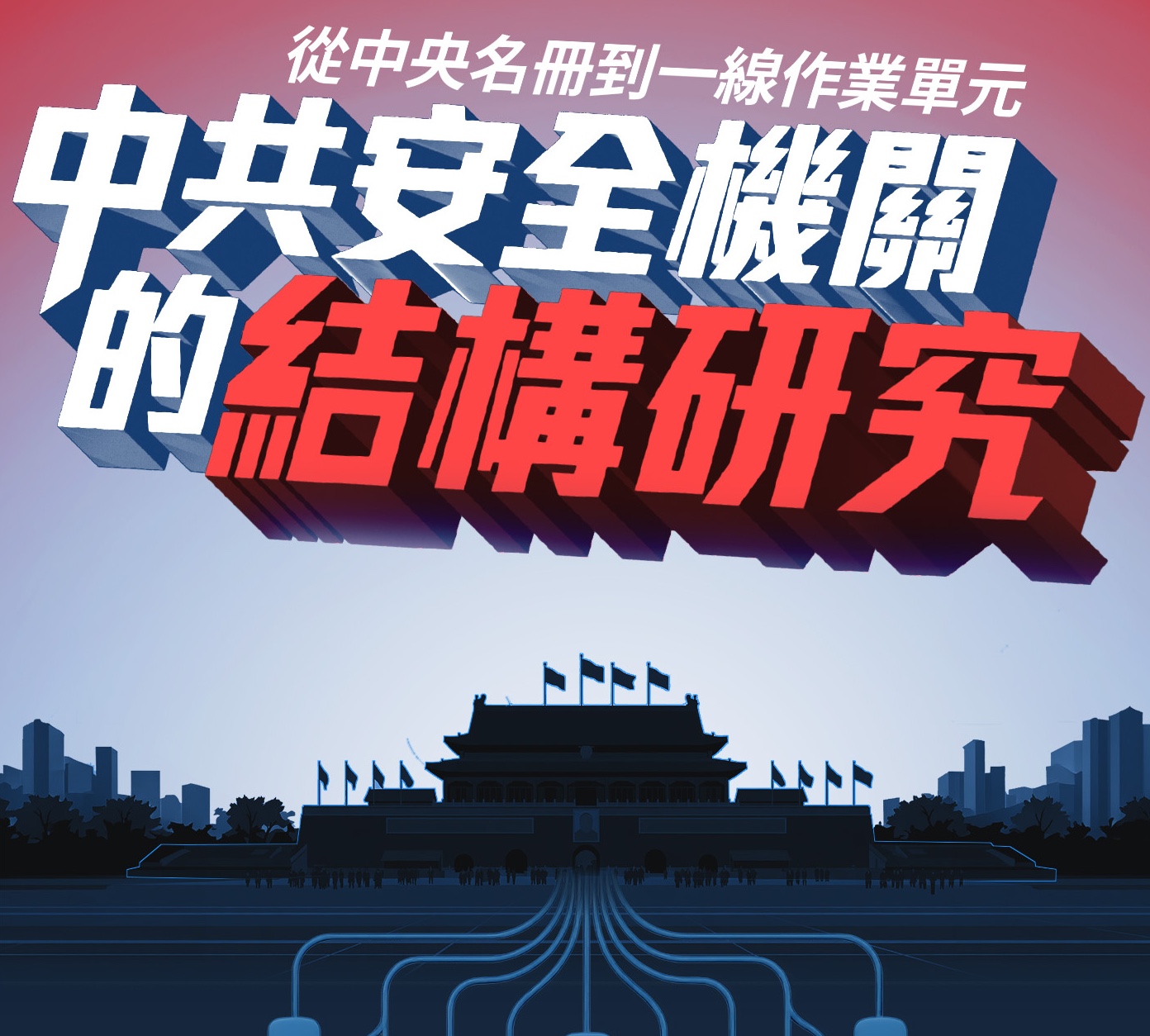
Epoch Times’ exclusive report on “The Structural Study of the CCP’s Security Apparatus” opens a window for us to see how the CCP monitors and subjugates the Chinese people through infiltrating the entire society’s security system.
This report’s sharpness lies not in depicting the vast machinery but in revealing: this machine does not need to turn everyone into agents, it only needs to make everyone live in a state of insecurity of being “possibly watched by Big Brother.”
Since its establishment in 1983, the MSS was not intended to distinguish between “external” and “internal” operations.
Western readers are accustomed to the clear distinction between the US CIA (Central Intelligence Agency) for external operations and the FBI (Federal Bureau of Investigation) for internal operations, but this logic does not apply to the MSS.
The report points out that the MSS was formed by integrating post-1949 separated external intelligence and internal security functions – party-state external intelligence, counter-espionage, foreign-related security, political security, and technical support into one entity. This unity is legally undivided: the 2023 Anti-Espionage Law authorizes security agencies to take enforcement measures against suspected spies, hence granting them internal law enforcement authority; the 2017 National Intelligence Law mandates citizens to support and cooperate with national intelligence work, thus establishing foreign intelligence obligations. Although these laws are divided into internal and external areas, they share the same executive body – a scenario where the CIA cannot simultaneously have the authority to arrest and engage in domestic political investigations, yet in the CCP system, these have always been two missions under the same command chain.
Overseas observers easily fall into the trap of “excessive centralization,” focusing on the MSS headquarters numbering bureau, attempting to piece together the organizational chart.
However, the report highlights that the MSS headquarters numbering bureau, shrouded in secrecy and not externally verified, serves merely as functional indexing, while the real implementing agents are the frontline operational units below the provincial level.
Citing scholar Joske and others’ research, the report clearly states that local security agencies are far from being central mechanized police stations. Provincial security bureaus have had their own origins, regional cadre networks, and specific priorities from the beginning. By the late 1980s, only in Beijing, Guangdong, Shanghai, and Tianjin, the number of security personnel exceeded tens of thousands, far exceeding the central headquarters’ size.
In the cross-border espionage cases prosecuted by the US Department of Justice in recent years, the term “MSS” is often seen, but the actual operatives are all from local bureaus – in the internationally shocking case of Xu Yanjun, the person indicted by the US was actually an official from the Sixth Bureau of the Jiangsu Province Security Department, not someone directly dispatched by the Beijing headquarters.
Viewing the CCP security system as a monolithic entity would overlook its true operational logic: the institutional competition arising from jurisdictional overlaps.
The Ministry of State Security and the public security system overlap significantly in areas such as political dissent, foreign organizations, and foreign-related cases. While public security is responsible for domestic political security, the security agencies are in charge of counter-espionage and covert frontlines. Collaboration does not equal organizational ownership. Both agencies often target the same subjects – for instance, a public interest organization suspected of receiving foreign funding; while the security agency tries to categorize it as “subversion by hostile foreign forces,” public security may attempt to designate it as an “illegal organization” using grassroots and cyber data to claim credit.
This competition not only doesn’t diminish control but actually intensifies surveillance density on ordinary people: both sides need to prove loyalty through “performance,” leading local security departments to lean towards “better to kill a mistake than to let go,” expanding the security boundary limitlessly.
The ruling logic of the Soviet KGB relied on fear: a huge, professional team of agents. During the heyday of the KGB and its East German counterpart, Stasi, there was one dedicated agent for every 165 citizens.
In comparison, the report, quoting scholar Pei Minxin’s estimates, states that the total number of national security police directly involved in political surveillance in China is only about 60,000 to 100,000, with only one dedicated national security officer per every 10,000 to 20,000 citizens.
However, surveillance efficiency has not decreased but become more sustained, with the key lying in the decentralized distribution of surveillance responsibility and fiscal costs to frontline police, party-government organs, grassroots organizations, and non-state entities – a phenomenon known as “distributed surveillance.”
In other words, the KGB instilled fear by maintaining a dedicated force to make people afraid; the Chinese security system, more terrifying than the KGB, relies on the indispensable convenience of everyday life for the Chinese people along with pervasive preventive penetration.
Your mobile phone knows you better than any KGB agent in history – the ID you provide for travel, the WeChat registration for socializing, the community “grid management” for daily living – making every ordinary person nearby – neighborhood watch members, community officials, counselors – act as eyes watching you.
It does not require violence but merely lets you realize that “you might be under surveillance.”
While the FBI’s law enforcement starts from concrete criminal facts that have occurred, China’s public security political security defense work’s starting point is merely “suspicion.”
The report indicates that the grassroots control focus of the political security system is on individuals summarized as “having suspected harm to national security and included in the working view of the public security agencies” – the key lies in “suspicion” and “working view”: the subjects may not have committed a crime, but if algorithms or grassroots contacts deem them to have tags like religious activity, sensitive online expression, rights advocacy, or foreign connections, they enter the “early warning – judgment – visit – stabilization” process.
Citing expert studies, the report estimates that the coverage of key individuals and groups amounts to about 0.5% to 0.9% of the population, totaling over seven to twelve million individuals; however, only a small proportion of them are explicitly listed as political suspects.
This structural proportion itself serves as a cover, allowing political objectives to be concealed amidst a large number of ordinary security targets under this supposedly “public security” based mass surveillance infrastructure.
Described as “preventative control,” it doesn’t operate like the FBI where crime comes first; instead, once there is “suspicion,” governance action is taken in advance.
Xiao Dali’s intuitive suspicion leading him to actively monitor his neighbor in the movie is a straightforward artistic footnote to this logic.
In 2018, 27-year-old Chinese citizen Ji Chaoqun was arrested in Chicago, where the indictment accused him of being guided by intelligence officers from the Jiangsu Province Security Department to collect resumes of eight engineers and scientists in the US, including individuals from US defense contractors. Ji was convicted of espionage in 2022.
Epoch Times’ exclusive report emphasizes that the significance of this case is not to prove that “Chinese spies are everywhere,” but to precisely demonstrate the harshest consequence of this security infrastructure: the targets of the work of the provincial security departments have never been professionally dressed spies but ordinary engineers, scholars, and students.
Meanwhile, during the US Department of Justice’s “China Initiative” from 2018 to 2022, in dozens of cases prosecuted, the majority were eventually charged with false statements regarding “undisclosed foreign relationships” or telecommunications fraud, not espionage or theft of secrets. For instance, the surveillance of Tennessee State University professor Juan Ming for 21 months ended in an acquittal due to conflicting jury opinions; the charges against MIT professor Chen Gang, disputed by over a hundred faculty members, were eventually dropped at the prosecutor’s suggestion even to the extent that the former prosecutor admitted that the motivation behind targeting some scholars was to “teach these Chinese (CCP) spies a lesson.”
These incidents precisely affirm the structural reality uncovered in the report: when the definition of “national security” broadens to cover almost all cross-border communications, every individual engaging with China, whether in Beijing, Hong Kong, New York, or London, is compelled to exist under the shadow of the CCP.
The report doesn’t present an institution that can be directly equated with a “Chinese CIA” or “Chinese FBI.” Instead, it portrays a complex infrastructure comprised of political integration layers, professional execution layers, data technology layers, and social outreach layers: the Central National Security Commission and Political and Legal Affairs Commission define risks, the Ministry of State Security and the Ministry of Public Security provide professional execution capabilities, Big data and the intelligence center provide decision-making closure, while police stations, grid members, community officials, and millions of informants constitute the last mile that truly reaches into every ordinary person’s life.
The report states that no existing Western concept can individually cover these four-layer structures – this is why the analogies of “China’s CIA,” “China’s FBI,” or “Eastern KGB” all fall flat.
The report’s poignant conclusion is that the most terrifying aspect of this machine is not about who it can catch but about making everyone feel that they might be under surveillance – and the fate that follows can be rewritten by the Party at any moment.