
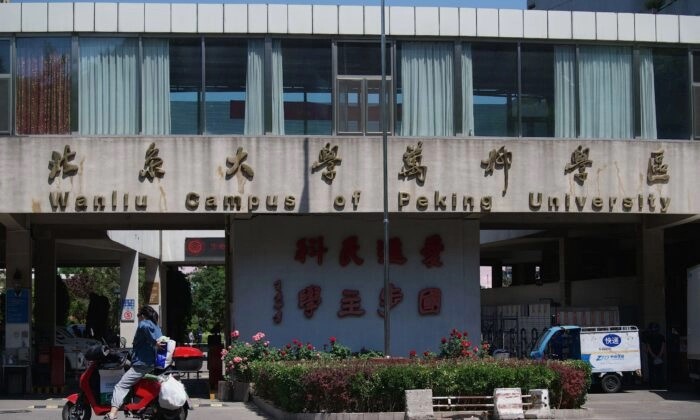
China’s doctoral students are facing unprecedented employment pressure as a result of the rapid expansion of doctoral programs in recent years. The cohort of doctoral students who entered in 2020 due to increased enrollment are now gradually reaching the graduation stage. With the rapid growth in the number of doctoral candidates, the contradiction between the long-accumulated talent supply and the demand for academic positions in universities is becoming increasingly apparent.
According to reports from various media outlets, including the WeChat public account “Everyday People,” the issue of doctoral employment difficulties has been gradually gaining attention in China in recent years.
In 2017, the Chinese government officially launched the construction of the “Double First-Class” universities, leading some institutions to expand their doctoral training capacities. The ability to train doctoral students gradually became an important factor in evaluating the research strength and academic development level of universities.
The expansion of doctoral training programs has outpaced the increase in academic positions at universities. Despite universities traditionally being the primary employment destination for doctoral graduates, some institutions have become more cautious in their recruitment practices in recent years, with some fields even experiencing a reduction in available positions.
For many doctoral candidates, securing an academic position at a university, which was once considered a “stable option,” has become increasingly challenging. The rise in the number of doctoral graduates means that annually over 100,000 individuals are entering a job market that can only absorb around 35,000 of them. This, coupled with competition from previous job seekers, postdoctoral researchers, and returning overseas doctoral graduates, presents a daunting employment challenge for fresh doctoral graduates who may need to lower their expectations and explore alternative career paths.
Despite the challenging job market environment, the State Council of China issued the “Outline of Building a Strong Education Country (2024-2035)” in early 2025, further emphasizing the need to expand the enrollment of graduate students, especially doctoral candidates, and increase the proportion of professional doctoral degrees.
Data released by the Ministry of Education indicates that in 2024, China had around 97,200 doctoral graduates, which increased to 112,900 in 2025. The number of graduates in 2026 has not been disclosed yet but is expected to continue to rise.
Articles from “Everyday People” shed light on the difficulties faced by doctoral graduates in finding employment. Some individuals, despite graduating with a doctoral degree, continue to struggle to secure suitable jobs even after two years, prompting them to consider postdoctoral positions, which also come with their own time restrictions and uncertain job prospects. As a result, some seasoned postdoctoral researchers advise newcomers to consider pursuing a career in public service as an alternative.
One overseas doctoral candidate shared their experience, expressing initial confidence in securing a position at a university in China due to their numerous international publications. However, they soon realized that the tightening competition in academic recruitment has far exceeded their expectations, with a reduction in available positions and a higher level of competition.
Another Ph.D. holder from a prestigious university mentioned facing fierce competition even when targeting teaching positions at vocational institutions, where a single job posting might attract dozens of doctoral candidates vying for the position.
The challenges faced by doctoral graduates in the job market are not solely a result of the increased number of doctoral candidates but are also influenced by factors such as the adjustment in university recruitment practices, changes in the financial environment, and intensified research competition.
The significant expansion of higher education in China began in 1999 with the expansion of university enrollment. Aiming to boost domestic demand, stimulate consumption, promote economic growth, and alleviate employment pressures, the government introduced policies to increase the number of students admitted to universities, leading to a historical spike in enrollment figures.
Over the years, the expansion of university enrollment led to issues such as strained educational resources, concerns about the quality of talent cultivation, and heightened employment pressures for university graduates.
In recent years, the focus has shifted to the rapid expansion of postgraduate education, particularly doctoral programs. Transitioning from expanding undergraduate programs to doctoral programs has once again highlighted the challenge of balancing the expansion of talent cultivation with ensuring quality education, employability, and research capabilities.
As local governments face financial constraints due to declining land revenues and increasing debt burdens, some regional universities are now more focused on cost control after relying on local financial support for rapid expansion in the past.
The recruitment of young faculty members entails long-term fixed expenses, including salaries, housing benefits, research start-up funds, and laboratory equipment. Due to budget constraints, some universities are reducing the hiring of new faculty members and resorting to more contract-based or non-traditional employment models rather than permanent positions.
These changes directly impact the job market for doctoral graduates. Previously, universities would attract doctoral talents by offering permanent positions, settling-in allowances, research start-up funds, among other benefits to compete for exceptional candidates. However, in recent years, some universities have downsized their recruitment, raised the entry criteria, and shifted towards more contract-based or performance-based hiring models.
Simultaneously, the intensifying competition for research funding has increased the difficulty of securing stable research resources. Young faculty heavily rely on research achievements, which in turn depend on project funding, laboratory conditions, and research platforms. Some young faculty members have reported challenges in securing stable research resources due to heightened competition in research project applications.
In some universities, the “up or out” policy further adds pressure on young faculty members. Under this policy, new faculty members must meet certain research and publication requirements within a specified time frame, failing which they might be at risk of losing their academic positions.
Therefore, the challenges faced by doctoral graduates today are not solely attributed to the increase in the number of doctoral candidates but are a result of various factors such as the expansion of doctoral training programs, adjustments in university recruitment strategies, changes in the financial landscape, and heightened research competition.
For a growing number of doctoral graduates, navigating alternative career paths beyond academia has become a pressing reality. Not only is it becoming harder to find employment, but the job benefits and conditions are also changing.
Some job seekers and education observers noted on social media platforms that the treatment of doctoral talents in recruitment is evolving. In the past, graduating with a doctoral degree typically led to positions at universities, research institutes, top companies, or central government units, where benefits like settling-in allowances were common. However, the current scenario is different, with rigorous selection criteria based on factors such as institution prestige, publication records in top-tier journals, and even age restrictions, such as being under 32. The most significant trend observed is the reduction in benefits, with many entities explicitly stating the discontinuation of settling-in allowances.