
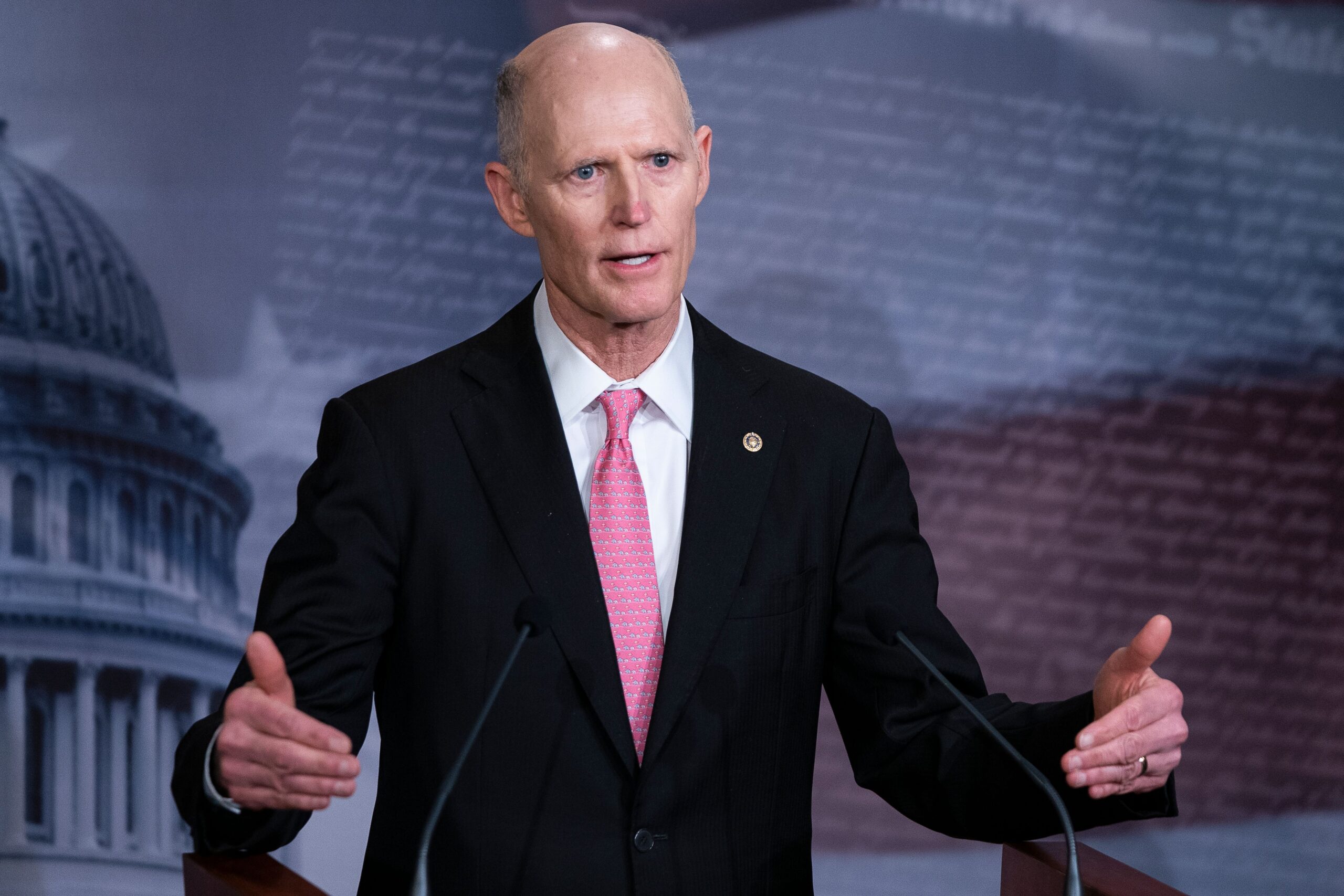
On Wednesday, July 15th, the bipartisan Senate Special Committee on Aging introduced the draft of the Pharmaceutical Investment Oversight and Accountability Act, which calls for a thorough examination by the U.S. government of the influence of foreign powers, including the Chinese Communist Party, in the American pharmaceutical manufacturing industry.
Led by Chairman Rick Scott (Republican from Florida), senior member Kirsten Gillibrand (Democrat from New York), and committee member Elizabeth Warren (Democrat from Massachusetts), the aim of the Pharmaceutical Investment Oversight and Accountability Act is to mitigate the risk of foreign investments affecting the U.S. pharmaceutical and medical technology sectors.
The act mandates the Federal Trade Commission (FTC) and the Committee on Foreign Investment in the United States (CFIUS) to analyze the control and influence of foreign capital on American pharmaceutical production, DNA sequencing, and storage, among other sensitive biomedical technologies.
According to the draft, the FTC must, within one year of the formal passage of the act and annually thereafter, collaborate with the U.S. Department of the Treasury-led CFIUS to submit annual reports to relevant Congressional committees, the Department of Health and Human Services (HHS), and the Food and Drug Administration (FDA).
The legislation stipulates that the annual report must cover four key areas:
1. Assessment of Supply Chain Resilience: A comprehensive evaluation of the current state of the U.S. pharmaceutical industry’s supply chain, analyzing the potential risks and impacts of “industry consolidation” and “overreliance on foreign manufacturing.”
2. Evaluation of Domestic Pharmaceutical Production Capacity: Investigation into whether foreign funding affects the U.S.’s ability to produce essential drugs domestically, including active pharmaceutical ingredients (APIs) and excipients.
3. Protection of Sensitive DNA and Genetic Data: Analysis of the impact of foreign investments on U.S. “DNA sequencing, genomics, and exome analysis products” to ensure the country has the capacity to safeguard genetic data of its citizens.
4. Review of Transaction Examination Data from the Past Decade: Requiring CFIUS to conduct yearly reviews and investigations of transactions in the U.S. pharmaceutical and medical manufacturing industries as well as DNA sequencing and storage-related sectors, and to detail how each review case was approved, rejected, or passed with conditions to mitigate risks.
The FTC will also conduct investigations within its existing jurisdiction under Section 6 of the Federal Trade Commission Act, releasing a non-confidential summary online for the American public to understand how foreign funds influence the domestic healthcare industry.
This legislation comes at a time when the Senate Special Committee on Aging is preparing to hold a hearing titled “Beyond the Label: Foreign Ownership and Control of the American Pharmaceutical Supply Chain.” The hearing will focus on how foreign influence threatens drug safety for the elderly, and whether the federal government has adequate tools to address such risks.
Senator Scott stated, “For too long, the U.S. has allowed entities like the Chinese Communist Party to interfere in our drug supply with money in the shadows, and this situation must come to an end. There are risks of compromise in drug production, raw material suppliers, and genome sequencing technologies. Due to Washington’s longstanding neglect, we are unaware of the severity of the situation.”
Senator Gillibrand approached the issue from a public health perspective, emphasizing that Americans should not rely on a supply chain controlled by foreign entities. She mentioned that the act would reveal the influence of foreign powers on the U.S. pharmaceutical supply chain, helping Americans understand the public health and national security threats hidden within.
Senator Warren expressed her concerns about the dependence on foreign drugs endangering Americans’ health. She highlighted that this legislation is a crucial first step in strengthening the drug supply chain and ensuring uninterrupted access to life-saving medications for Americans.
Notably, this is not the first time Senators Scott and Gillibrand have joined forces to address issues within the pharmaceutical supply chain. In October 2025, they released a report investigating the protection of seniors’ rights to essential medications and securing the safety of the foreign generic pharmaceutical supply chain.
In January of this year, the two senators also pushed for the CLEAR LABELS Act, which requires prescription drug supply chains to be labeled with their country of origin to enhance accountability for pharmaceutical manufacturers and oversight of the supply chain.