
In recent times, Beijing has been accelerating the enforcement of taxation on residents’ overseas income, covering a wide range from Hong Kong insurance proceeds to offshore trust assets, with related measures gradually being implemented. The global tax collection initiative by the Chinese Communist Party has drawn high attention from the global financial sector. Not only has mainland China’s financial media, “Caixin,” reported on this in detail, but international authoritative publications such as “Nikkei Asia” and “Financial Times” have also followed suit.
Analysis suggests that Beijing’s actions have been premeditated. Against the backdrop of a stable tax base, economic downturn, and fiscal constraints in China, the strengthening of actual collection has begun, with the core aim being to retain political power.
An article in “Nikkei Asia” on August 6 titled “Expansion of China’s Tax Web to Offshore Trusts and Insurance Sends Shockwaves Through Market” pointed out that Beijing has started comprehensive tracking of overseas assets and global income, sparking market panic.
The Beijing government is embarking on global tax collection actions, targeting the overseas assets of China’s affluent class. There have been cases where overseas insurance proceeds are subject to a 20% individual income tax, with some local tax authorities even pursuing decades-old overseas capital gains.
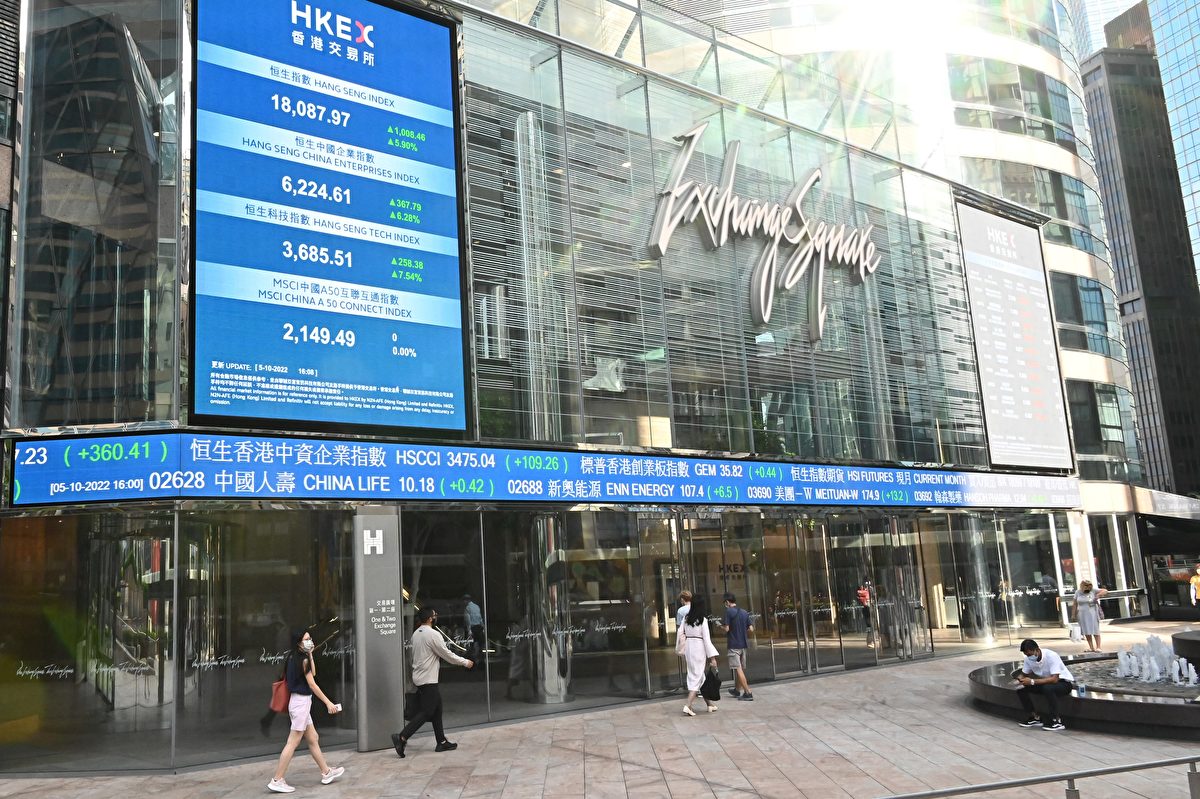
As a result, there has been a sell-off in the Hong Kong financial market, leading to a 1.5% drop in the Hang Seng Index. Market leaders in the insurance and banking sectors have been hit hard, causing significant declines in stock prices. For example, AIA suffered a 9% plunge, Prudential plummeted by 5.8%, and HSBC dropped by 2.8%.
For a long time, Hong Kong has been a core hub for China’s wealthy to diversify their overseas asset allocation and wealth management. Beijing’s tax crackdown has stirred concerns among both new and existing clients. By expanding overseas taxation, Beijing is significantly impacting Hong Kong’s wealth management and insurance industry.
The article points out that the underlying reason behind this move is Beijing’s desire to plug fiscal deficits and stem capital outflows.
“Financial Times” published an article on August 6 titled “Insurance and Banking Stocks Fall on Concerns of China’s Crackdown on Tax Evasion,” reporting on the market panic triggered by Beijing’s global tax collection initiative.
The report indicates that the market is concerned about Beijing cracking down on mainland depositors buying insurance in Hong Kong, leading to a significant drop in Hong Kong insurance and banking stocks. This reflects investors’ worries about the potential impact on the demand from high-net-worth Chinese clients.
Hong Kong has long been a convenient channel for mainland capital outflows. Hong Kong’s insurance products, especially investment-linked long-term policies, have been a key channel for mainland residents to shift assets overseas and circumvent strict foreign exchange controls.
The article further states that a large number of Chinese residents travel to Hong Kong to purchase insurance policies, primarily for purposes such as asset allocation in US dollars, diversifying Renminbi risks, overseas asset allocation, and wealth transfer. If Beijing continues to strengthen tax enforcement, the appeal of Hong Kong as the preferred hub for cross-border wealth management for Chinese affluent individuals may diminish.
Given the heavy reliance of the Hong Kong insurance industry on mainland clients, this news has sparked high anxiety within the sector, prompting some multinational insurance companies to convene emergency meetings to devise response strategies. The report also highlights that coverage by mainland media outlet “Caixin” acted as the catalyst for this incident.
In an exclusive report published by “Caixin” on August 5, the taxation of overseas income, taxation of insurance benefits, and other related issues were discussed, indicating that the Chinese Communist Party’s global tax collection initiative has been launched.
The report states that cases have emerged where residents in Beijing and Hangzhou have had their Hong Kong insurance benefits subject to individual income tax. The authorities in Beijing are not implementing new legislation for taxing overseas income but rather beginning the actual enforcement of taxing Hong Kong insurance benefits in line with existing provisions of the Personal Income Tax Law. The scope and intensity of future actions are expected to expand further.
The report confirms that overseas insurance benefits are already being taxed, with a current tax rate of around 20%. Chinese tax authorities are leveraging information obtained through the Common Reporting Standard (CRS) for data exchange to practically collect taxes on certain overseas insurance benefits.
CRS is an international tax information automatic exchange standard led by the OECD, requiring financial institutions to identify customers’ tax statuses and automatically report foreign customer financial account information to their tax residence country.
The report also notes that different local tax enforcement approaches exist in China, for example, with Shanghai adopting a taxation-at-realization approach for income and Nanjing activating the taxation mechanism upon dividend calculation.
A report by Xinhua News Agency on August 7 responded to rumors about mainland residents’ Hong Kong insurance benefits being subject to taxation by the State Administration of Taxation of China, stating that, in accordance with relevant regulations, global income taxation is not a new policy nor specifically targeted at the Hong Kong insurance market and does not require excessive interpretation.
In fact, as early as the beginning of 2020, the Ministry of Finance and State Administration of Taxation of China issued a notice announcing the taxation of overseas income in accordance with the Personal Income Tax Law. However, despite the existence of regulations in the following years, enforcement was limited, mostly reliant on taxpayers’ self-declaration. It wasn’t until July 2026 that authorities began comprehensive enforcement.
Moreover, on July 24, the Ministry of Finance and the State Administration of Taxation of China clarified that personal income tax at a rate of 20% would be levied on income from assets held in offshore trusts and their products.
According to Reuters, handling tax matters related to offshore trusts had been a gray area previously, with this move viewed as the latest action by the authorities to collect income from residents holding wealth overseas.
China expert Mike Li told Epoch Times that when news broke about Chinese tax authorities preparing to impose a 20% individual income tax on overseas insurance benefits, shares of Prudential in the UK dropped by up to 13%, with HSBC and Standard Chartered also declining accordingly.
Mike Li pointed out that Prudential (Hong Kong), AIA, and other financial services greatly depend on mainland Chinese investments. After the 2008 financial crisis, the Hong Kong financial industry faced significant challenges. To aid the Hong Kong economy at that time, the Chinese authorities introduced a series of preferential policies, including allowing mainland residents to purchase Hong Kong insurance products (as foreign investment remained restricted) and opening up more mainland cities for unrestricted travel to Hong Kong.
Since then, mainland residents have been using visa-free travel to Hong Kong to open accounts and transfer funds to major banks like HSBC and Standard Chartered. Due to Hong Kong regulations requiring policyholders to purchase insurance policies in person in Hong Kong for them to be effective, mainland individuals have been flocking to Hong Kong to buy insurance products.
The Hong Kong Insurance Authority disclosed annual premium statistics for the full year of 2025 on April 24, 2026, with total gross premiums reaching HK$827 billion, marking a 29.7% annual increase and hitting a historic high. Mike Li noted that a significant portion of these premiums were purchases made by mainland residents, with approximately HK$200 billion in insurance purchases by mainlanders just in 2025.
He further explained that the main insurance products purchased are dividend policies with savings features, over 80% of which are denominated in US dollars, with the remainder in Hong Kong dollars and Renminbi.
The rush of mainland residents to buy insurance in Hong Kong is driven by two main factors, as per Mike Li: firstly, Hong Kong’s status as a financial hub allows funds to flow freely with tax-exempt benefits, and secondly, the higher investment returns, such as the annual return rate of 6.5% on lifetime insurance dividend policies.
As early as 2020, the State Administration of Taxation of China issued the “Announcement on Overseas Income Related Personal Income Tax Policies.” The third clause of the second article specifies that income sources such as interest, dividends, property leasing, property transfers, and occasional gains derived from outside China by resident individuals should not be consolidated with domestic income and should be separately calculated for taxation.
Mike Li stated that the current measure by the Chinese authorities was clearly premeditated. “If implemented too early, at the time, the tax base was not stable and the scale wasn’t large. However, waiting until today, when the Chinese authorities are facing economic downturns and dwindling tax revenues leading to fiscal constraints, then starting the actual collection makes sense.”