
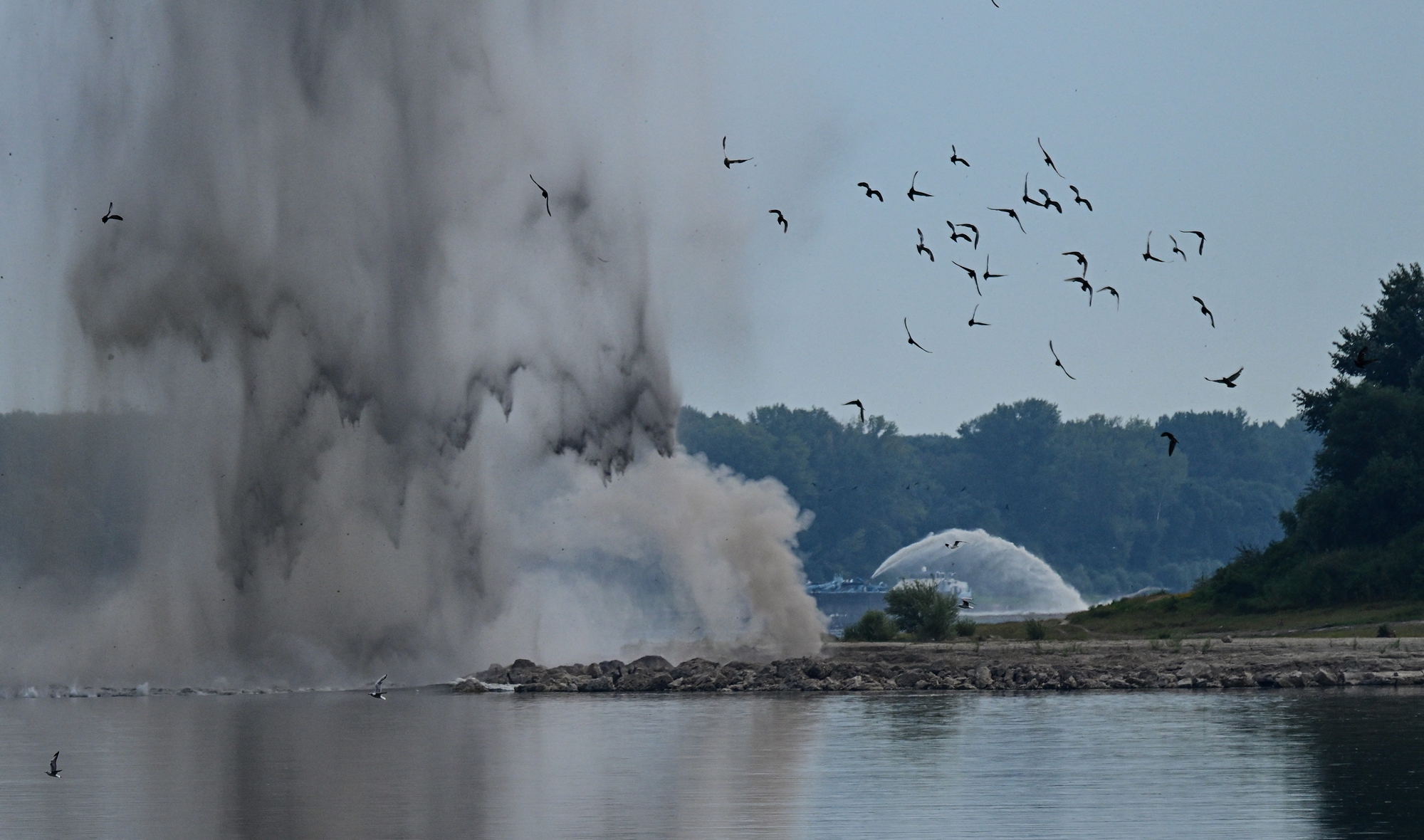
Due to severe heatwaves and drought, the water level of the Danube River has dropped to historic lows. In response, the Romanian Navy is carrying out controlled explosions in the Danube River’s Bala channel section to blast away riverbed rocks and redirect the flow of the river. The aim is to divert some water flow from the Bala tributary to the old Danube tributary to raise the water level, ensuring the water supply for the country’s key energy facility, the Cernavoda Nuclear Power Plant. The plant relies on the Danube River water for cooling purposes.
According to media reports, on Monday (August 2), the Romanian Navy used 180 kilograms of explosives to successfully destroy an underwater reef in the Bala tributary. Following the explosion, dredging vessels began clearing the rock debris.
Authorities have stated that this action will facilitate the construction of temporary dams to clear obstacles for diverting more tributary flow into the old river channel, thereby maintaining the water intake for the Cernavoda Nuclear Power Plant’s cooling system. The military has indicated that the related engineering works are expected to be completed by Wednesday (5th).
Experts estimate that after the completion of the temporary dams, the water level of the old Danube River could rise by approximately 10 to 15 centimeters, providing valuable cooling water for the nuclear power plant.
This drastic measure highlights the serious energy shortage in the European region. Due to prolonged high temperatures and drought, the flow of the Danube River in the Romanian section continues to decrease. According to data released by the Romanian water authorities on Monday (August 3), the flow of the Danube River in the Romanian border section is currently about 1590 cubic meters per second, with expectations of further decline in the coming days. By August 7, it may decrease to around 1450 cubic meters per second, approaching the historic record low of 1400 cubic meters per second set in 1985.
As the water level of the Danube River rapidly declines, it not only severely affects inland navigation and agricultural irrigation but also poses a threat to several coastal nuclear power plants. To prevent damage to the cooling systems, the Romanian state-owned nuclear company, Nuclearelectrica, was forced to shut down a reactor at the Cernavoda Nuclear Power Plant on July 28. In response, the Romanian government declared a one-month national energy emergency status starting in August.
Located in Constanta County in southeastern Romania, the Cernavoda Nuclear Power Plant is the country’s only nuclear power plant. With two units utilizing Canadian CANDU (CANada Deuterium Uranium) technology, the plant generates approximately 20% of Romania’s total electricity output.