
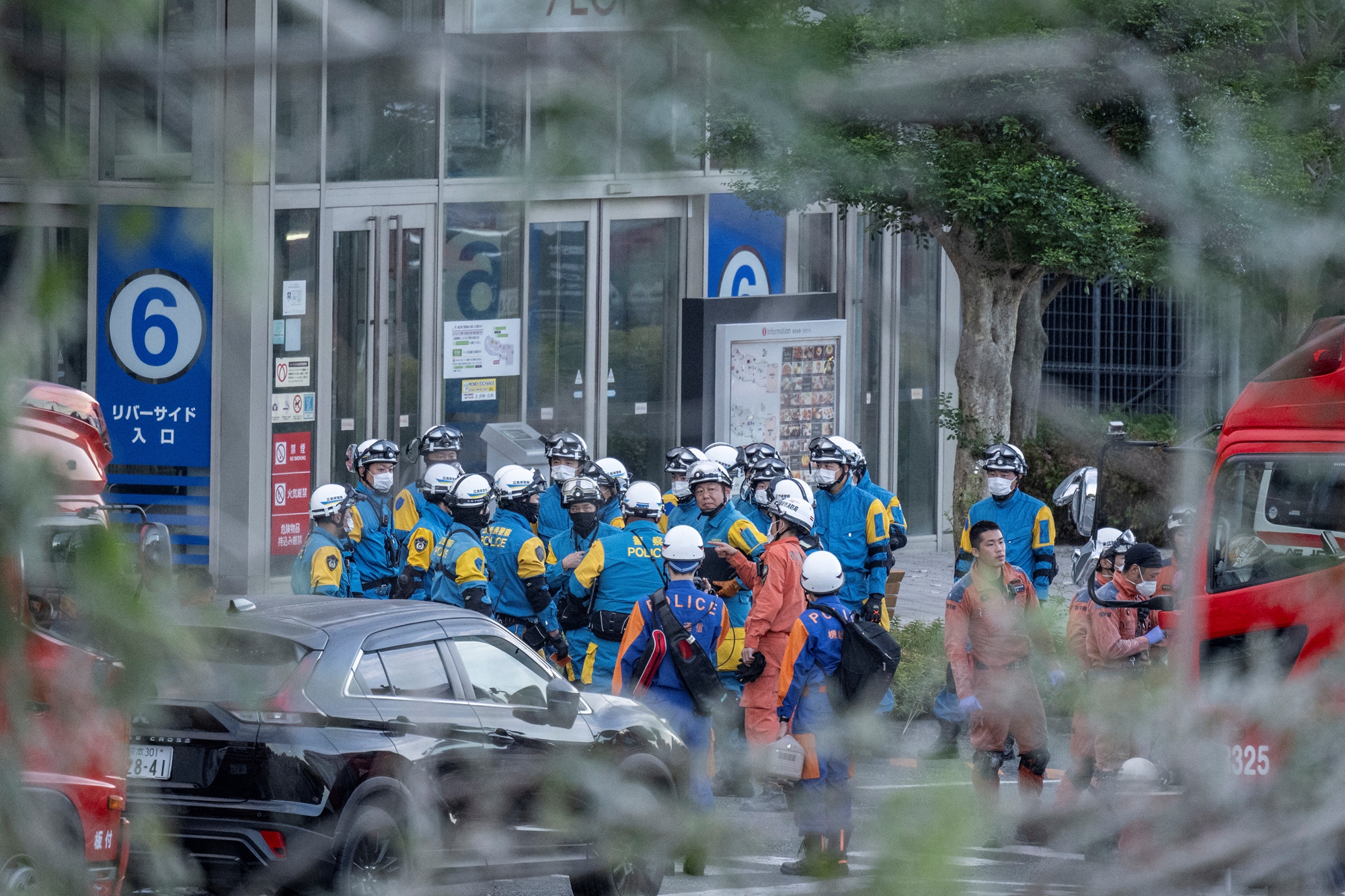
Following a strong earthquake in southwestern Japan two days ago, rescue efforts are still ongoing, but the time to find survivors is dwindling. As of Thursday (July 30), at least 34 people have been confirmed dead, with 9 others under investigation for potentially earthquake-related deaths. At least 86 individuals were injured in the earthquake, with 5 sustaining serious injuries.
Rescue teams continue their search and rescue operations in the Kumamoto area of Kyushu Island in southern Japan. On Tuesday (July 28), a magnitude 7.1 earthquake struck the region, causing severe shaking resulting in collapsed buildings, factory chimneys falling, an explosion, and partial collapse of a large shopping center.
As time goes on, the search and rescue operations become more urgent. Typically, the first 72 hours after a disaster are crucial for finding survivors, and this earthquake has now entered its third day.
One of the severely affected locations is the large shopping center “Aeon Mall Kumamoto” in Jashima, where a significant number of people were present during the earthquake. Approximately 3,000 customers were evacuated to the parking lot before the explosion occurred, but some employees remained inside the mall at that time.
Following the explosion, a portion of the second floor of the mall collapsed, trapping many people. By Thursday, the Kumamoto Prefecture authorities reported rescuing 12 individuals from the rubble, with 7 confirmed casualties among them. Aeon Group announced on the 30th that a total of 7 employees from Aeon Mall Kumamoto, where the explosion occurred, had tragically lost their lives, including 3 previously missing individuals, with the company confirming the safety status of all its staff.
Firefighters and rescue personnel continue to search for other potential victims at the scene.
In the Yatsushiro area, a chimney at a factory owned by Japan Paper Industry Co., Ltd. collapsed, resulting in the rescue of 10 individuals, but 8 others were killed, with 1 person missing. Numerous residences in other affected areas were either destroyed or severely damaged.
Footage provided by the Japanese government and military shows rescue teams drilling through collapsed buildings, attempting to extract individuals who may still be trapped inside.
Two days after the earthquake, the basic living conditions in the disaster area have not yet fully recovered. Thousands of people spent another night in shelters set up in sports halls and other large venues across the region. Some homes still lack water or electricity, while some people are too afraid to return home.
Currently, close to 19,000 households remain without power, with over 9,000 people residing in around 400 shelters. Authorities are working to enhance power supplies at certain shelter locations to ensure air conditioning functions properly.
However, many residents, either fearing aftershocks or reluctant to go to crowded shelters, can only spend the night in their cars or tents.
In the severely affected town of Higashikucho, over 800 out of 4,500 households have had their homes destroyed or damaged. Many residents are without water, electricity, or both, some resorting to parking their cars in parks, municipal parking lots, or in front of their homes, staying together as a family inside the vehicle.
The local government distributed bottled water and instant rice meals to residents in front of the municipal hall, and the Japan Ground Self-Defense Force mobilized to deliver potable water to the evacuees.
According to CTV, nurse Hirokazu Sato’s house was destroyed during the earthquake. Currently, he, his wife, and three children can only live in their car parked in the municipal hall’s parking lot.
Due to having a one-year-old child at home, he is concerned that staying at a collective shelter might inconvenience others, hence opting to remain in the car. Sato mentioned that he can hardly get any good sleep sitting in the car, sometimes having to step out for a walk at night. He hopes that authorities can swiftly provide temporary accommodations for families affected by the disaster.
66-year-old resident Yoshiaki Nakashima also chose to sleep in his car, bringing along two water bottles and his pet dog to the relief site for drinking water.
Due to ongoing aftershocks, he is afraid to return home to sleep, yet reluctant to go to a shelter. Nakashima mentioned, “It’s difficult to even turn over while sleeping in the car.”
Another resident in her thirties, Akiko Inazaki, is living in a tent set up in her backyard. Since the earthquake, her residence has been without water and electricity.
When she went to collect drinking water, she expressed how every bit of clean water is precious now, making her conserve its usage. However, due to limited water intake, she once almost suffered from heatstroke.
While facing a lack of water and electricity, alongside a significant number of residents unable to return home, the scorching heat is becoming another crisis in the disaster area. Concerns are rising regarding the potential outbreak of diseases.
The Japanese Ministry of the Environment has issued a heat advisory for the Kumamoto region, as the local temperature exceeded 33°C on Thursday.
Medical personnel are especially worried about the elderly, injured individuals, and residents staying for extended periods inside cars and tents, as they may face heatstroke and dehydration.
Dr. Yutaka Kobayashi from Aichi Prefecture conducted assessments of evacuees’ health conditions by touring several shelters on Thursday.
He emphasized the importance of ensuring that the elderly do not succumb to heatstroke or dehydration under the current high temperatures.
Officials from Higashikucho mentioned that on the first night post-earthquake, almost all parking lots were filled with evacuee vehicles. Currently, some residents have been moved to three public schools with air conditioning, but the urgent needs remain for drinking water, food, and temporary shelters.
The emergency food supplies such as canned goods, bread, instant rice, etc., that the local government had stockpiled are running low.
It has been two days since the earthquake struck. For rescue workers, the upcoming period is crucial, while for the thousands who have lost their homes, even if they survived the earthquake itself, the risks of aftershocks, high temperatures, lack of water and electricity, and inadequate supplies make the post-disaster life filled with uncertainties.