
In the future, will wars still require soldiers to charge into battle? Countries in the US, Europe, and China are accelerating the development of a new generation of military weapons, bringing technology from science fiction movies onto the battlefield, shaping the look of future warfare beyond people’s imaginations.
According to the British technology magazine “BBC Science Focus” in July, the arms race among countries is no longer just about missiles and traditional weapons but is shifting towards the development of laser cannons, electromagnetic attacks, sonic energy weapons, AI autonomous combat systems, drone swarms, and even cutting-edge military technology that can disrupt human sensory organs.
Let’s explore nine future military weapons being developed by various European and American countries:
Laser weapons, a classic subject in science fiction movies, are now becoming a reality as the next generation of military equipment. The British Navy plans to deploy laser weapons on four warships by 2027.
The UK-developed DragonFire laser system claims to be able to hit a target the size of a one-pound coin from 1 km away (equivalent to aiming at a 25-cent coin from about 0.6 miles away) and can destroy drones up to 5 km (about 3.1 miles) away.
This system utilizes multiple fiber optic laser modules to generate high-power lasers, converging into a single high-energy beam to destroy targets, disrupt incoming missile guidance systems, and even detonate explosive devices carried by targets. The cost is relatively low, with each shot costing less than £10 (about $13), and the energy used is sustainable.
Jack McDonald, Director of Science and Security Research at King’s College London, says, “The advantage of laser weapons is that they do not rely on traditional ammunition supplies, making it difficult for enemies to deplete our defense capabilities through mass attacks.”
However, the DragonFire laser weapon is currently mainly used for short-range defense. Even Russia is developing portable laser rifles for soldiers to shoot down drones.
Directed energy weaponry has become a actively developed military technology by various countries. Besides laser weapons, high-power microwave weapons (HPM) are also rapidly advancing as a new method to counter swarm drone attacks.
The wavelength of high-power microwave weapons is longer than lasers, allowing them to simultaneously attack multiple targets. The high-energy microwave beam emitted by these weapons can reach 150,000 times the power of a household microwave.
Sidharth Kaushal, Senior Research Fellow at the Royal United Services Institute (RUSI) in the UK, says, “These weapons utilize radio frequency energy to disrupt electronic components in target systems, rendering them inoperable.”
In 2023, the US military displayed the high-power microwave weapon “THOR,” which can emit microwave energy from a vehicular platform to disable incoming drones. During testing, multiple drones crashed as a result.
Another alternative technology is radio wave weapons. In 2024, the UK showcased a new weapon that uses radio frequency energy to disable drones, locking onto targets from 1 km away at a cost of just 10 pence (about 13 cents) per use.
Dr. Lukasz Olejnik, Visiting Researcher at King’s College London, points out that the biggest risk of AI autonomous weapons is the potential loss of human control, leading to weapons causing civilian casualties. Therefore, AI weapons must adhere to the Geneva Conventions, distinguishing between military targets and civilians to avoid excessive harm and ensure human always have the ultimate decision-making power.
Currently, multiple air forces are developing “AI wingman” UAVs, allowing them to fly alongside manned fighter jets and execute cooperative combat missions. In addition, AI is also being applied to automatic targeting systems, such as the “Bullfrog Gun Turret,” enabling AI to identify, track, and accurately strike drones.
Olejnik says that although these AI weapons have human intervention mechanisms for final supervision and control, there are concerns about whether all parties will abide by usage regulations during wartime.
In 2016, dozens of American officials stationed in Havana, Cuba reported symptoms including nausea, dizziness, and severe cognitive impairments. Officials from other countries also reported similar experiences, usually with sudden onset and sometimes accompanied by a loud noise.
These symptoms later became known as “Havana Syndrome.” One theory is that they were targeted by some form of sonic weapon attack, as high-intensity sound waves can cause bodily pain and discomfort, even leading to eardrum damage in severe cases.
However, scientists have yet to reach a definitive conclusion when replicating relevant effects in experiments. These sonic devices are usually large and mostly mounted on trucks. It is unclear whether this technology can be used to attack American officials without detection.
Nevertheless, sonic weapons do exist, such as sound cannons or Long Range Acoustic Devices (LRAD), used to disperse crowds, deter illegal immigration, defend against pirates, and suicide bombers.
Many armed forces are developing electromagnetic railgun technology. This weapon uses two parallel metal rails to generate electromagnetic force, propelling missiles at speeds exceeding the speed of sound. Railguns do not require explosive warheads but rely on the immense kinetic energy generated by high-speed projectiles to destroy targets.
Kaushal points out that railguns have the advantage of longer ranges, reaching distant targets that traditional artillery, especially ship-based cannons, cannot reach. Additionally, railguns do not require explosive warheads, reducing costs and making them easier to store on warships.
Although railguns possess formidable power, their high energy consumption is a challenge that has led to many countries delaying development projects. Currently, only China and Europe continue to explore this technology. A new electromagnetic railgun developed by the European Defense Agency aims to accelerate projectiles to Mach 6 speeds and is set for testing before 2028.
Kaushal explains that low-power laser weapons are primarily used for crowd control, border protection, and hindering enemy actions. They can cause fatal injuries or create a suppressive effect that causes individuals severe discomfort, but there is still debate about their suitability for use against people.
For example, the US military developed the Active Denial System (ADS), a microwave-based thermal weapon that induces a burning sensation on the skin, forcing individuals to move away. Although not used in combat, during testing, a few individuals suffered second-degree burns.
Another technology is the Scalable Compact Ultra-Short Pulse Laser System, which serves multiple functions, such as producing intense light and sound effects similar to flashbang grenades, penetrating clothing and skin to inflict harm, and even transmitting voice commands from a distance of 1 km in certain modes.
The Outer Space Treaty signed in 1967 prohibits the deployment of large-scale destructive weapons in space but does not explicitly ban other forms of space warfare.
Countries have proposed numerous space weapons concepts, some of which are currently being tested. The US, Russia, and China are actively developing related technologies, including anti-satellite weapons. Russia has tested satellite attack techniques, while China has attempted to maneuver other satellites using its satellites. These technologies can be used to disrupt or destroy enemy communication and reconnaissance satellites.
A more unique and devastating technology is orbital bombardment. This concept dates back to the Cold War when the idea of “Rods from God” was first proposed. Kaushal states that this technology would involve using tungsten rods dropping from space orbit, utilizing the immense kinetic energy from high-speed impacts to destroy targets, but it is still a conceptual idea.
He believes that the Fractional Orbital Bombardment System (FOBS) is also worth noting.
This technology involves launching missiles into space orbits, flying along near-earth orbits as they skim over the Earth like skipping stones on a lake, then re-entering the atmosphere to strike ground targets. This method extends missile ranges, making it harder for adversaries to predict attack trajectories.
Kaushal says, “Previous FOBS had low accuracy, but combining FOBS with new hypersonic glide vehicles changes the game. These vehicles can adjust their direction precisely to attack targets after re-entering the atmosphere, giving this system preemptive strike capabilities.”
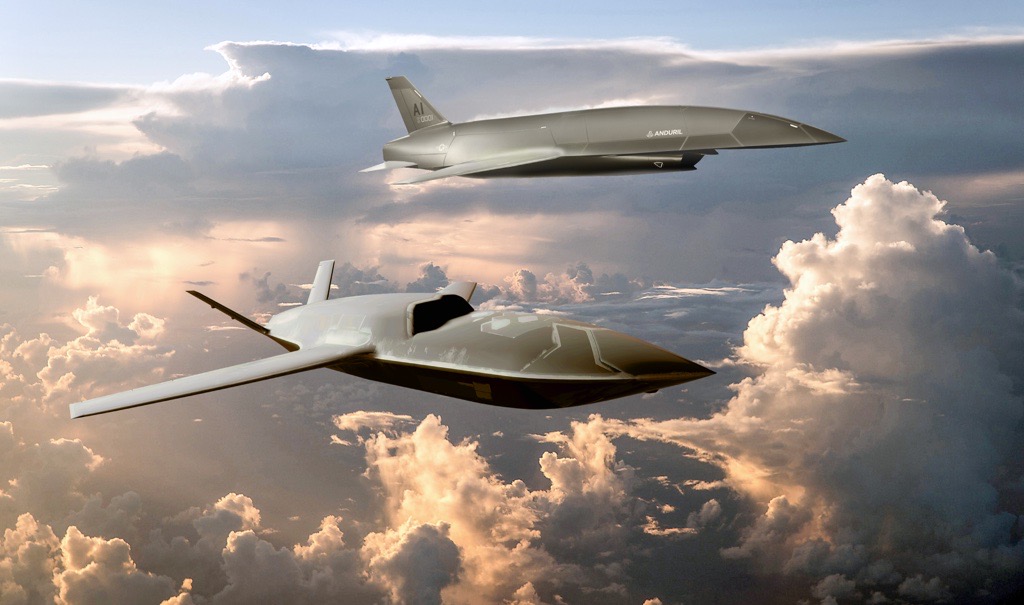
The US Space Force revealed its first batch of fully unmanned combat drones, the “YFQ-42A” and “YFQ-44A,” in March 2025. These aircraft have autonomous flight capabilities and can independently execute missions. The YFQ-44A can fly at an altitude of 15,200 meters at a speed of 1,046 km/h (650 mph).
However, these combat drones do not operate independently but instead work in tandem with manned fighter jets, serving as “Collaborative Combat Aircraft” or “Loyal Wingmen.”
Drones like the Australian MQ-28 “Ghost Bat” and the Chinese “Dark Sword” are also following a similar development path.
Human pilots have already begun competing against AI. In 2023, two F-16 fighters conducted simulated aerial combat exercises in California, with one piloted by a human and the other by AI. The results have not been publicly disclosed by the US military. However, in a flight simulation test in 2020, AI won in all five dogfights.
Experts project that the US Army could deploy cyborg soldiers by 2050. Future soldiers may directly manipulate robots on the battlefield with their minds using brain-machine interfaces or control brain cell activity using optogenetics, a technique combining light and genetic engineering to suppress anxiety responses.
This article references reports from the British science and technology magazine “BBC Science Focus.”