
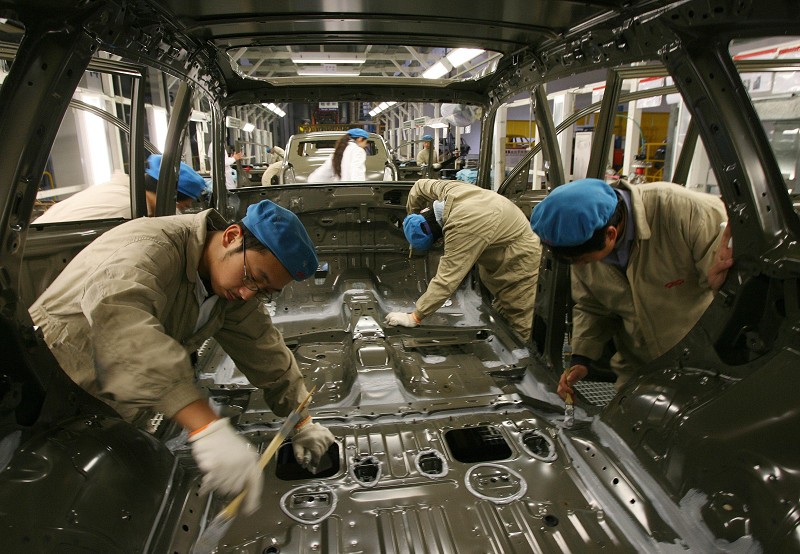
Car light company Xingyu Group in mainland China has sparked a public outcry after terminating contracts with 107 newly-hired fresh graduates. Despite offering apologies and promising increased severance pay in an attempt to control the situation, the incident has garnered international attention beyond national borders.
The Wall Street Journal pointed out that the event highlights the sensitivity of downsizing in a sluggish economy in China. Xingyu recruited a total of 440 fresh graduates this year, with most of them placed in research, technology, and management training positions. However, just over a month after their recruitment, the company forced 107 of them to resign, triggering public backlash.
Reports from the mainland suggested that Xingyu was accused of pressuring employees to “voluntarily” resign or transferring highly educated employees to factory assembly lines. Following widespread condemnation on Chinese social media, the company issued another public apology on Monday (September 7) and announced disciplinary actions against four senior executives, including the dismissal of the HR director.
The company’s hometown government, Changzhou City, has launched an investigation, urging enterprises to learn from this incident. This public scrutiny and criticism, according to the Wall Street Journal, illustrate the Chinese government’s intention to curb economic turmoil amid growing disillusionment among the youth with the current state of affairs.
The incident, as mentioned by Christian Yao, a labor expert at Victoria University of Wellington, reflects the overall situation in the Chinese labor market. With many young graduates struggling to find stable jobs, local authorities fear that massive layoffs will exacerbate people’s anxieties.
Xingyu supplies car lights to companies like Volkswagen. The company had earlier filed for a listing on the Hong Kong Stock Exchange. Multiple terminated fresh graduates have submitted evidence, including recordings, employment notices, and chat records, to regulatory channels in Hong Kong, EU supply chains, and Xingyu’s clients.
Jenny Chan, an associate professor at the Hong Kong Polytechnic University specializing in the Chinese labor market, noted that the widespread attention to this incident is rare. She highlighted that while layoffs are common, organized resistance and public exposure like this have not been encountered before, and the advancement of artificial intelligence is bringing more uncertainty and instability to workers.
While the public outcry and protests have helped the terminated employees receive additional compensation, millions are still struggling without much government assistance. Official statistics indicated that China’s youth unemployment rate rose to 17.9% in July, reaching an 11-month high.
Bloomberg suggested that Xingyu’s layoff incident reflects the harsh price wars in the Chinese auto industry, squeezing component manufacturers and compressing the industry’s profit margins. The layoffs have dealt a heavy blow to these young new employees, stripping them of their formal “fresh graduate” status which could present them with preferential opportunities in applying for positions in state-owned enterprises, civil service exams, and urban household registration quotas.
Volkswagen China announced on September 1 that it is investigating allegations of labor rights violations against its supplier Xingyu. Despite Xingyu’s initial apology and increased severance pay at the end of August to contain the situation, Volkswagen’s investigation has drawn attention back to the allegations against the Chinese company.
In accordance with relevant German supply chain laws, companies are required to ensure that their global supplier network complies with strict human rights and labor standards. Failure to comply may result in fines. Under pressure from investors, Volkswagen decided in 2024 to end its business activities in Xinjiang due to investor concerns about potential human rights violations in the region.