
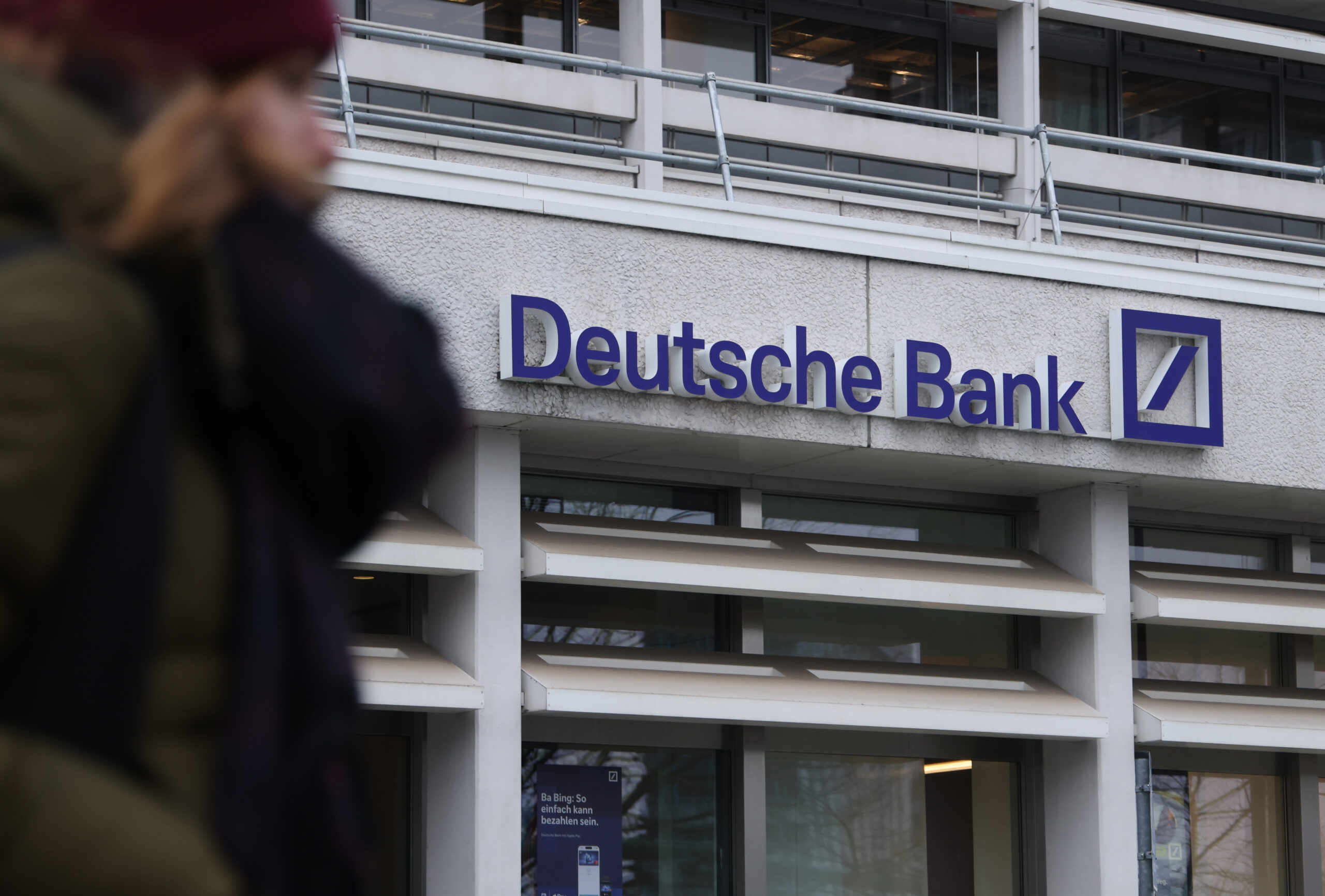
On August 10, the People’s Bank of China authorized Deutsche Bank to act as the renminbi clearing bank in Frankfurt, marking the first time the renminbi has extended its reach to a major European bank on its own soil. Experts believe that the participation of foreign banks will help expand the use of the renminbi, but challenges remain in breaking through institutional bottlenecks such as free convertibility of the currency. Meanwhile, Beijing may seek to use financial ties to Europe to constrain Europe’s “risk mitigation” towards China. As the renminbi moves towards internationalization, it becomes increasingly difficult to avoid the contradictions between financial openness and capital controls.
Deutsche Bank announced on August 10 that it had been authorized by the People’s Bank of China to become the renminbi clearing bank in Frankfurt, serving as a regional hub connecting the Chinese payment system and providing comprehensive clearing and settlement services for cross-border renminbi transactions for European financial institutions and businesses.
Deutsche Bank, an important bank in the German financial system and one of the major multinational banks in Europe, has become the first European domestic bank to receive the qualification, allowing direct access to the Chinese payment system, facilitating European financial institutions and businesses in participating in cross-border renminbi transactions, managing renminbi liquidity, and conducting related investments.
According to officials from Deutsche Bank, European corporate groups will utilize the renminbi clearing function to reduce “exchange rate friction” and facilitate supply chain payments; Chinese companies can also utilize Deutsche Bank for investments in Europe and promote trade flow.
Simultaneously, the deepening financial ties between Deutsche Bank and the Chinese market have raised concerns outside about potential higher economic resistance to Germany and the EU toward their “risk mitigation” policy towards China.
Scholar Wang He, an expert on Chinese issues, analyzed that for the Chinese Communist Party, strengthening cooperation with the German financial sector could lead to German companies and financial institutions forming larger vested interests in China, thereby increasing the cost of Germany and the EU’s “risk mitigation” towards China. Germany finds itself at a “crossroads” seeking a balance between political and economic considerations.
Economically, Wang explained, Germany has significant investments in China, and reliance on the Chinese market has led many large German companies and business communities to become major supporters and promoters of bilateral economic and trade relations between China and Germany. Geopolitically, the Chinese Communist Party’s covert support for Russia during the Russia-Ukraine conflict requires the German government to align with the EU and the U.S. in promoting the “risk mitigation” policy towards China.
Furthermore, for the Chinese Communist Party, Deutsche Bank becoming the renminbi clearing bank in Frankfurt also signifies the further extension of the renminbi overseas clearing network to European domestic financial institutions.
As early as 2014, the “Bank of China Frankfurt Branch” became a critical node in the German renminbi clearing system. Then Bank of China President Chen Siqing described the establishment of the branch as “an important milestone in promoting the internationalization of the renminbi.”
Now, with the renminbi clearing bank qualification expanding to a major German bank on its own soil, it indicates that participants in the overseas renminbi clearing network are beginning to transition from Chinese banks to foreign banks.
In response, U.S. economist David Huang told the Epoch Times that the significance of Deutsche Bank becoming a renminbi clearing bank cannot be overstated nor underestimated. This marks a qualitative change in China’s push for renminbi internationalization, shifting from China actively promoting its currency to foreign banks voluntarily becoming part of the renminbi system. While the impact is currently limited, strategically it holds importance for the Chinese Communist Party.
Since the International Monetary Fund (IMF) formally included the renminbi in the Special Drawing Rights (SDR) currency basket in 2016, China has continuously promoted renminbi internationalization, starting with expanding trade settlements and overseas clearing networks, and gradually encouraging foreign institutions to hold renminbi assets.
Huang stated that the “internationalization of renminbi assets” is the next step China aims towards. Currently, this endeavor remains in the “paving the way” phase: the first phase primarily involves enabling more companies to use the renminbi through trade settlements and clearing networks; the subsequent phase entails foreign central banks, insurance companies, banks, and funds being willing to hold renminbi assets long-term. The former is relatively easier, whereas the latter poses a true challenge.
Deutsche Bank becoming a clearing bank isn’t just about trade services; it’s laying the groundwork for “renminbi asset internationalization.” However, the true strength of an international currency doesn’t lie in who’s willing to “transact” with it but in who’s willing to “hold onto it.”
To truly attract global capital, Beijing first needs to address not merely clearing channels but whether foreign capital can freely enter and exit the renminbi market. For a company, the renminbi can be “used and left”; for a retirement fund holding onto renminbi assets for a decade, the concern is whether they can safely exit after ten years.
Huang candidly stated, “If this can’t be achieved, the renminbi may become a significant trade currency, but it will struggle to become a genuine global reserve and investment currency.”
Wang also pointed out that there are still institutional barriers between China and the international financial system, with offshore renminbi markets and various clearing banks serving as the “few bridges” to cross this vast financial divide. Deutsche Bank becoming the renminbi clearing bank in Germany is akin to constructing another bridge on this immense financial rift, yet the impact on the overall financial landscape remains limited.
The current real concern is that once the bridge is erected, whether the renminbi can truly pass freely through this divide.
Huang believes that for further development of renminbi internationalization, there needs to be more freedom for cross-border capital flow, including free convertibility of the renminbi, increased exchange rate flexibility, and advancing interest rate liberalization, among other reforms. However, these measures simultaneously weaken China’s ability to control exchange rates, interest rates, and capital flows—this is precisely the institutional challenge Beijing faces.
He suggests that the internationalization of the renminbi ultimately poses not just a technical challenge but a systemic choice: how much control over capital, exchange rates, and the financial system is Beijing willing to relinquish to elevate the renminbi’s international standing.