
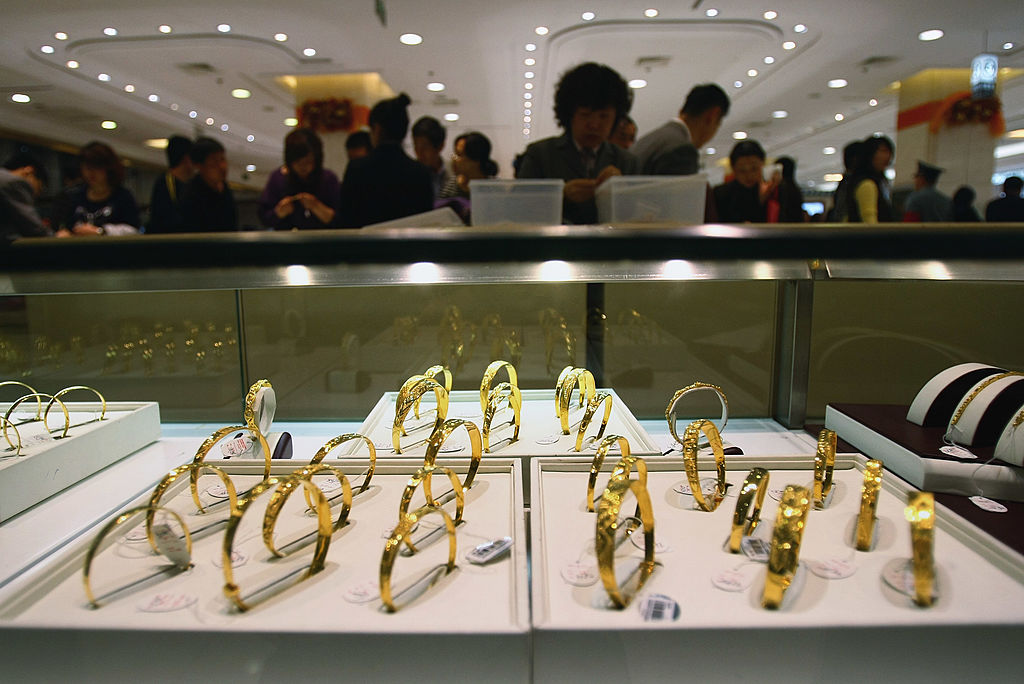
In the first half of this year, the consumption of gold jewelry in Mainland China decreased by 33.88% compared to last year, while the consumption of gold bars and coins increased by 28.42%. The World Gold Council stated that high gold prices and weak consumer confidence continue to suppress the demand for jewelry, making it difficult for the jewelry market to quickly rebound in the short term.
According to a report by “China Newsweek” on August 6, data from the China Gold Association showed that the total gold consumption in Mainland China for the first half of the year was 511.412 tons, representing a 1.23% year-on-year increase.
Among these figures, the consumption of gold jewelry dropped to 132.133 tons, a 33.88% decrease compared to the previous year; while the consumption of gold bars and coins rose to 339.336 tons, marking a 28.42% increase; the industrial and other gold usage amounted to 39.943 tons, a decrease of 2.9%.
During the same period, domestic gold production totaled 152.908 tons, a 14.62% decrease from the previous year; while imported gold production stood at 77.080 tons, showing a 4.62% increase. The total gold production, combining domestic and imported sources, amounted to 229.988 tons, down by 9.01% year-on-year.
After significant fluctuations in international gold prices in the first half of the year, the prices have recently rebounded. According to a report by “21st Century Economic News,” on August 5, spot gold prices surged by over 4%, marking the largest single-day gain since February; on August 6, it temporarily exceeded $4300 per ounce, reaching a nearly seven-week high.
Despite the high gold prices, the demand for gold jewelry in Mainland China remains subdued. Data from the World Gold Council shows that although there was a significant decline in the consumption of gold jewelry in the first half of the year, the total expenditure on gold jewelry reached approximately 141.9 billion RMB, marking the second-highest level in the first half of the year on record, demonstrating a trend of “decreasing quantity but increasing expenditure”.
The World Gold Council attributes the weakening demand for gold jewelry in Mainland China primarily to the high and volatile gold prices, as well as the lack of consumer confidence. Some consumers are turning to lighter-weight gold jewelry or opting to trade in their old pieces for new ones, while investment buyers are showing a preference for gold bars and coins with lower premiums.
Jia Shuchang, the Regional Research Head for the Asia-Pacific region (excluding India) and Deputy General Manager of Industry Expansion for the China region at the World Gold Council, recently told “Financial Times” that the inhibitory effect of high gold prices on gold jewelry consumption may take 3 to 4 quarters to gradually diminish, making it difficult for the jewelry market to quickly recover in the short term.
The Council believes that factors such as low domestic interest rates and a persistently weak real estate market will continue to support the investment demand for gold bars and coins, while the divergence between weak gold jewelry consumption and strong gold investment is likely to persist.
A report released by the World Gold Council on July 14 revealed that the gold withdrawal volume from the Shanghai Gold Exchange in the first half of the year was 598 tons, a 12% decrease compared to the previous year, and 27% lower than the average level of the past decade during the same period. The report noted that while physical gold investment demand remains robust, gold jewelry consumption continues to be weak, leading manufacturers and retailers to be cautious in restocking.