
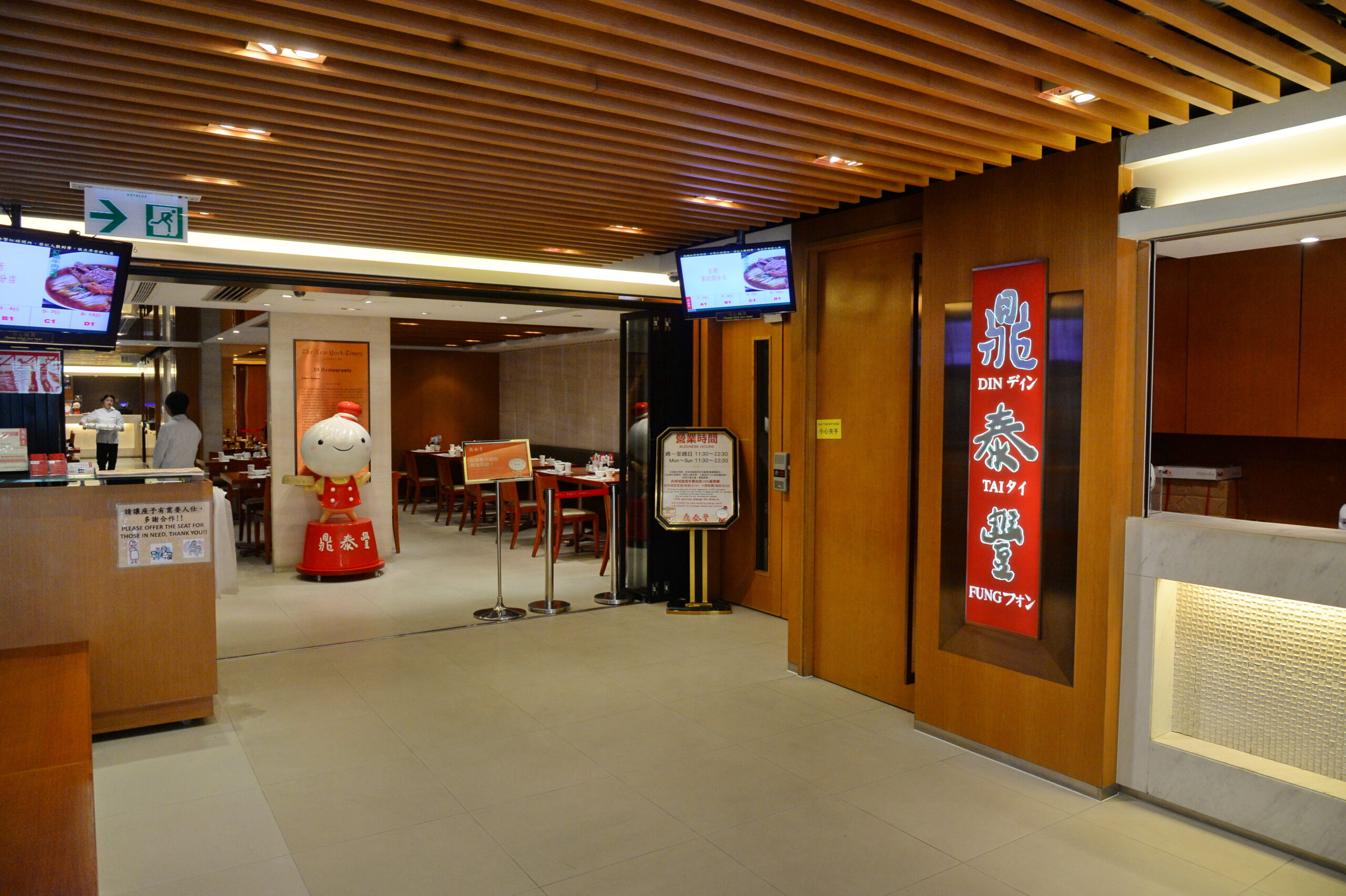
Michelin-starred restaurant Din Tai Fung has closed another branch in Shanghai due to the impact of the shrinking middle to high-end consumer market in China. With the economic downturn and decreasing income, Chinese people are increasingly favoring lower-priced consumer goods, leading to over 2 million restaurant closures in the first half of the year.
Din Tai Fung announced on August 3 that its Din Tai Fung Shanghai Harbor Plaza branch officially ceased operations due to the expiration of the lease contract. Customers were advised to dine at the Xu Jiahui Central store instead.
This closure marks another branch shutting down after the Hangzhou MixC store in April this year. According to Din Tai Fung, they operate 15 stores (including the Shanghai Harbor Plaza branch) in seven cities in mainland China, including Beijing, Shanghai, Guangzhou, Shenzhen, Hangzhou, Suzhou, and Wuxi.
In August 2024, one of Din Tai Fung’s operators, Beijing Heng Tai Fung Catering Co., Ltd., announced the gradual closure of stores in Beijing and other locations due to the expiration of the twenty-year business license and lack of consensus on renewal by the board of directors.
As reported by the “Daily Economic News” on August 4, Din Tai Fung’s stores are typically located in middle to high-end shopping malls. The Harbor Plaza where the Shanghai branch was situated is a well-known upscale mall primarily housing luxury brands, indicating high rental costs. “Under the heavy asset, large store model, sustained losses can drag down the entire company, and closing stores is also a strategic retreat,” said Lin Yue, Chief Consultant of Lingyan Management Consulting.
Currently with an average per capita consumption of around 130 yuan (RMB), Din Tai Fung is considered a mid-to-high-end dining brand. Lin Yue analyzed that Din Tai Fung’s contraction is primarily due to the overall pressure on the middle to high-end dining industry, as mainstream consumer habits have shifted towards price sensitivity.
A report from market monitoring and data analysis company Nielsen on Chinese consumer insights showed that 43% of Chinese respondents stated they would strictly control their overall spending, while 37% said they would change their consumption behaviors to seek the best price/cheaper products. In such a trend, mid-to-high-end dining brands undoubtedly face pressure to align with mass consumer demands.
Currently, Din Tai Fung has shrunk its mainland China stores from over 30 to 14. In stark contrast to the cooling mainland China market, Din Tai Fung has rapidly expanded overseas with over 177 global stores. According to the restaurant market research company Technomic, Din Tai Fung’s U.S. store revenue reached $478 million in 2025, with a year-on-year growth of about 16%, making it one of the most profitable chain dining brands in the U.S.
Alongside Din Tai Fung’s closures in mainland China, many once-famous middle to high-end brands have also shut down in the past two years, such as Shanghai’s “Xiao Nan Guo,” Beijing’s well-known “Shun Feng Restaurant,” Nanjing’s middle to high-end brand “Republic Red Mansion,” and the Michelin three-starred Furama Hotel in Hong Kong closed its mainland branch.
The “2026 China Restaurant Chain Development White Paper” released by the China Chain Operations Association shows that the Chinese restaurant market is experiencing intensified elimination, with a staggering 3.39 million food and beverage merchants closure throughout 2025.
According to research by Chen Zhi Big Data and various industry media, in the first half of 2026, the number of restaurant closures in mainland China reached a high of 2.0552 million.
Nestlé China’s “2026 Chinese Traditional Dining White Paper” indicates that the average price per customer for Chinese dining has substantially dropped to the 2015 level. In the past year, per capita dining consumption has continuously decreased from nearly 40 yuan to 34.7 yuan, with up to 80% of city residents in 45 key cities in China spending less than 50 yuan on dining on average.
A study on “Chinese Consumption in the New Normal” by McKinsey & Company pointed out that Chinese consumers are adjusting their behavior to adapt to a more challenging economic environment. Due to increasing concerns about “job stability and property devaluation,” low-income young groups in first and second-tier cities, and even some affluent elderly individuals in certain towns are becoming more cautious in their spending, placing greater emphasis on factors like actual income.