
Significant Rebound in Asian Stock Markets Driven by Strong Performance of US Tech Giants
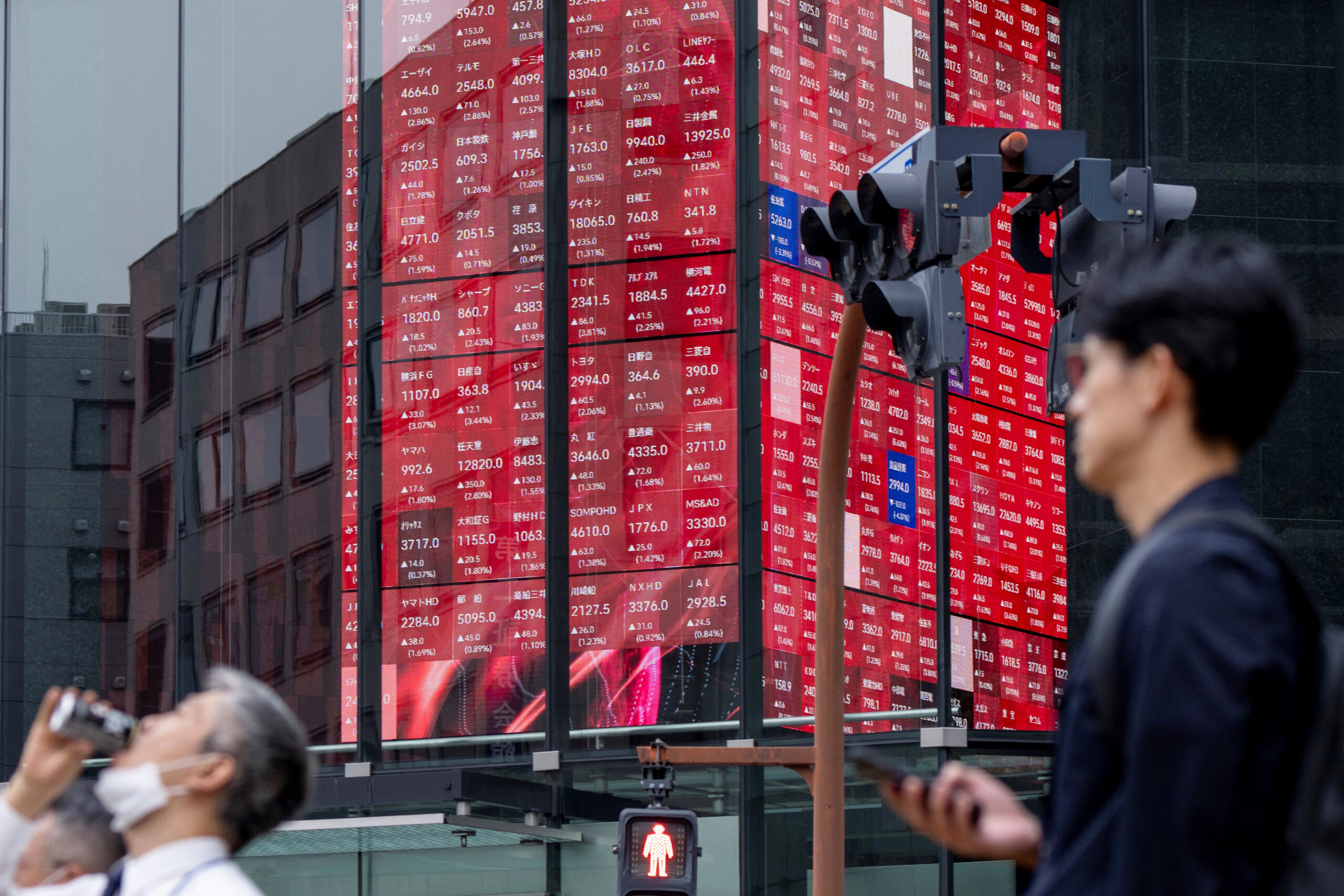
On Friday, July 31st, Asian major stock markets rebounded strongly, with South Korea, Japan, and Taiwan making particularly notable gains, fueled by the impressive performance of US tech giants. The composite index of South Korea surged over 17% at one point, marking the largest single-day increase in history, while the Taiwan Stock Market also soared over 3,200 points. The Japanese stock market also saw an increase of over 4%.
This rebound was primarily driven by artificial intelligence (AI) and chip stocks. Microsoft and Amazon’s cloud businesses performed better than expected, alleviating market concerns about the massive capital spending on AI and its future demand outlook.
The Korea Composite Stock Price Index (KOSPI) surged rapidly after opening, reaching a high of 6,548.64 points during the day, representing an increase of around 17.1% compared to the previous trading day’s closing, setting a new record for the largest single-day intra-day gain in history.
As of 1:23 PM Taipei time, the KOSPI was at 6,500.07 points, up by 906.51 points, an increase of 16.21%. If the upward trend continues until the closing, it will also set a new record for the largest single-day closing gain in history.
The Taiwan stock market also demonstrated strong performance. The Taiwan Weighted Index was at 43,145.93 points, up by 3,212.63 points, a rise of 8.04%. The electronic index increased by 230 points, and the financial index rose by 156.72 points.
The Nikkei Index in Japan stood at 64,516.20 points, up by 2,648.77 points, representing a 4.28% increase.
In comparison, the performance of the stock markets in China and Hong Kong remained flat. The Hang Seng Index in Hong Kong was at 25,811.06 points, down by 47.82 points, while the Shanghai Composite Index was at 3,836.18 points, up by 31.49 points.
The turning point in market sentiment came from the impressive performance reported by Microsoft and Amazon.
Microsoft’s Azure cloud business grew faster than expected, and Amazon’s second-quarter revenue also surpassed analysts’ expectations, largely driven by the continued strong performance of their cloud computing business. These results alleviated investors’ concerns about whether the significant capital spending on AI can be translated into real income and productivity.
Asian chip stocks subsequently rebounded significantly. South Korea’s chip giant SK Hynix surged by over 25% during the trading session, potentially achieving the company’s best single-day performance on record; while Samsung Electronics also rose by over 20%.
IG market analyst Fabien Yip stated, “The demand for AI has not actually slowed down, it seems to still be sustainable. Therefore, the sell-offs we see may be an overreaction to concerns about capital spending.”
In addition to the rebound of US tech stocks, interventions by Japanese and Korean authorities to stabilize the currency markets also supported the recovery of Asian stock markets. For foreign investors holding Asian stocks, if local currencies continue to depreciate, stock gains might be offset by exchange losses, leading to capital outflows. Stabilizing exchange rates could help reduce the selling pressure from foreign funds.
There were speculations that the Japanese authorities intervened in the foreign exchange market during the New York trading session on Thursday, leading to a significant increase of 2.4% in the Japanese yen. Similarly, the South Korean foreign exchange authorities also sold US dollars on the same day to curb the depreciation of the Korean won.
According to the Nikkei Economic Daily, US authorities also conducted so-called “rate checks,” indicating that Japan, the US, and South Korea may take coordinated actions. These measures eased concerns in the market about the prolonged depreciation of the yen and won, as well as further withdrawals of foreign funds from Asian markets.
After the Bank of Japan (BOJ) maintained the interest rate on Friday, the Japanese yen temporarily weakened, retracing some of the gains believed to be the result of intervention. However, the joint efforts of multiple countries to stabilize exchange rates have sent a signal of stability to the market.
Despite the strong rebound on Friday, some analysts cautioned that the market may not have fully returned to stability yet. Foreign buying, short covering, and leveraged ETF mechanical rebalancing could further amplify the rise of South Korean stocks, indicating that the market structure remains fragile under high leverage and intense capital flows. Even with a significant rebound, the Korea Composite Stock Price Index may still accumulate a nearly 25% decline in July, setting the largest monthly drop since 1997.
Paul Gambles, co-founder of the MBMG Family Office Group, commented, “I think we will see more of these days. Asset prices have completely disconnected from fundamentals. This suggests there is a lot of leverage in the market.”
He cautioned that Friday’s rebound may be just a one-day relief rally or could last a bit longer, but investors should not see it as evidence that the risks related to the AI hype have disappeared.