
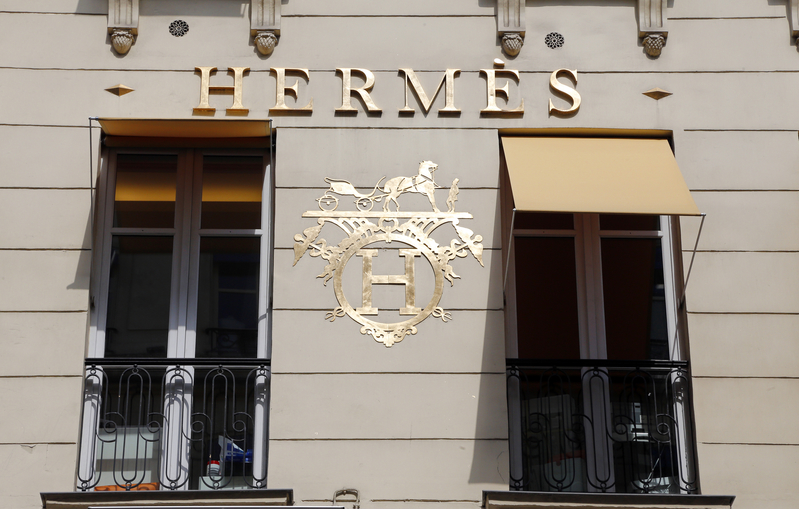
Luxury giant Hermès released its second-quarter financial report on July 29. The Executive Chairman, Axel Dumas, mentioned that he evaluates the Chinese luxury goods consumption market by observing the price of pork in China. With pork prices hitting a near 10-year low, the Chinese economy and consumer confidence remain weak.
According to Bloomberg’s report on July 29, Hermès’ overall performance in the second quarter met market expectations. Dumas stated during the financial briefing that the Chinese market has not yet emerged from its difficulties. Apart from monitoring the local real estate market, when assessing sales in the Chinese consumer market, he looks at an unusual indicator – pork prices.
Dumas explained, “In China, pork is commonly served at banquets and restaurants, so pork prices serve as a good indicator of celebratory activities.” “A rise in pork prices may reflect a warming of optimism,” he added.
Compared to other competitors, Hermès has a higher reliance on the Chinese market. As of the end of June, the Greater China region accounted for about 43% of the company’s revenue, while during the same period, LVMH Group’s revenue from the Asian market (excluding Japan) was 29%.
However, Chinese pork prices have hit a near 10-year low, dragging down the performances of listed pig enterprises in China. 20 A-share listed pig breeding companies, primarily engaged in pig farming, recently released earnings forecasts for the first half of the year, all expecting a net loss attributable to shareholders of the listed companies. The total loss is expected to reach as high as 18.338 billion yuan. The vast majority of these companies have shifted from profit to loss compared to the same period in 2025 when they collectively made nearly 14 billion yuan in profits.
According to commodity information platform Zhuo Chuang Information, the average self-bred and self-raised pig incurred a loss of 221.33 yuan/head in the first half of the year. Since mid-September 2025, pig farming has been in a loss-making state. By mid-July 2026, the self-bred and self-raised pigs had been in a loss cycle for 10 months.
In terms of feed costs, the average theoretical feed cost per pig in the first half of 2026 was 883.91 yuan. Currently, the price of pig feed remains far below the breakeven point. Monitoring data from Beijing showed that from June 29 to July 5, the price ratio of pig feed in Beijing was 4.22:1. Data from Hubei Province on July 16 showed a pig feed price ratio of 4.37:1.
The pig feed price ratio is used to measure the profit of pig farming and predict market changes. Usually, a ratio of 5.5:1 represents a breakeven point. If the ratio is too low, it indicates losses for pig farming enterprises.
On July 28, Zhu Zengyong, a researcher at the Institute of Animal Husbandry and Veterinary Medicine of the Chinese Academy of Agricultural Sciences, told local media that oversupply and weak demand have caused continuous declines in pig prices, resulting in deep losses for the industry. Currently, there has been no substantial improvement in consumer demand, and the industry’s oversupply situation remains unchanged.