
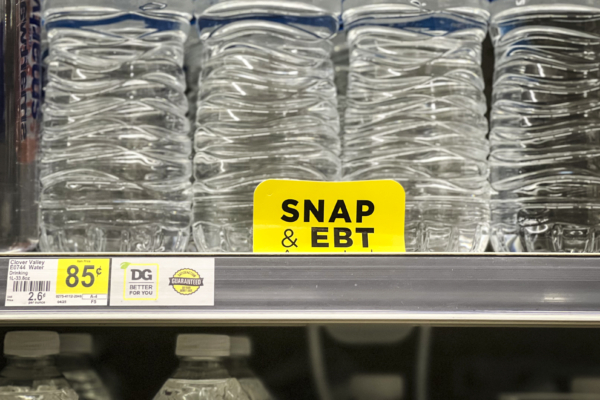
According to the “One Big Beautiful Bill”, if states do not control the error rate, dozens of states will have to self-fund the Supplemental Nutrition Assistance Program (SNAP) welfare. The bill stipulates that if states cannot control the error rate, by the fiscal year of 2028, they will lose part of the federal funding for the food stamp program. The law requires states to keep their error rates below 6%, otherwise, the funding for food stamps will be borne by the state government.
The error rate refers to the percentage of SNAP benefits that are either overpaid or underpaid due to human error. It includes both overpayments and underpayments, with overpayments being more common. States with error rates exceeding 6% will be required to cover 5% to 15% of the welfare costs starting from October 2027. States with higher error rates typically need to pay more, but states with exceptionally high error rates will be granted extensions, with the latest deadline being 2030.
The latest data from June revealed that 41 states have not yet met the requirements set by the bill. In the fiscal year of 2025, only nine states had an error rate below 6%: Idaho, Iowa, Kentucky, Nebraska, South Dakota, Utah, Vermont, Wisconsin, and Wyoming. The majority of states have exceeded the target, with some significantly surpassing it. Due to the limited time left for adjustment, federal law allows states to use error rates from 2025 or 2026 when calculating SNAP benefit payments in October 2027.
In states with higher error rates, the law does not directly cut SNAP benefits for recipients but rather mandates states to raise funds on their own. As a result of this cost shift, the Congressional Budget Office estimates that some states may ultimately reduce or eliminate SNAP benefits for around 300,000 people.
Take Missouri as an example, where the error rate was as high as 8.7% last year. Unless the situation improves next year, Missouri will have to cover 10% of SNAP benefits starting from October 2027.
According to the latest data from the federal government, Missouri residents received approximately $1.5 billion in SNAP benefits in 2024. If a similar amount of benefits continues to be dispersed in the future, Missouri might need to bear $150 million in costs. This amount even exceeds the total budget of several state prisons.
Chloe Green, the Policy Assistant Director of the American Public Human Services Association, stated that “If states want to continue operating the SNAP program, they must find funding to cover billions of dollars in costs.”
States with very high error rates such as Alaska, Delaware, Georgia, Illinois, New Mexico, Oregon, and the District of Columbia are granted at least one more year to reduce their error rates.
Preliminary data from the US Department of Agriculture showed that over 37 million people in the United States received SNAP benefits in March. This number decreased by nearly 5 million people compared to the same period last year, a reduction of over 11%.
In addition, other provisions of the “One Big Beautiful Bill” have already impacted SNAP, such as expanding work requirements and tightening immigrant status restrictions. BenefitsUSA stated that due to increased work requirements for food stamp recipients and the removal of certain exemptions, at least 3.5 million people lost their benefits as of February this year.
Earlier this month, US Secretary of Agriculture Brooke Rollins revealed that there is an alarming amount of fraud in the SNAP program across states, with the Department of Agriculture alone reclaiming nearly $10 billion in funds.