
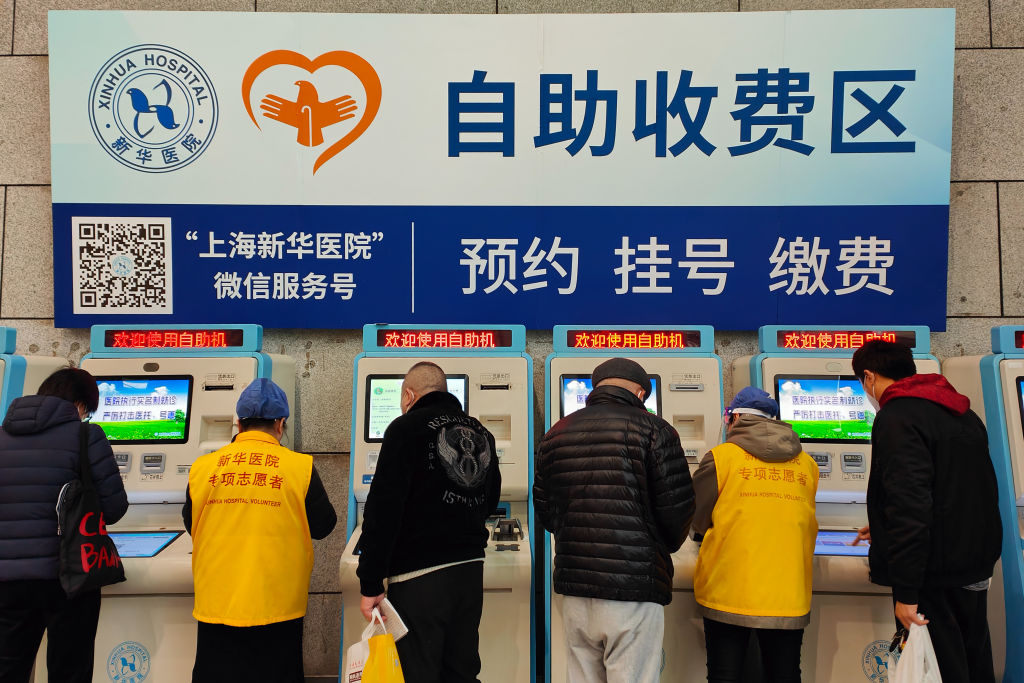
On March 24, 2025, at Xinhua Hospital affiliated with the Shanghai Jiao Tong University School of Medicine, Chinese doctors and scientists used gene editing technology for the first time to treat a 6-year-old girl with abnormal brain development.
They injected trillions of viruses into her cerebrospinal fluid, these viruses carried instructions to assemble a customized gene repair system called an “adenine base editor” to fix the defective genes in her brain cells.
Seven days later, the little girl passed away.
“Mom, I want to go home.” After saying these words, the child, known as “Xiaomei,” was pushed into the ICU ward and never came out.
On July 23, 2026, the international top academic journal “Science” together with the academic supervision website “Retraction Watch” released two in-depth investigations, uncovering the incident of a 6-year-old Chinese girl who died due to gene editing therapy, which had been concealed.
The report quickly shocked the global scientific community. Several foreign gene therapy experts and bioethicists who reviewed the case questioned whether the Chinese doctors adequately informed the girl’s parents of the risks of the treatment.
According to the joint investigation, “Xiaomei” was the first known person globally to undergo brain gene editing therapy and was the sole subject of this clinical trial.
The hospital received $860,000 (approximately 5.82 million RMB) from the girl’s family as part of the funding for the therapy research.
Here is a compilation of the events based on the report published by the journal “Science”:
Two years ago, Xiaomei’s parents noticed that at the age of 4, Xiaomei was slower in language, writing, and drawing skills compared to children of the same age, and also showed some behavioral traits suggestive of autism. Following examinations, Xiaomei was diagnosed with a rare neurological developmental disorder known as Snijders Blok-Campeau syndrome.
After Xiaomei’s diagnosis, her parents joined a WeChat group for parents of children with autism and similar diseases. In the group, parents shared information about experimental therapies being conducted domestically and internationally.
In July 2023, a parent shared a lecture by Qiu Zilong in the group. Xiaomei’s parents learned that Qiu Zilong had been researching autism for a long time and actively promoting related gene therapies.
Therefore, Xiaomei’s father sent an email to Qiu Zilong, attaching his daughter’s medical records. In the email, he indicated that he understood the complexity and cost of developing gene therapy but was willing and able to bear the expenses.
“Watching our child suffer every day is the most painful agony for us as parents.” He attached Xiaomei’s genetic test results and sent the email.
Thirteen minutes later, Qiu Zilong replied to the email and invited him for a face-to-face meeting at the research institute.
During their first meeting, they hit it off immediately: Xiaomei’s parents mentioned that they did not just want to fund an academic study but genuinely wanted to treat their daughter, while Qiu Zilong stated that adenine base editing technology was nearing a “critical point,” and the team was ready to push it towards clinical application.
Due to the complexity of the technical information, Xiaomei’s parents recorded many conversations with Qiu Zilong and other personnel related to the experiment. They shared these recordings with the magazine “Science” and the Retraction Watch website.
Qiu Zilong explained that editing the brain required injecting the virus into Xiaomei’s spinal fluid at the base of her spine. He added that as Xiaomei’s condition was not life-threatening, obtaining approval from the hospital’s ethics committee would be challenging. Developing this therapy and conducting tests on mice and monkeys would take up to two years, and the efficacy could not be guaranteed. However, in one recording, Qiu Zilong mentioned that reputable institutions like Xinhua Hospital could ensure no safety incidents would occur.
Xiaomei’s parents had heard about other gene therapies leading to severe side effects, even death, and were aware of the biggest risk being Xiaomei’s immune response to the high viral doses.
In response, Qiu Zilong emphasized the importance of dosage control and explained that directly injecting the virus into Xiaomei’s spinal fluid instead of her bloodstream could bypass the kidneys and liver, thus minimizing the risk of adverse reactions.
This reassured Xiaomei’s parents. “For me, the psychological cost of doing this is very high,” Xiaomei’s mother told Qiu Zilong. “But I am willing to try because you are very trustworthy.”
Soon after, as Xiaomei’s parents sent the first payment and started designing the adenine base editor, preparing AAV virus vectors, and the company responsible for conducting the experiments on monkeys received the funding, the project began to move forward.
According to text message records shared by Xiaomei’s parents, Qiu Zilong requested the couple to directly pay other members of the research team through informal arrangements, which made them increasingly uneasy.
Every few months, Xiaomei’s father would visit Qiu Zilong’s office, nearby restaurants, or his home hours away. Family records showed that each time Xiaomei’s father footed the bill and had gifted several iPhones, an iPad, and a box of Maotai liquor.
In April 2024, Xiaomei’s father continued negotiating the costs with Yang Kan, the researcher responsible for the specific experiments and a student of Qiu Zilong. Yang Kan explained to him why the project had cost more than initially discussed, to which Xiaomei’s father in a recording said, “I feel a bit pressured.”
The two haggled over the price. Eventually, he wired around $130,000 (about 900,000 RMB) to Yang Kan’s personal account in multiple installments.
Xiaomei’s father mentioned that Qiu Zilong himself did not ask for money but that he visited him every few months at his office, restaurant, or home, where he would pay and give away multiple iPhones, an iPad, and a box of Maotai liquor.
According to the investigation by “Science,” Xiaomei’s family ended up paying $860,000 for the project, mainly from the couple’s savings and loans from friends and family.
After Xiaomei’s death, Yang Kan returned the mentioned $130,000.
According to documents from the Yangpu District Health Committee in Shanghai, the hospital’s ethics committee approved the clinical trial on January 2, 2025, before the publication of the monkey toxicology report (released on February 17). This meant that the institution did not review the monkey toxicology report at all. Neither were any of the researchers or doctors informed the girl’s parents in advance about the potential risk of death in this treatment.
Three days after the surgery, Xiaomei started running a fever, a common reaction post AAV virus injection, expected to last a few days. Qiu Zilong visited when her fever subsided. He assured Xiaomei’s parents that their daughter’s condition would soon improve.
As they escorted him to the elevator, Qiu Zilong excitedly announced that the paper submitted to “Nature” had been accepted after revisions. He then added that Xiaomei’s treatment would cause a bigger stir: it would be the first case of gene editing therapy directed at the brain.
Xiaomei’s condition did not improve. Due to her lack of urine output after fluid administration – indicating severe kidney damage – doctors restricted her fluid intake, leaving her extremely thirsty. Her platelet count dropped to dangerous levels, aligning with a series of symptoms warned of in the informed consent form.
Xiaomei’s parents mentioned that the informed consent form did not clearly indicate that these symptoms could lead to death, and no one, including Qiu Zilong or other doctors, mentioned this in any conversations.
Doctors conducted a full-body CT scan on Xiaomei and swiftly moved her to the intensive care unit. The expression of strength on the child’s face began to crumble. “Mom, I want to go home.” After saying this, she disappeared into the ward.
Over the next 24 hours, Xiaomei’s parents and grandparents were seated in the waiting room. Upon hearing about Xiaomei’s condition, Qiu Zilong rushed back, seemingly unable to accept the reality.
The next morning, he was still with Xiaomei’s family. At that moment, a doctor came out and informed them that Xiaomei had passed away. This news shocked Qiu Zilong.
Two days later, the hospital’s ethics committee held an emergency meeting and concluded from the report that Xiaomei’s death was “definitely” related to the treatment. The cause of death was thrombotic microangiopathy.
For the following weeks, Qiu Zilong expressed condolences to the family but was unwilling to speculate on what went wrong. Xiaomei’s parents mentioned that they had requested Qiu Zilong to retract the paper published in “Nature” because they were concerned it might mislead other families with similar cases and researchers.
Initially, Qiu Zilong agreed. However, he stopped responding to the parents’ inquiries eventually. Yang Kan, who was involved in the research, returned all his earnings.
In September 2025, the district health department fined the hospital approximately $3,600 for inadequate monitoring of the trial and failure to register it as a commercially sponsored study in the national database. Xiaomei’s family claimed that Qiu Zilong was listed in the report as the responsible doctor and the hospital requested him to undergo a verbal review.
Despite Qiu Zilong’s company being insured for the trial, Xiaomei’s family stated they did not receive any compensation. They mentioned that they did not seek compensation either; instead, they blamed themselves for not asking more questions and fully trusting the so-called authorities.
After Qiu Zilong’s paper was published in “Nature,” some families in the WeChat group began discussing contacting Qiu Zilong to inquire about their children’s conditions.
Upon seeing this, Xiaomei’s parents decided they could no longer stay silent. They submitted a complaint to the dean of the School of Medicine at Shanghai Jiao Tong University, where Qiu Zilong was based, requesting an investigation into the paper published in “Nature” and its retraction, “to prevent more children from suffering and to spare our tears from being shed in vain.”
On April 30, Xiaomei’s parents received an email response from the university, followed by a phone call: the dean’s office would take no action against Qiu Zilong.
The school also stated that the payments to Yang Kan were “research service fees” for the clinical trial and that the paper published in “Nature” had “no connection to the experiment you funded.”
In June, on Xiaomei’s birthday, her mother, in an emotional interview via Zoom video call in front of bare white walls, broke down several times, turning away from the camera.
On that day, she mustered the courage to return to the old apartment where the three of them lived, sat on Xiaomei’s bed surrounded by her belongings. She had bought a chocolate cupcake on the way and now sat eating, picturing her daughter still by her side.
“I can’t cry every day, but that day, I thought I could cry alone in the room,” she said.