
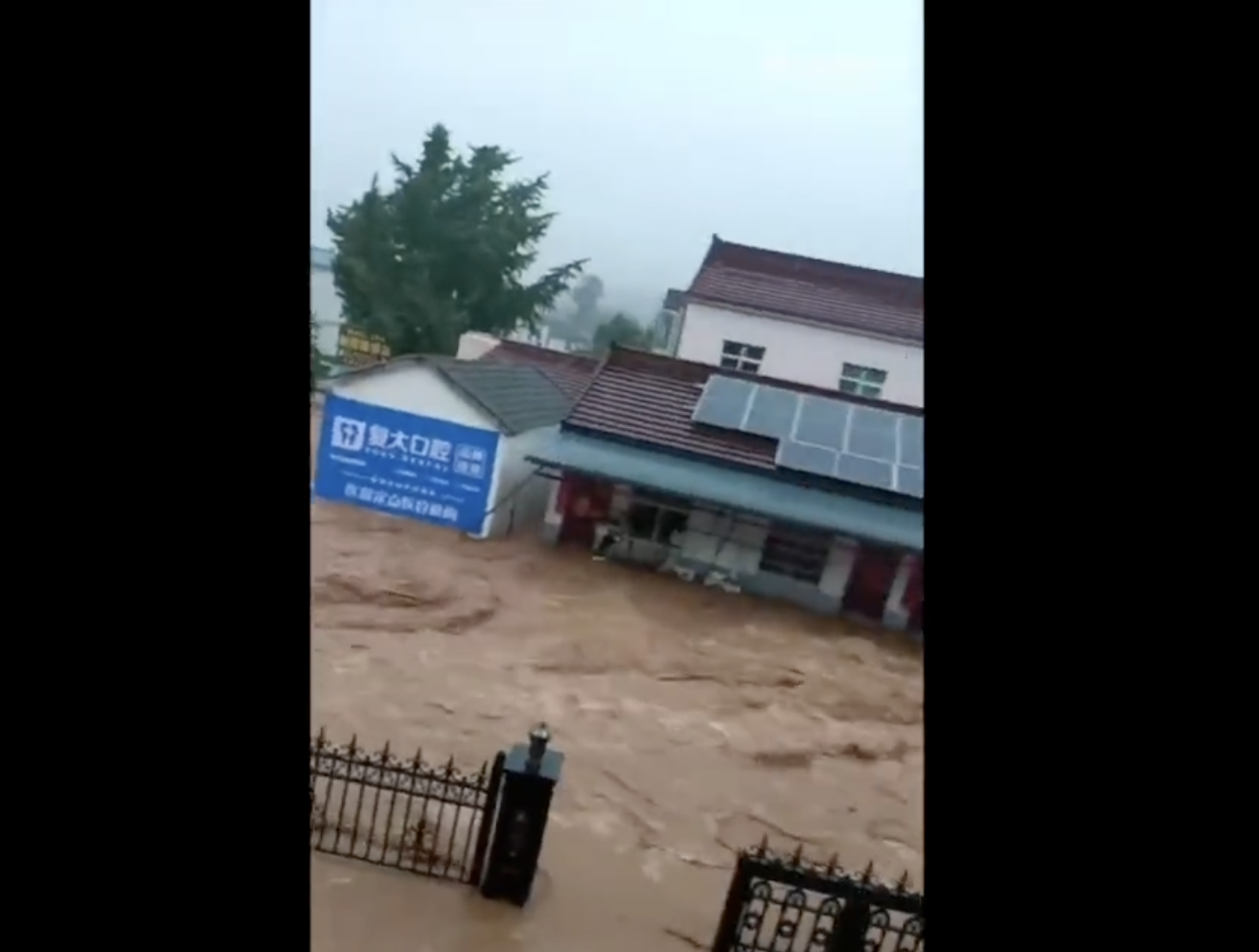
In mid-August, top officials of the Chinese Communist Party (CCP) are still hiding in Beidaihe for vacation. Due to the remnants of Typhoon “White Dolphin,” on August 14th, multiple regions in Zhejiang and Jiangsu provinces in China experienced rainfall exceeding historical records. In Henan, multiple reservoirs continued to discharge floodwaters due to heavy rain, leading to a breach in the Jialu River embankment. The floods wreaked havoc, causing severe damage to people’s livelihoods, with some victims exclaiming, “Where is the government?”
On August 14th, Wuxi, Jiangsu once again encountered heavy rainfall, with many areas experiencing torrential downpours. Yixing, in particular, saw rainfall surpassing historical records, triggering flash floods that submerged roads and villages. Several tunnels in Wuxi were severely flooded, with vehicles trapped inside.
Video footage from the scene showed the Gao Lang Tunnel inundated, with vehicles stuck inside. The recorder of the video said, “It’s all flooded, all vehicles are turning around where they are, those who haven’t come shouldn’t come.”
Public information indicates that the Gao Lang Tunnel is part of the Wuxi Gao Lang Road rapid transformation project. Another video depicted the Hui Shan Tunnel in Wuxi already flooded, with vehicles and people trapped inside. Officials urged people to abandon their vehicles and wade through the water, shouting, “Leave the vehicles, get out quickly, the rain is getting heavier, hurry up and get out.”
Local media reports stated that starting from the early hours of August 14th, Yixing, under the administration of Wuxi, experienced intense rainfall. By 6 pm, the water level had visibly decreased compared to the peak of the flash flood in the morning. However, half an hour later, the roads were submerged again by a new round of heavy rain. Within an hour, neighboring roads were also inundated with floodwater, heaps of debris including broken woods, sands, and rocks were washed down onto the road.
Residents mentioned that floodwaters rose to the second floor in areas like Shaodong Village in Luxi Town, with severe water ingress in low-lying houses, some vehicles directly swept away, some vehicles floating in the water.
Water supply facilities in Shaodong Town were flooded, leading to water stoppage in some villages. Emergency closures were imposed on scenic areas like Yao Hu Town and Yixing Bamboo Sea. Public transportation services were suspended.
Local netizens commented, “The rain in Wuxi is really frightening” and “This amount of rainfall surpasses the entire year’s total.” The heavy rain caused severe urban flooding in Wuxi, with deep waters reaching waist-high in the main roads of the old city area and flooding in underground tunnels and parking lots, causing vehicles to stall.
A video showed a woman in Jiangsu trapped by fast-flowing floodwater, despairingly shouting, “Where is the government, where are the officials responsible for flood control?”
On August 14th, multiple areas in Huzhou, Zhejiang experienced exceptionally heavy downpours within a short period, surpassing the hourly rainfall record since the “7・20” rainstorm in Zhengzhou in 2021. The urban areas faced severe urban flooding with streets submerged.
In the evening and night of the same day, Nanxun and surrounding areas in Huzhou were struck by extremely heavy rain, with localized maximum hourly rainfall exceeding 161 millimeters and a red alert issued for torrential rain.
According to videos shared by netizens in Zhejiang Nanxun, streets were filled with floodwaters, as people waded through, and water entered shops alongside the street. In one video, a female student mentioned hearing about two deaths due to electric shock, cautioning her companions to be careful and to turn off the power in the shops.
On August 14th, Changxing, Anji, and Haiyan in Zhejiang simultaneously issued the highest level of red alert for heavy rain. Huzhou witnessed a sudden mudslide, resulting in an official report of one death and three missing individuals.
Videos posted by netizens showed collapsed houses and numerous vehicles swept away by the flood in the affected areas.
According to the weather information in Zhejiang, from 12 pm to 3 pm that day, Huzhou, Jiaxing, northwestern Hangzhou, northern Ningbo, southern Jinhua, and other areas witnessed intermittent showers or thunderstorms, accompanied by localized heavy rainfall. The highest recorded accumulated rainfall was 167 millimeters in Huizhou Village, Changxing County, Huzhou, with a maximum hourly rainfall of 110.8 millimeters, while in some areas, the 6-hour rainfall exceeded 300 millimeters, marking the strongest rainfall event since 1971.
Due to sudden heavy rainfall, large areas in Changxing Waterkou Township of Huzhou were submerged, with water levels reaching 1.6 meters and extensive flooding on multiple road sections.
Henan was also hit by heavy rain due to the influence of Typhoon “White Dolphin.” Many reservoirs continued to discharge floodwaters, resulting in the breach of the Jialu River embankment, causing a state of emergency in Zhoukou since August 13th. The authorities failed to issue flood warnings before discharging water from reservoirs, leading to severe losses for the local residents.
The Shahe, Yinghe, and Jialu Rivers converge in Chuanhui District of Zhoukou City in Henan. The “Big and Small Iron Bulls,” landmarks standing at the confluence of the three rivers, are regarded as symbols of the area. According to folklore, the “Small Iron Bull” is a treasure for protecting the river, with the proverb “If the Iron Bull remains dry, Zhoukou will be safe” passed down for a century.
Due to the discharge from upstream reservoirs, the “Small Iron Bull” was submerged since August 13th, leading to the breach of the Jialu River embankment in the Chuanhui District, prompting a state of emergency in Zhoukou. Some streets in the urban area were already flooded, and people stood guard along the riverbanks, working overnight to reinforce flood defenses.
On the evening of August 13th, a section of the embankment on the east bank of the Jialu River in Chuanhui District, Zhoukou City, collapsed, creating a gap of around 30 meters. The floodwaters poured into the urban area, flooding the Fifth People’s Hospital of Zhoukou and a driving school. The Zhoukou Vocational and Technical College also experienced flooding, but there was no mention of these incidents in official CCP media reports. Official notifications mentioned the relocation of 781 people, claiming no casualties.
Online videos depicted a wide breach in the riverbank with caution tape set up around the gap.
Earlier, on the night of August 12th, a section of a riverbank in Ji County, Pingdingshan, Henan, suddenly collapsed, with a gap over forty meters wide. Floodwaters rushed into villages and farmland, prompting over 2,000 local residents to evacuate in the dark.
Additionally, all twelve gates of the Mahai Floodgate in Wuyang County, Luohe City, were fully opened on August 13th to protect the upstream and downstream areas of Xuchang City and Zhoukou City. The “Nihezuo Flood Storage Area” was initiated at 2 am, submerging 160,000 mu of arable land in towns like Lianhua and Beiwudu, leading to the submergence of all the autumn harvest corn and causing significant distress for farmers.
On August 13th, floodwaters surged in Wangping Township, Ruyang County, Luoyang, Henan, inundating bridges and riverbank structures while flooding the town’s roads. The Fudian Street area faced even more dangerous conditions, with several local residents being asked to delete flood-related videos they shared.
Changcun Township in Yexian County, Henan, received over 500 millimeters of rainfall over three days from August 11th to 13th. The water level in the Shimen Reservoir rose sharply, causing the overflow canal to release water and flood the tourist road.
Videos online revealed a road near a fish farm flooded but not completely closed off, leading many people to venture into the water to catch fish using bamboo poles and fishing nets to intercept fish swept away from the farm. Electrical facilities like transformers near the flooded road were also visible.
It is worth noting that in the consecutive flood incidents, CCP officials claimed no casualties, but some casualty figures raised suspicions. Many Chinese internet users revealed the severe censorship by authorities on flood-related videos and information, making it difficult for outsiders to grasp the true extent of the disasters. Furthermore, since August, no Politburo Standing Committee members or high-ranking officials have visited the disaster areas, signaling that the seven Standing Committee members of the CCP are still hiding in Beidaihe.