
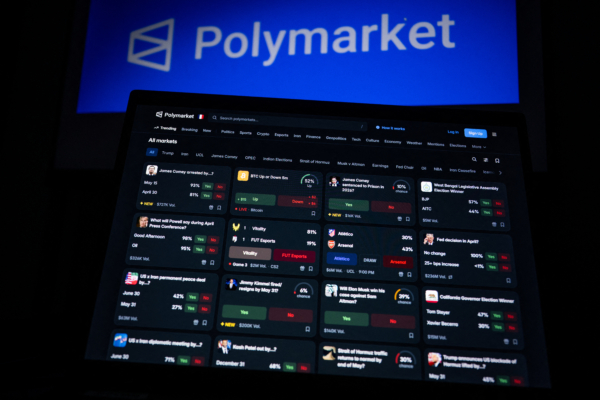
Prediction market platforms have been surging in popularity in recent years, but their controversial marketing tactics have caught the attention of government regulators. Julie Menin, the Speaker of the New York City Council, announced on August 12 that the council has launched a comprehensive investigation into the marketing strategies of several mainstream prediction market platforms to protect consumers from fraudulent and exploitative advertising.
The City Council has sent formal letters to four platforms including Polymarket, Kalshi, Coinbase, and Gemini Titan. Menin stated in a press release that the council has been investigating the “false, deceptive, and improper” marketing practices of these platforms for the past few months.
“Prediction markets actively encourage consumers to place bets and gamble on sports, politics, culture, weather, and almost anything,” said Menin. “I intend to utilize all the power of the City Council to protect New York City residents from the damages of these platforms’ deceptive marketing.”
One of the triggers for this investigation came from a report by The Wall Street Journal in June of this year. The report revealed that Polymarket created the illusion in marketing campaigns that content creators (influencers) were “profiting repeatedly” on the platform, when in reality these creators had not actually made any bets. This report subsequently triggered a regulatory investigation by the U.S. Commodity Futures Trading Commission (CFTC).
According to CNBC, Polymarket has taken steps to improve its marketing strategies. The New York City Council is further investigating whether other platforms have also used similar deceptive advertising methods and plans to hold hearings to assess the need for targeted new legislation.
It is worth noting that the City Council specifically stated that this investigation focuses solely on “marketing and advertising practices” and does not involve whether these platforms are in violation of New York state gambling laws. Currently, the New York State government is suing Kalshi, Coinbase, and Gemini Titan, accusing them of operating illegal gambling activities, but Polymarket has not been sued.
In response to the City Council’s investigation, both Polymarket and Kalshi have expressed their willingness to communicate with the council and explain their business models; Coinbase has emphasized that its prediction market is subject to federal regulation by the CFTC and is fully compliant.
Prediction market platforms are financial/trading platforms that allow users to bet on the outcomes of future real-world events by purchasing “event contracts.”
The platform poses questions about specific events, such as whether a candidate will win an election or if it will rain in New York tomorrow.
Prices on the platform represent probabilities. Contract prices typically fluctuate between 0 and 1 dollar (e.g., 0.60 dollars indicating a 60% probability). If the event occurs, holders of the winning contract can receive 1 dollar per share; otherwise, it goes to zero.
Supporters argue that prediction markets, by utilizing crowd wisdom and real money betting, can more accurately predict the future than traditional polls or weather forecasts. However, opponents and regulatory agencies question whether these platforms essentially turn politics, news, and daily events into financial products in an “online casino” fashion, which can easily lead to market manipulation and deceptive marketing issues.