
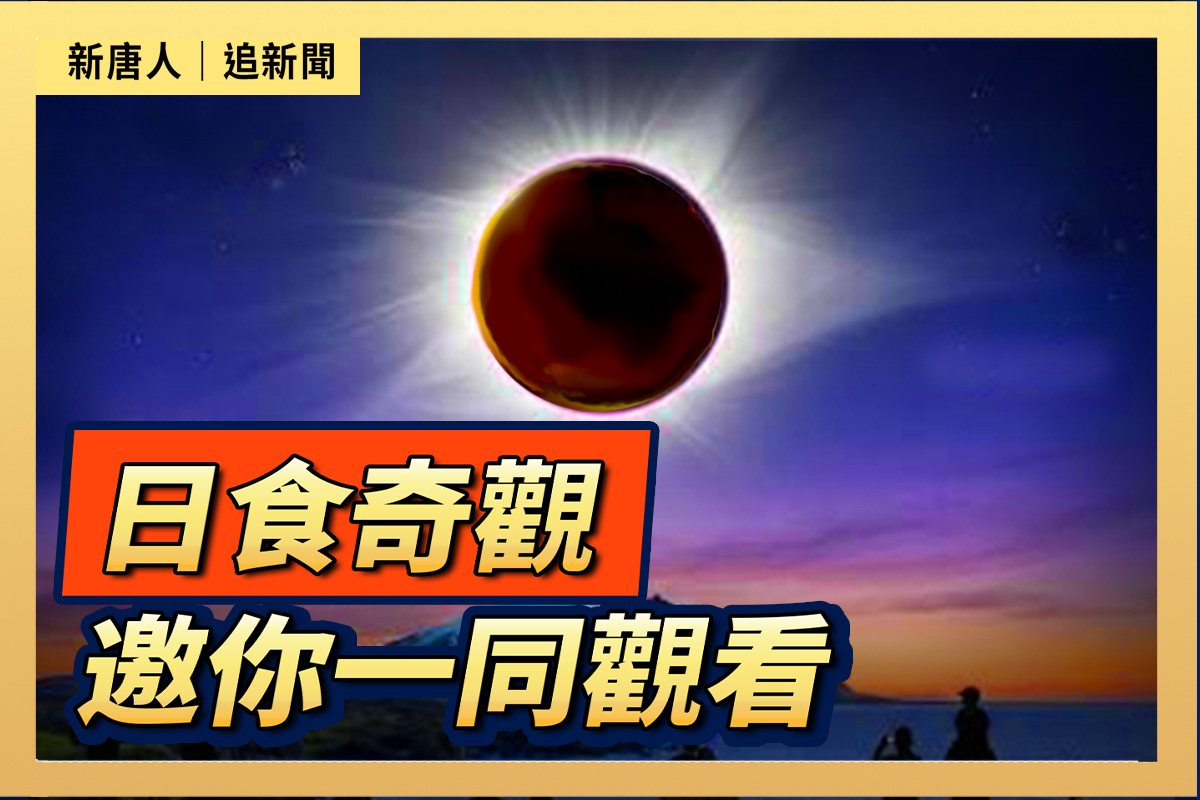
On August 12th at 1:15 PM Eastern Time, a total solar eclipse will be visible along its path in Greenland, Iceland, parts of Spain, and over the Atlantic Ocean. Most of Europe and some parts of North America will witness a partial solar eclipse. The total solar eclipse phase will begin in Iceland at 1:45 PM Eastern Time (17:45 Coordinated Universal Time) and in Spain at 2:28 PM Eastern Time (18:28 Coordinated Universal Time). The media outlets New Tang Dynasty Television and Epoch Times will be live streaming the event with real-time subtitle translations.
You can watch the live streams at the following links:
Epoch Times:
New Tang Dynasty Television:
Clean World:
https://www.ganjingworld.com/live/1io78jbck1tlENDN3RXUMADyL1231c
The solar eclipse is a rare and stunning celestial event that captivates people around the world. It serves as a reminder of the beauty and wonder of the universe, attracting both professional astronomers and amateur stargazers to observe and study its phenomena. Such events offer an opportunity for the public to learn more about space and astronomy, fostering a sense of curiosity and appreciation for the mysteries of the cosmos.
As viewers prepare to witness this natural wonder, experts advise taking necessary precautions to protect one’s eyes when observing the solar eclipse. Specialized solar viewing glasses or handheld solar viewers are recommended to safely watch the eclipse without risking eye damage. Additionally, using solar filters on cameras, binoculars, or telescopes is crucial to prevent harm to equipment and eyesight during the event.
Total solar eclipses occur when the moon passes between the sun and Earth, blocking the sun’s light and casting a shadow on the Earth’s surface. This alignment creates a breathtaking display of the moon completely covering the sun, revealing the sun’s outer atmosphere, known as the solar corona. The fleeting moments of totality during a solar eclipse offer a rare glimpse into the sun’s dynamic features and provide scientists with valuable data for research and analysis.
The astronomical community eagerly anticipates each solar eclipse, as these events offer a unique opportunity to study solar activity, atmospheric phenomena, and the interplay between the sun, moon, and Earth. By observing and documenting solar eclipses, researchers can deepen their understanding of the sun’s behavior, magnetic fields, and solar eruptions, contributing to advancements in space science and technology.
Whether viewers are seasoned astronomers or casual skywatchers, the experience of witnessing a solar eclipse is a memorable and awe-inspiring moment that underscores the majesty and complexity of the cosmos. As the world unites in observing this celestial spectacle, the wonder and beauty of the universe shine brightly, connecting people across continents and cultures in shared fascination and admiration for the wonders of the natural world.