
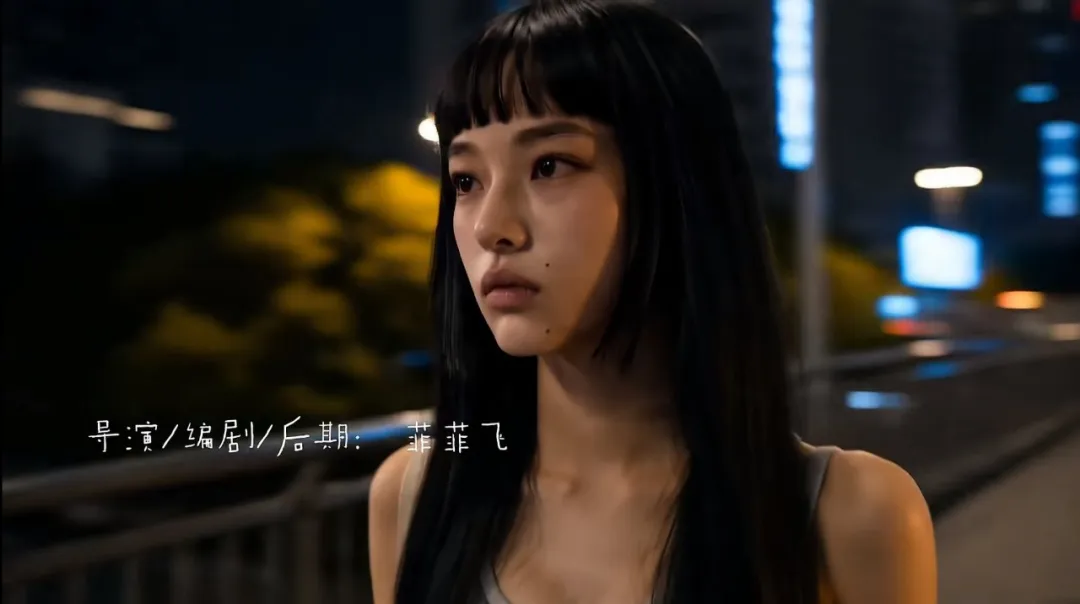
As artificial intelligence continues to rapidly integrate into film and television production, the Chinese short drama industry is undergoing a drastic transformation in production methods. From scriptwriting and character design to storyboarding, voiceover, and video generation, more and more aspects can now be completed by AI. What used to require actors, sets, lighting, costumes, and post-production teams to collaborate on short dramas is now gradually being compressed into a production process operated by a few individuals using AI tools.
According to reports from The Paper, in May of this year, AI short dramas first occupied over half of the daily TOP100 rankings; by August, the proportion had increased to about 70%. In the past month, the peak viewership of three AI short dramas has exceeded one billion, while live-action short dramas have not reached the billion views mark for nearly two months in a row.
Looking at the monthly numbers of new short dramas launched on Douyin, last August saw only 655 new AI dramas; a year later, this figure had risen to 74,000, increasing more than 100 times and accounting for 75.4% of the total new dramas that month. Translated, this means a new AI drama is launched roughly every 36 seconds in July.
In terms of themes, AI short dramas currently focus mainly on male-oriented genres such as revenge, time travel, and fantasy. A research report released at the beginning of the year by Guosen Securities showed that the core users of animated dramas are primarily aged between 24 and 30, with males making up 86%; while traditional live-action short dramas are mainly dominated by women over 30.
The rapid increase in AI short dramas does not necessarily mean a synchronous increase in profits, rather is swiftly pushing the market into a “red ocean”.
DataEye’s “2026 First Half Year AI Drama Report” shows that in the first half of this year, a total of 221,900 AI dramas were launched on Douyin, with only 1,055 surpassing one billion views, accounting for 0.48%. Using 50 million views as a reference point for breaking even, only 1.3% of works met this standard.
This means that, on average, about 77 new dramas, only one drama is able to reach this breakeven point.
AI has addressed the production capabilities of short dramas, but has not resolved the issue of content competition. As the production threshold significantly decreases, a large number of works quickly flood the market, intensifying homogenization and traffic competition.
The biggest advantage of AI short dramas is their low cost, fast production speed, and not being constrained by actors’ salaries, schedules, and shooting conditions.
Traditional short dramas require finding actors, setting up or renting scenes, going through shooting, editing, and post-production; AI production, on the other hand, can directly generate characters, scenes, and shots based on the script and repeatedly modify the appearance, clothing, and actions of the characters. Some industry cases show that AI short dramas can now be completed by one or two creators from script to the final cut.
In July of this year, a case showed that a 55-episode AI short drama had a production cost of only about 1,600 yuan, done by one person, with a total duration of approximately 36 minutes. Although this is only a case of an individual creator and does not represent the average cost of the entire industry, it indicates that AI is compressing the production threshold of short dramas to an unprecedented level.
The explosive growth of AI film and television is also impacting the traditional live-action short drama ecosystem.
Hengdian, Zhejiang, was once an important hub for short drama filming in China. In the first quarter of 2026, the number of short drama productions in the region dropped by about 75% compared to the same period last year; simultaneously, phenomena such as empty studios and reduced contracts for actors have also drawn attention. Short drama filming bases in Zhengzhou, Xi’an, and elsewhere have also seen instances of vacant locations, with the production volume of works by top-tier popular actors decreasing by nearly a quarter.
Generative AI does not require real-life shooting and human performances, which can significantly shorten production cycles and reduce fundamental costs, putting traditional on-location production crews under unprecedented pressure.
However, it should be noted that the reduction in Hengdian production crews cannot solely be attributed to AI. In recent years, the short drama market itself has been undergoing adjustments, with factors like capital contraction and changes in platform regulations also affecting live-action short dramas.
For real-life actors, the most direct change is that “humans” are no longer deemed necessary for short drama production. AI characters do not require salaries, nor are they bound by schedules, and will not affect shoots due to sudden illness or other work commitments; the same character can be continuously utilized and have their appearance, clothing, and performance altered at any time.
According to media reports and public information online, some Hengdian actors are facing a reduction in contracts and even transitioning to other forms of work. Reports mention instances where actors have turned to delivery services or setting up stalls. However, the lack of unified and authoritative industry statistics on such cases and their corresponding proportions means they are more appropriate as examples of industry changes, rather than simple generalizations of the overall situation of Hengdian actors.
At the same time, AI short dramas are forming a different content ecosystem than traditional live-action short dramas.
Currently, AI short dramas predominantly focus on themes such as fantasy, time travel, revenge, and apocalyptic scenarios that can fully leverage visual generation capabilities. AI is particularly well-suited for constructing grand scenes and fantasy worlds with high live-action production costs, making these genres essential territories for early AI short dramas.
However, the market is witnessing new changes.
The recent popular AI short drama “The Laid-Off Girl” is a prime example. The drama has no live actors but has garnered over 200 million views. More notably, the two AI characters in the drama even have their own social media accounts.
The female lead, “Fang Taozi,” posts everyday content on her account like cooking, buying flowers, and working out, while the male lead, “Zhou Yiheng,” continues to update his “life.” As of July 28th, the two characters’ accounts had a fan base of 387,000 and 128,000 respectively.
This signifies that AI characters are transitioning from being “virtual characters in the drama” to digital artists capable of independent operations.
In the past, after a TV drama concluded, actors could continue to participate in variety shows, live broadcasts, commercials, and business activities; now, AI characters are also beginning to be given a similar commercial lifecycle. Producers can control their appearance, personality, and speech, allowing characters to continue managing social media accounts after departing the storyline, further developing commercial values through advertising, live streams, product endorsements, and more.
This model has caused discomfort among some netizens.
Some believe that AI characters having independent accounts, sharing “daily life” content, and even interacting with fans in a manner similar to real individuals create a blurred line between fiction and reality.
Especially when AI characters begin to have fans, pairings, and continuous updates of their “private lives,” the boundary between them and traditional virtual idols becomes increasingly unclear.
The impact of AI short dramas on the traditional film and television industry may only be just beginning.
Some netizens suggest that it may not be about whether “AI will replace actors,” but rather how much human involvement a future drama truly requires, and when AI can infinitely produce “actors” and “stories,” which type of content audiences ultimately prefer to pay for.