
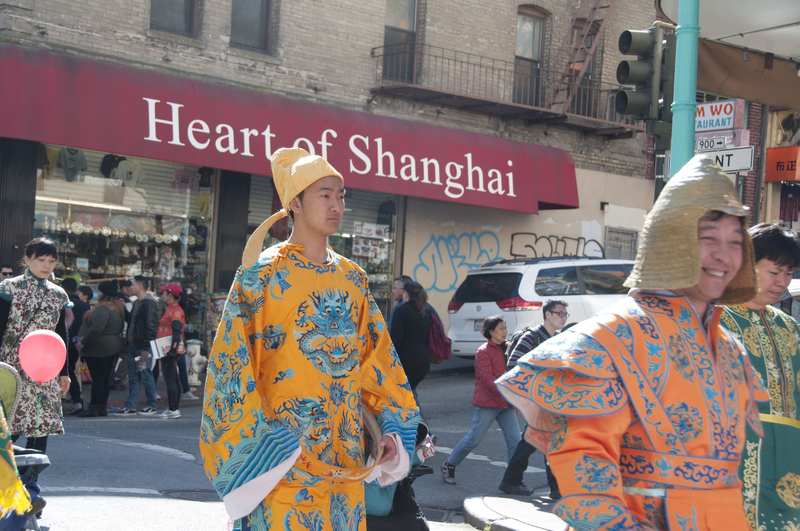
In a world where people lose confidence in the future, they often turn to the past to seek answers. This trend is evident among the youth in China, where a wave of nostalgia and retro style has been gaining popularity in recent years.
It is believed that whether it’s wearing traditional Hanfu clothing, listening to old songs, using vintage items, watching classic dramas, visiting museums, or buying toys from their childhood or passed-down by their elders, Chinese youth are expressing their dissatisfaction with reality through a nostalgic and retro way. They seek comfort and temporary escape in old objects from the past, while yearning for a better future life.
According to a recent article by Bloomberg columnist Karishma Vaswani, during her travels in China, she noticed that the most captivating sight was not the ancient cultural landmarks like the Forbidden City, but rather the young Chinese people dressed in bright and colorful Hanfu outfits. The most popular styles of Hanfu among the youth are inspired by the Tang, Song, and Ming dynasties.
Citing industry forecasts, Vaswani stated that Hanfu has evolved from a niche hobby into a substantial industry, with an estimated market size of 228 billion Chinese yuan (around 31 billion USD) this year, showing a 30% increase from the previous year.
The article highlighted that the majority of Hanfu consumers are young people, mostly female, but in recent years, there has been a growth in the percentage of male consumers. Over 60% of Hanfu buyers indicated that they actively researched the historical backgrounds behind the garments they wear. Popular historical dramas like “The Long Ballad,” social media platforms, and fantasy role-playing games have further fueled the popularity of Hanfu.
Many young people not only wear Hanfu as a way to pay homage to Chinese cultural traditions but also as a form of self-entertainment to escape the uncertainties of present-day life.
Another nostalgic trend among young people is listening to old songs, watching classic dramas, buying vintage items, and visiting museums. The release of the movie adaptation of “The Long Ballad” quickly gained popularity, while topics like “nostalgia for the past” and “millennium style” accumulated billions of views online. Young people enthusiastically support the trend of “nostalgia trips” by listening to old songs, watching classic dramas, purchasing vintage items, and reliving childhood memories.
Social media platforms have also driven young people to rediscover classic TV dramas. Shows like “Home with Kids,” which aired 20 years ago, are being rewatched on short video platforms, while classic movies like “A Chinese Ghost Story” and “Spirited Away” have returned to the big screen, sparking a wave of enthusiasm among viewers. Many young people share their viewing experiences on social media, reminiscing about common childhood memories.
Old-fashioned items like phonographs, CCD cameras (early digital cameras), and nostalgic games consoles like the Subor Game Machine have made a comeback in popularity. Childhood IPs like Pleasant Goat and Big Big Wolf, Doraemon, Crayon Shin-chan, and Winnie the Pooh have inspired young people’s fashion choices once again.
Owners of vintage stores revealed that in recent years, young people’s tastes have been continually evolving. Many young people, including those born post-2000, are acquiring items such as phonographs and projectors to display at home.
Similarly, proprietors of antique clothing stores disclosed that clothing items with strong vintage vibes, such as 1980s flared jeans, 1990s printed shirts, and millennium-era jackets, are attracting a large number of young buyers, with 80% of customers in the stores being young people.
A college student who recently purchased a large number of Winnie the Pooh handbags and Crayon Shin-chan blind boxes expressed that they bought these items because they found them cute, fun, and reminiscent of their childhood. Another young buyer of CCD cameras stated that vintage items hold a unique charm with stories to tell, evoking a sense of transcending time. Compared to smartphones, CCD cameras provide a more engaging photography experience and leave deeper memories.
A significant indication of the young generation’s nostalgia and retro trend is their increased visits to museums. Data from the “2025 May Day Holiday Report” on travel platforms showed a 210% growth in museum reservations in China compared to the same period in 2019, with post-2000s-born individuals accounting for over 52% of reservations.
The data indicated that by 2025, the retro economy market size in China had reached 355.22 billion yuan, showing an 11.7% year-on-year increase. It is projected that by 2030, the market size could reach 587.85 billion yuan.
Experts believe that the surge of “retro resurgence” among Chinese youth, driven by a profound nostalgia for past eras, is a form of rebellion against AI.
A recent article in Tianxia Magazine stated that since the second half of 2025, the development of AI models has entered a phase of rapid iteration. Faced with the impact of AI’s “infinite productivity,” young people are no longer just concerned about what AI can do but are beginning to question: if AI can do everything, what can we do?
Under the influence of popular AI creative tools like Nano Banana and Midjourney, blind admiration for efficiency among young people has begun to wane, as they embrace the warmth of retro nostalgia.
After the Chinese communist authorities announced the comprehensive digitization to replace paper documents, many young people rushed to telegram stations to send the last telegrams before the service was terminated, or printed the last paper train tickets at stations. On social media, young people started creating small magazines, using physical paper to document their personal worlds.
The article states that as AI increasingly mimics human behavior, young people have initiated a movement of “computing power resistance,” aiming to reclaim aesthetic sovereignty. Many have started sharing content without any tags, attempting to bypass algorithmic recommendation mechanisms and seek genuine connections in more humane social communities.
Young people have also started shunning short videos in favor of embracing deep and slow content. In an era dominated by 15-second short videos, the resurgence of long-form videos, in-depth interviews, and two-hour-long podcasts is evident.
Additionally, young people are rediscovering classics. The “Youth Digital Reading Report” revealed that the most-discussed book annually was “Zizhi Tongjian,” with nearly 15,000 comments recorded throughout the year; traditional classics like “Analects” and “Tao Te Ching” continue to top e-book charts.
The article suggests that amidst the oversaturation of AI-generated content today, the essence of handicraft, artisan spirit, and meticulously crafted content can help young people establish a deeper connection with culture at a slower pace and with more warmth.
Vaswani pointed out in her article for Bloomberg that this wave of retro style reflects deeper socio-economic issues: the younger generation in China feels disillusioned. Under the leadership of Xi Jinping, nostalgia among Chinese youth has become a rare political tool.
Vaswani highlighted that Chinese youth desire to break free from their predicaments due to the intense job market competition resulting from the economic downturn. The entire society is mired in severe internal competition, exacerbated by the collapse of the real estate market, leading to economic fragility and eroded confidence among young people. Many are forgoing marriage and parenthood, postponing these life milestones, with more and more opting for childfree and single lives.
The pessimistic sentiment among the Chinese youth is further supported by economic data. The latest figures from the Chinese authorities show a slowdown in economic growth to 4.3% in the previous quarter, leading to the discreet abandonment of quantified goals for urban employment growth over the next five years, a stark reversal from past continuous rhetoric about employment objectives.
Vaswani expressed that the Chinese Communist Party (CCP) seized power on the mainland through deception and violence, followed by successive movements like “Three-Anti Five-Anti,” land reform, and the Cultural Revolution, which involved toppling Confucius statues, destroying temples, and vandalizing cultural relics. Traditional Chinese culture and heritage were trampled upon and branded as hindrances to revolutionary progress.
Vaswani pointed out that the CCP initially maintained its rule by promoting economic reforms and development and sought compliance from the Chinese people. However, over time, this narrative began losing its effectiveness, especially as the economy started declining. Under Xi Jinping’s leadership, the CCP has fervently proclaimed a vision for the great rejuvenation of the Chinese nation using the guise of Chinese history and culture to revive past glories. However, without a robust and prosperous economy, what basis is there for a great renaissance?
Renowned commentator and current affairs analyst Tang Jingyuan believes that an increasing number of Chinese youth are opting for a collective ‘lying flat’ lifestyle not solely due to economic downturns and income reduction but because the CCP’s governance has disrupted all aspects of society. Living under the pervasive surveillance of CCP’s big data, young people face immense pressure, anxiety, and fear, permeating society with a palpable sense of desolation and resentment, making genuine happiness untenable for many youth.
Tang Jingyuan asserts that the nostalgic sentiment exhibited by Chinese youth today goes beyond mere fondness for the past; it reflects their profound disappointment and rejection of the current social environment and atmosphere. Fundamentally, what young people truly long for is a lifestyle reminiscent of an era with more genuine kindness, warmth, and at least a basic level of trust among individuals that characterized the society in the 1980s and 1990s.
According to Tang, the CCP’s variations in governing methods, including pervasive big data surveillance, have eroded the minimal trust, warmth, and goodwill that existed between people, ultimately reducing interpersonal relationships, even between spouses, to naked material and monetary exchanges.
In this social backdrop and altered societal conditions, many young people struggle to find happiness and satisfaction in their roles as individuals. Through nostalgic and retro means, they seek the inherent warmth, trust, and goodwill that should naturally exist in human relationships.
Geng Lutao, Head of the Youth Development Department at the San Francisco Branch of the China Democracy Party, believes that the current “retro” mindset among Chinese youth is strongly influenced by the current economic conditions and job market. Many recent graduates struggle to secure suitable employment or see prospects for the future, leading to a loss of confidence.
Geng remarked that the purchases made by many young people go beyond acquiring specific vintage clothing or items; they long for a relatively free, relaxed, and beautiful way of life—one that they cherish, filled with authentic kindness and charm.
Tang Jingyuan suggests that as more and more young people adopt a ‘lying flat’ mentality, it symbolizes the societal decay. Despite the CCP’s various tactics and measures, the trajectory seems irreversible, and without prompt intervention, imminent dissolution and collapse may be inevitable. In such a scenario, the only path for China’s revival is a return to tradition and morality, enabling the restoration of normal social order and ethical atmospheres.
Geng Lutao also emphasizes that despite people’s longing for the past, they still need to address present societal environments and real issues. Within Chinese traditional culture and values lie both essence and detriments. It is crucial to preserve the honest, kind, trustworthy, responsible, and life-respecting aspects and employ them in future life and societal contexts.
He further states that the CCP has long maintained its authority through deceit, propaganda, censorship, and violence, continuously obscuring historical truths, suppressing dissenting voices, and depriving the people of their rights to freely express themselves and seek truth. The fear, harm, and collapse of societal trust caused by the CCP cannot be rectified solely by wearing old clothes and listening to old songs.
Geng Lutao hopes that young people, using their nostalgia as a starting point, will actively seek to understand genuine history, foster independent thinking, reject the fear, lies, and hate propagated by the CCP, and no longer remain silent against despotism, oppression, and injustice.
In conclusion, only when an increasing number of young people are willing to identify the root causes of the problems, bravely stand up, defend their rights and dignity, and actively engage in actions to change China, can the authoritarian rule of the CCP be brought to an end, reshaping a future that is free, authentic, kind, and beautiful.