
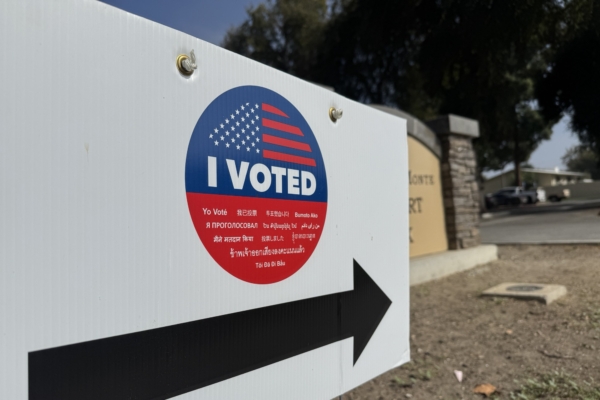
In this year’s California election on November 3rd, Proposition 43 regarding taxation rules has significant and long-term implications.
Voters who choose “Yes” are in support of this amendment to the California Constitution, which states that any local special tax proposal initiated by citizens must be approved by a 2/3 majority of voters before it can be enacted, extended, or have its tax rate increased. It also prohibits local jurisdictions from implementing a “parcel tax” (a tax based on the assessed value of real estate and major personal property) without specific authorization in the state constitution and approval by voters, debts funded by bond financing and approved by voters are exempt from this requirement of voter approval. Those who vote “No” indicate that the taxation measures mentioned above do not require a 2/3 majority vote and allows for the imposition of parcel taxes.
Currently, special tax proposals initiated by local governments require a 2/3 vote for approval, while those proposed through citizen petitions only require a simple majority vote to pass.
According to the Howard Jarvis Taxpayers Association (HJTA), at the end of April this year, they submitted 1.3 million signatures for the “Save Prop 13” initiative, successfully advancing the “Local Taxpayer Protection Act” (LTPA) to the November ballot.
Proposition 13, passed in 1978, limits the annual increase in property taxes during the period of ownership and reduced the tax rate from an average of 2.67% annually statewide to 1%; it also raised the threshold for increasing other taxes: state tax increases require a 2/3 vote by the legislature, and local tax increases must be approved by voters, with special taxes requiring a 2/3 vote.
Although the above regulations are within the California Constitution, the state’s Supreme Court has reinterpreted certain provisions, allowing for some “special taxes” to be established without reaching a 2/3 majority vote. This change originated from the California Supreme Court’s ruling on the case of “California Cannabis Coalition v. City of Upland,” indicating that if a tax increase proposal initiated by citizens is put to a vote, it does not need to meet the 2/3 majority vote requirement. This has resulted in Californians paying billions of dollars in new taxes that should not have been levied.
This loophole enables special interest groups to draft tax increase proposals themselves, collect signatures to have them included on the ballot, bypassing the 2/3 majority vote threshold required for establishing special taxes, with the tax revenue serving the interests of those groups.
Jon Coupal, the president of HJTA, stated in a press release on June 29th, “In recent weeks, we have faced tremendous pressure from special interest groups and elected officials (including the governor’s office) to withdraw the initiative from the November election; our business supporters have faced even greater pressure to stop assisting the ballot measure.”
The association explicitly stated that they would not withdraw the LTPA initiative unless there was a more favorable alternative for taxpayers.
“Hours before the deadline to determine the ballot content, we won a major victory for taxpayers,” Coupal said, “The governor’s office and legislature changed course, supporting the requirement that special taxes must have a 2/3 majority vote, presenting and passing ACA22 (Assembly Constitutional Amendment 22) to completely close the ‘Upland case’ loophole.”
But that’s not all. Coupal wrote, “We also demanded that the legislature withdraw the ‘poison pill’ Constitutional Amendment ACA13 slated for November 2023, which requires a high threshold (a 2/3 majority vote) for LTPA to pass. The legislature has now passed ACA21, removing the ‘poison pill’ from the ballot.”
HJTA also stated that, given the strong support from the legislature for the requirement that all special taxes must pass by a 2/3 majority vote and agreeing to remove the “poison pill,” the association agreed to withdraw the initial citizen initiative, replacing it with ACA22, to be voted on by the electorate. This is Proposition 43 in the November election.
On June 25th, the California Senate and Assembly passed ACA22 by votes of 35:1 (4 abstentions) and 68:2 (9 abstentions) respectively, titled “Local taxes: limitation.” This constitutional amendment is intended to apply to all local government “special taxes,” including various fees, charges, and other non-property taxes, all requiring a 2/3 majority vote for establishment. Property parcel taxes and sales taxes will still adhere to the state constitution’s provisions.
Proposition 43, officially named “Local Special Tax Proposal Requires 2/3 Majority Passage and Constitutional Amendment Prohibiting Property Tax Proposal,” is supported by HJTA. Coupal stated, “The legislature’s passage of ACA22 aims to increase the difficulty of tax increases, closing a legal loophole that previously allowed certain special taxes to pass without meeting the 2/3 majority requirement of Proposition 13.”
According to ballotpedia.org, Buffy Wicks, the Democratic State Assembly member for California’s 14th District and the drafter of ACA22, publicly opposed the amendment. She stated, “I initiated ACA22 not with the intention of it becoming California law, but because it was the only pathway to prevent the more harmful initiative (LTPA) from entering the ballot under the time constraints.”
The non-profit organization “Evolve California” also expressed opposition, stating, “The amendment requiring all local revenues to be approved by a 2/3 majority of voters will make California the most challenging region in the country to raise local funds.”
In 1978, Proposition 13 passed with a 65% majority, with support from 55 out of 58 counties, requiring property taxes not to exceed 1% of the 1975-1976 assessed value; annual increases limited to the rate of inflation or 2% (whichever is lower); property reassessed to market value when transferred, resetting the annual growth cap; prohibiting the state government from levying new taxes on property value or sales; state government responsible for distributing a portion of the tax revenue to local governments; and a 2/3 vote of the legislature required to establish non-property taxes.