
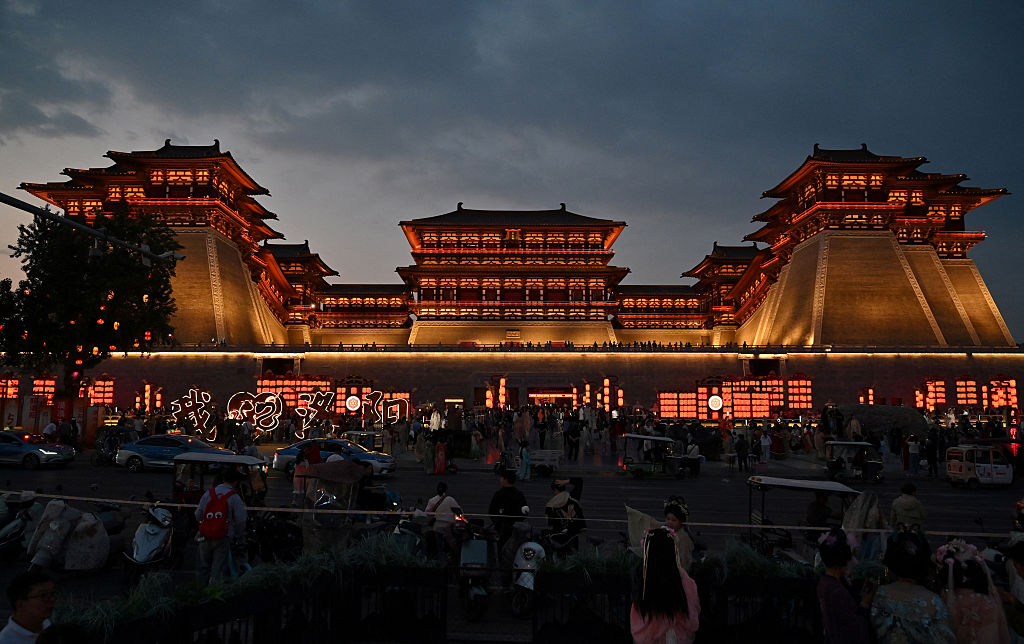
Zhengzhou Yellow River Nocturnal City, with an external investment claim of 160 million RMB, opened in October 2024 but halted operation after only about half a year. Today, the streets are desolate, with many storefronts available for rent, village houses left vacant, some businesses closed down while others are struggling to stay afloat.
According to a report by “First Finance” on August 1, as of mid-July, this street area located in the outskirts of Zhengzhou, spanning over 500 meters, sees few tourists, with multiple rental signs hanging and the roads being used as free parking by local residents.
The project was jointly developed by Zhengzhou Luqiao Group Yuansu Digital Technology Co., Ltd., Zhengzhou Jiucu Shigu Commercial Management Co., Ltd., and Beijing Creative Tour Culture Tourism Development Co., Ltd. It was built on the foundation of the original Yellow River Food Valley market and leased most of the village houses along the flood control road, with annual rents ranging from 50,000 to 150,000 RMB per unit.
When it opened in October 2024, “Henan Daily” once referred to it as “the first domestic cultural and tourism street area deeply integrating Yellow River culture and night economy,” with nearly 20 performances arranged daily during the National Day holiday and free admission to the scenic area. However, the project came to a standstill after about half a year of operation.
Yufeng Ling, who runs a precious treasure gallery on the premises, said that he visited the project over ten times and decided to set up shop after seeing many tourists, but less than three months into business, the project halted. Before the halt, the shop could accommodate dozens of visitors daily, with peak days seeing one to two hundred people; now, there are days without a single customer, and relocating would cost tens of thousands.
Yellow River Nocturnal City does not charge admission fees, and its main revenue comes from sales commissions from businesses. Yufeng Ling mentioned that about 20% of his shop’s sales need to be given to the project.
Liu Ying (pseudonym), who once had a shop in Yellow River Nocturnal City, stated that the project employed a large number of actors, with monthly salaries mostly exceeding 5000 RMB; there were also nearly 40 security personnel, each costing over 300 RMB per day.
Liu Ying mentioned that although the snack stalls could generate income, it was significantly limited compared to the project expenses. As the project is far from the city center, the majority of visitors are local residents who come for leisure after meals, with limited willingness to spend. Liu Ying has since closed the shop.
Several villagers claimed that their houses were rented to Yellow River Nocturnal City with the coordination of the village committee, but after the project paid rent for several months, payments ceased. A person surnamed Wang, the head of Zhengzhou Jiucu Shigu Commercial Management Co., stated that some villagers demanded rent increases and closed the doors, leading the project unable to continue operation, resulting in a loss-making exit. Both sides have contrasting claims.
Similar predicaments have been observed in other nocturnal cities. Xi’an Datang Nocturnal City received over 86 million visitors in 2025, but Qujiang Cultural Tourism’s Datang Nocturnal City Development Company still incurred a net loss of about 6.64 million RMB that year; Qujiang Cultural Tourism, as a whole, recorded a net loss of 196 million RMB.
NetEase author Qingzhe Mu believes that Yellow River Nocturnal City had significant upfront investment, but subsequent operations failed to keep up; light shows, national trend performances, and antique street areas were similar to those in many other projects, making it challenging to sustain visitor attraction.
Tourism industry researcher Jin Shufang, in a related study, analyzed that free admission caused the nocturnal city to lack stable ticket revenue, while the costs of lighting, performances, and property were high, and the project’s income overly relied on merchant commissions. After the initial fervor fades, reduced footfall, business closures, and difficulties in attracting investments may exacerbate each other, leading to a vicious cycle.