
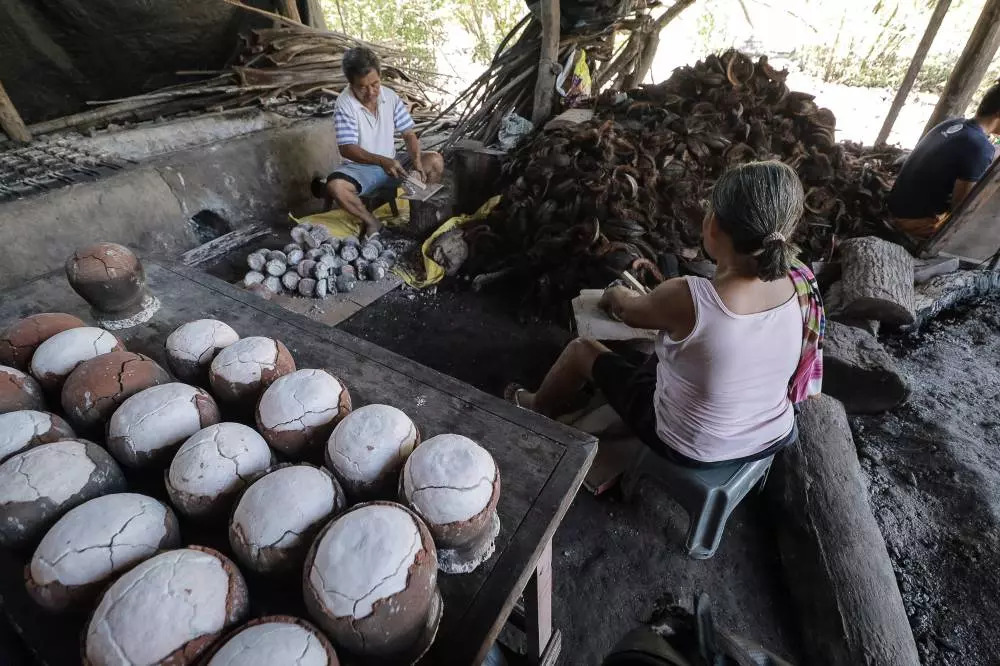
In the Philippines, on the island of Bohol, there is a traditional handcrafted sea salt known as “Asin Tibuok,” which has been passed down for generations and is renowned for its unique egg-shaped appearance, often referred to as “dinosaur egg salt.” Not only is the production process complex, but its rarity has made it a sought-after delicacy in the global culinary world.
Following ancient methods of production, this traditional sea salt undergoes a meticulous process starting from soaking coconut shells, burning them, to boiling them in saltwater to form its distinctive shape. Each salt egg takes over four and a half months to complete and comes with a hefty price tag. The salt exudes a unique smoky saltiness and fruity aroma.
Father Cris Manongas, born into a family of salt producers, has revived the ancestral craft in recent years. He prices each salt egg at a minimum of $150 (112 euros) just to break even on the production costs.
The endangered art of salt production has been listed by UNESCO as part of the Intangible Cultural Heritage of Humanity. The “Asin Tibuok” sea salt is not only one of the rarest salts globally but also embodies centuries of Filipino culinary traditions.
The term “Asin Tibuok” translates to “unbroken salt.”
Originating in the 1600s and passed down through generations on Bohol Island, this craft is maintained by a few salt-making families who engage in small-scale artisanal production without industrial expansion. With fewer inheritors of the craft, this traditional salt production technique is at risk of fading away.
Artisans collect over 1,000 coconut shells, soak them in seawater for an extended period, then dry and burn them to create coconut ash mixed with seawater to form a high concentration brine. This brine is continuously boiled in clay pots until the salt crystallizes and solidifies, forming the final product – white salt encased in a brown shell, hence earning the nickname “dinosaur egg salt.”
According to Manongas, like many salt artisans, his ancestors considered this craft sacred and never sold “Asin Tibuok,” only exchanging it for rice. However, to revive the industry, Manongas had to take out loans to invest in production and adapt to modern practices.
Traditional norms are strictly upheld during the salt-making process. Workers must remove all jewelry and are prohibited from carrying coins or consuming oily foods. Additionally, water is still poured into clay pots using shells as they can withstand high temperatures in the kiln without affecting the salt’s original flavor.
“Dinosaur egg salt” carries a mild smoky saltiness and a subtle fruity aroma, perfect for a finishing touch to dishes before serving. Whether in savory dishes or desserts, it enhances the original flavors of the ingredients and adds depth.
Jordy Navarra, the chef of Michelin-starred restaurant “Toyo Eatery,” incorporates “dinosaur egg salt” into his eight-course tasting menu. He notes that the salt’s flavor is more delicate than iodized salt and highlights the different tastes from various parts of the same salt egg.
“What’s most intriguing is that the ends of the salt egg taste different,” he explains. “One end carries a richer smoky aroma, possibly due to prolonged exposure to flames during production; whereas the other end lacks that distinct smoky flavor.”
In traditional Filipino cuisine, “Asin Tibuok” elevates dishes such as “kinilaw” (ceviche) by imparting a subtle smoky aroma and enhances the flavor of the tamarind soup “sinigang.”
This article drew references from food and cooking website Chowhound and reports by the British Broadcasting Corporation (BBC).