
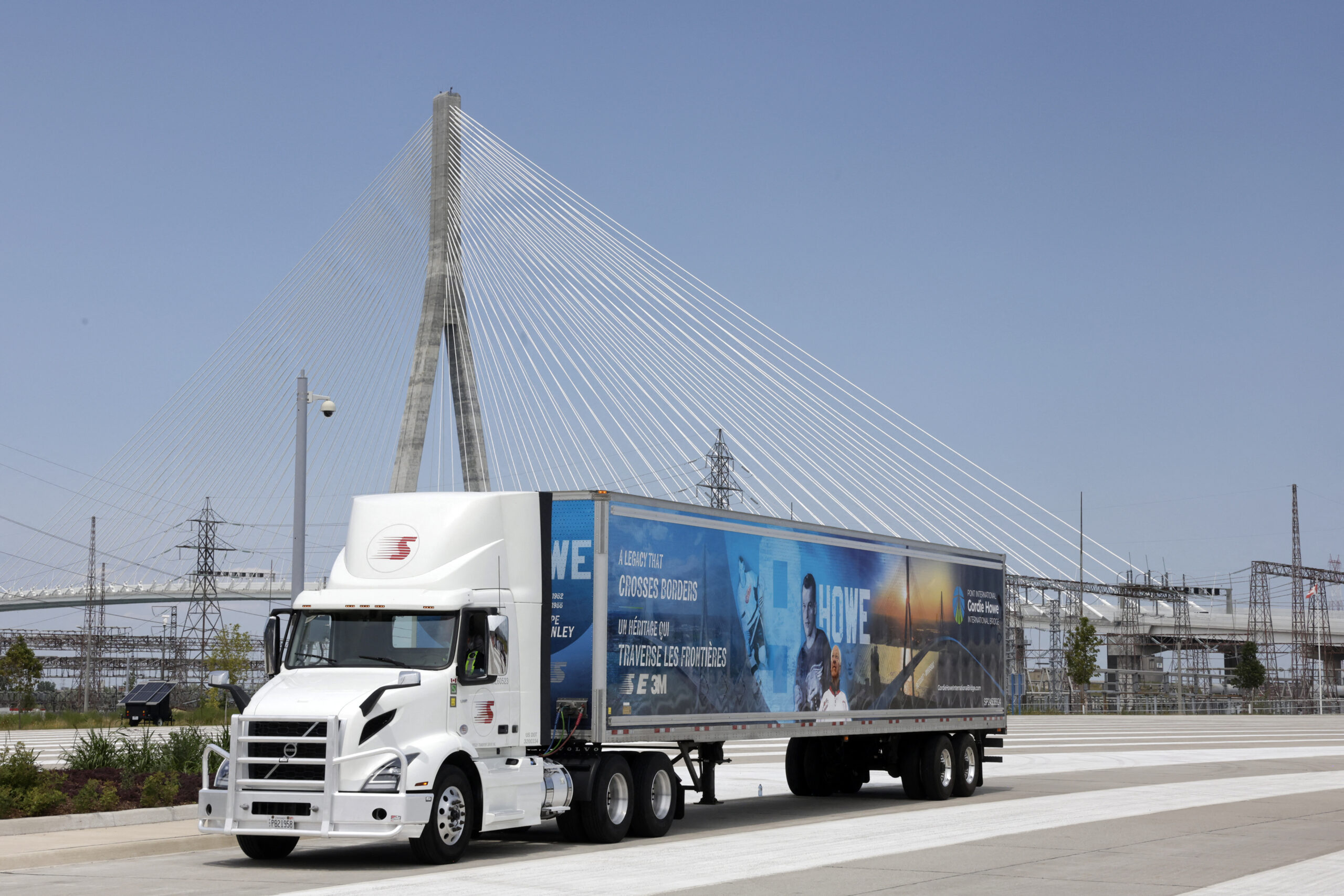
The Gordie Howe International Bridge connecting Detroit, Michigan in the United States with Windsor, Ontario in Canada is set to officially open to the public on September 30, 2026. An open house event was held on July 27th, inviting media and the public to visit and experience the new landmark that spans the Detroit River. Residents from both Detroit and Windsor eagerly attended the event to be among the first to explore this iconic bridge.
The construction of the Gordie Howe International Bridge was a joint effort between the United States and Canada, with the Canadian government providing the main funding for the project. The Windsor-Detroit Bridge Authority (WDBA), established by Canada, was responsible for project management, and the construction was carried out by the Bridging North America alliance. With a total cost of approximately 6.4 billion Canadian dollars (around 4.7 billion US dollars), the project began in 2018 and faced delays due to factors such as the pandemic, supply chain disruptions, and construction challenges before finally reaching completion after several years.
Spanning the Detroit River, the Gordie Howe International Bridge connects Interstate 75 in the United States with Highway 401 in Canada. It is approximately 2.5 kilometers long, featuring 6 lanes for vehicular traffic, as well as dedicated lanes for bicycles and pedestrians. The main span is 853 meters, making it the longest cable-stayed bridge in North America. The bridge is named after the Canadian ice hockey legend Gordie Howe.
The Detroit-Windsor border crossing is one of the busiest commercial border crossings in North America, handling about a quarter of the US-Canada trade in goods. Prior to the completion of the new bridge, cross-border traffic between Detroit and Windsor mainly relied on the Ambassador Bridge, opened in 1929, and the Detroit-Windsor Tunnel, inaugurated in 1930. The Ambassador Bridge has long been a crucial international freight transportation route connecting the two countries.
Upon the opening of the new bridge, traffic flow at the Ambassador Bridge and the Detroit-Windsor Tunnel will be alleviated, enhancing customs clearance capabilities and reducing the risk of traffic congestion. This development will further strengthen North American freight logistics and supply chain resilience. The new bridge is not only a local transportation infrastructure but also a vital cross-border infrastructure to enhance supply chain resilience and cross-border logistics efficiency in North America.
During the open house event on July 27th, many residents visited to experience the new bridge firsthand. Commuters who cross the border regularly expressed hopes that the new bridge would help avoid the congestion at peak times at the Ambassador Bridge, reducing their daily commute time. Truck drivers anticipated that the new bridge would improve logistics efficiency and decrease waiting times. Some residents believed that the new bridge would not only enhance transportation but also facilitate commercial, tourism, and economic exchanges between Detroit and Windsor.
As the new port is set to begin operations, the US Customs and Border Protection (CBP) recently issued travel advisories, urging travelers to familiarize themselves with the new customs arrangements and ensure they have the necessary travel documents.
The CBP emphasized that all travelers entering the United States must carry appropriate travel documents. US citizens can use valid passports, passport cards, or other documents that comply with the Western Hemisphere Travel Initiative (WHTI) requirements for entry, while Canadian citizens and other foreign travelers must carry valid passports or required visas and travel documents based on their status.
Furthermore, travelers should accurately declare any food, agricultural products, plants, animal products, and cash exceeding the legal limit to avoid customs violations affecting their clearance.
The CBP suggested that travelers check real-time border wait times through the official website or mobile applications before departure. Those eligible can also apply for Trusted Traveler Programs like Global Entry or NEXUS to expedite the clearance process.
Due to the anticipated increase in traffic flow during the initial phase of the new bridge’s operation, the CBP recommended that travelers allocate ample time and stay informed about the latest traffic information and port announcements to ensure a smooth cross-border journey.
The US port of entry features 20 passenger vehicle lanes, 15 commercial vehicle lanes, a dedicated bus lane, and a pedestrian/cyclist lane. All transit methods, including walking or cycling, require valid travel documents. The pedestrian/cyclist lane is scheduled to open on August 5th.
For more information on entry recommendations, border wait times, required documents, prohibited items, and other inquiries, please visit CBP.gov/travel.
Additionally, the CBP encourages non-US citizen travelers to apply for the I-94 form online or through the CBP Link mobile application. Travelers who pre-apply for the I-94 form will benefit from expedited processing, facilitating entry into the country.
For visa waiver program travelers, approval of the Electronic System for Travel Authorization (ESTA) is required before arriving at the port of entry. Travelers seeking further details on the ESTA program and eligibility requirements can visit esta.cbp.dhs.gov.