
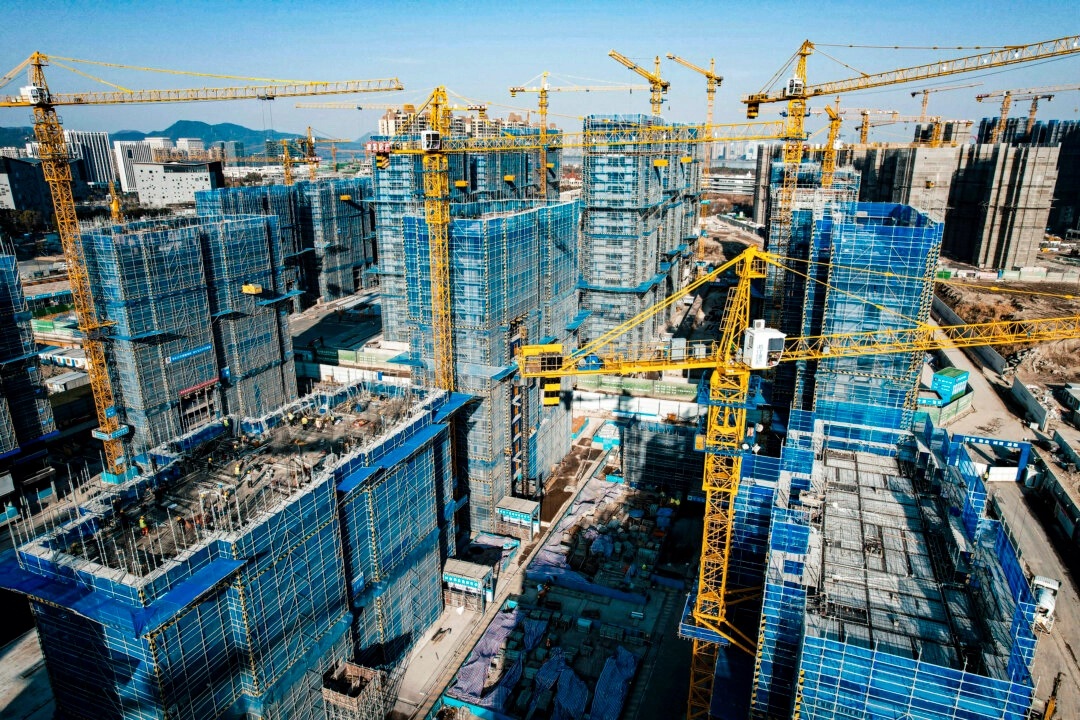
In China, as the mortgage interest rates are already at a low level, the willingness of residents to purchase homes is still affected by factors such as housing prices, income, and job expectations. In response to this situation, the Ministry of Finance of the Communist Party of China and other departments announced on September 29th that starting from October 1st, eligible first-time home buyers will be provided with interest subsidies for their loans, with a maximum cumulative amount of up to 50,000 yuan. Experts have pointed out that this measure does not cover core first-tier cities, leading to limited effectiveness in stimulating the real estate market, as the 50,000 yuan subsidy could easily be offset by future price decreases or repayment risks.
According to the announcement, eligible residents who purchase their first home with an area not exceeding 120 square meters and a price not exceeding 1.5 million yuan can receive a 1% annual interest subsidy on their mortgage loans, with a maximum term of 5 years and a maximum principal amount of 1 million yuan per household.
When calculating based on a 1 million yuan long-term commercial mortgage, qualified individuals could potentially reduce interest payments by nearly 50,000 yuan under the current monthly principal and interest repayment method. The policy is applicable not only to new homes but also to second-hand homes, excluding the replacement of existing loans with newly issued commercial personal housing loans.
Professor Sun Guoxiang from the Department of International Affairs and Business at Nanhua University in Taiwan stated in an interview with Da Ji Yuan that the past reduction of down payments and mortgage rates by the Communist authorities was mainly aimed at lowering the threshold for home purchases by loosening financial conditions. Now, with mortgage rates already at a low level, the direct interest subsidies provided by the central government reflect that the factors influencing people’s home buying decisions are not just loan costs, but also include housing prices, income, employment, and expectations of future asset values.
Economist David Huang from the United States analyzed that banks are not lacking loan funds, but rather the main issue lies in insufficient effective demand for home purchases. From interest rate cuts, reduced down payments to the government directly bearing a portion of the interest costs, the method of policy support has shifted further from lowering loan costs to reducing the actual expenses for home buyers.
The Ministry of Finance of the Communist Party of China stated that in the past, support mainly focused on the supply side by reserving land and local acquisition of existing commercial properties. Now, there is further support on the demand side for the rigid housing needs of residents. The interest subsidy policy is officially positioned by the authorities as the first time the central finance is providing support to some residential commercial personal housing loans.
After setting the two limits of 120 square meters and 1.5 million yuan, there will be differences in the distribution of qualified properties. Zhang Bo, director of the 58 Anjuke Research Institute, mentioned that eligible properties are mainly concentrated in medium and small-sized third and fourth-tier cities, county-level areas, and satellite cities of urban clusters, followed by ordinary second and third-tier cities. Some small and medium-sized households in strong second-tier cities in the outskirts with strong housing demand may also meet the requirements.
Huang David believes that the 1.5 million yuan price threshold may not cover the main commercial properties in first-tier cities such as Beijing, Shanghai, Guangzhou, and Shenzhen, which typically have a more significant impact on the Chinese real estate market. The latest policy announced mainly covers third and fourth-tier cities, but these cities have weaker population inflows and higher housing inventory. Even with reduced home buying costs, it may not necessarily change local residents’ expectations of housing prices.
Senior capital market expert Xu Zhen from China expressed to Da Ji Yuan that the primary beneficiaries of the policy are rigid demanders in third and fourth-tier cities. However, if home prices continue to decline, the price drop might outweigh the interest benefits of tens of thousands of yuan. Therefore, the interest subsidy may not be sufficient to alter residents’ home buying decisions. He described the implementation of the subsidy for a provisional period of 1 year, with a maximum of 50,000 yuan, as a “trial run” to observe the real estate market’s response.
Sun Guoxiang pointed out that the constraints affecting people’s home buying decisions have shifted from interest rates to housing prices, income, employment, and expectations of future asset values. Even with a decrease in mortgage rates, if residents anticipate a potential decline in housing prices or are concerned about future income reduction, they may still choose to save and wait and see.
Sun Guoxiang also mentioned that the nearly 50,000 yuan maximum interest subsidy may be somewhat attractive to families with planned home purchases who are just waiting for the right price or timing. However, for families who were originally in a wait-and-see mode, the 50,000 yuan interest subsidy may not be enough to change their decisions. This is because buying a house involves millions of yuan in property prices and decades of debt.
Huang David believes that this policy is more likely to affect families who were initially prepared to buy a home but were hesitant due to monthly payment pressures. For residents worried about income and housing price declines, this subsidy may not necessarily alter their home buying decisions because what residents are more concerned about is property prices and the future asset value of the home.