
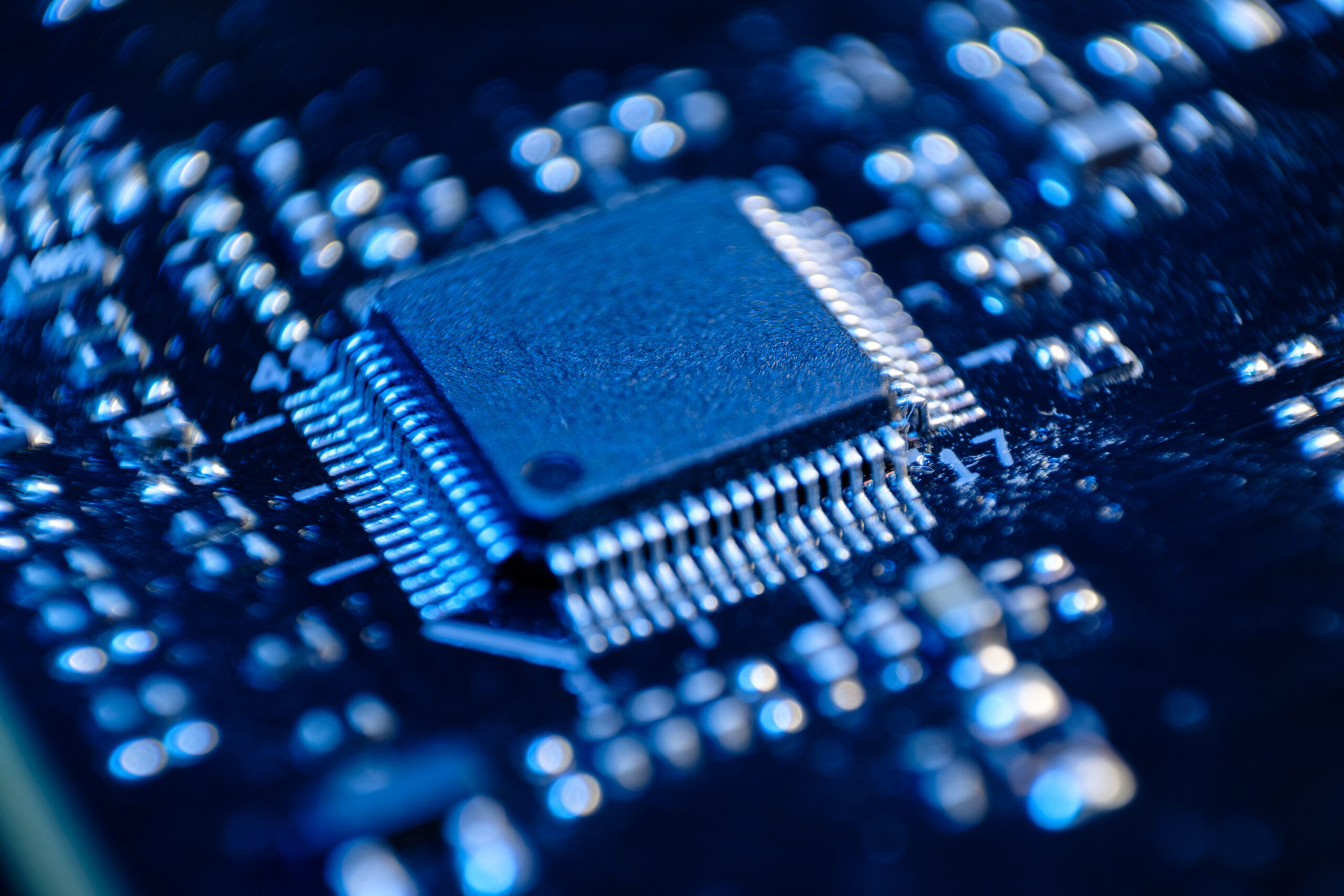
The United States continues to restrict the export of advanced chips and related technologies to China, prompting Chinese chip companies to accelerate financing, product development, and software adaptation. Respondents have indicated that despite the Chinese Communist Party’s strong push for “chip autonomy” through funding and administrative power, China faces challenges in breaking through the constraints of advanced processes, manufacturing equipment, and ecosystem development, potentially leading to technological isolation.
Chinese political scholar Sun Zhiming, in an interview with Epoch Times, stated that under the CCP’s directive of “chip autonomy,” local governments and privately-owned enterprises under its control bear political missions to develop the chip industry at all costs, creating a false prosperity akin to the “Great Leap Forward.”
Sun Zhiming noted that relying on the substantial financial resources of tech giants like Tencent, the CCP is injecting significant funds into the semiconductor sector, a strategy he describes as “flooding the industry.” This approach, however, deviates from the objective scientific principles of the semiconductor industry, and instead of creating advanced chips, it risks further isolating China technologically.
According to an article by Reuters on September 7, Suirui Technology is advancing its plans for an IPO in Shanghai, following MooreThread, Muxi Integrated Circuits, and Birun Technology’s entry into the capital market. Chinese AI chip companies have recently seen intensive fundraising activities. These companies are collaborating with Huawei and others to establish an alternative computing platform to Nvidia’s products. Data cited in the article shows that the Chinese AI chip market is valued at approximately 90 billion dollars, with Nvidia’s market share in China dropping from near monopoly to around 55%.
Among these, Suirui Technology, backed by Tencent, is moving forward with its initial public offering in Shanghai, aiming to raise around 900 million dollars. The company has yet to turn a profit, but its sales in the first quarter of this year increased by over 14 times, focusing on AI inference chips and related computing systems.
Companies like MooreThread are also developing products compatible with Nvidia’s CUDA platform. CUDA comprises programming tools, software libraries, and development environments, posing a long-term competitive threshold for Nvidia in the AI chip market. Chinese companies are seeking to attract data centers, internet platforms, and AI enterprises to adopt domestically-produced chips by facilitating the conversion of programs developed using CUDA to local platforms.
Jiang Jin, engaged in artificial intelligence model development in Jiangsu, mentioned that his company has started testing computing chips manufactured in China in recent years. During testing, they discovered a reliance on technologies from the US, Japan, and other countries. Insufficient technical support led to a temporary halt in testing.
Jiang Jin remarked, “During the initial chip testing, compatibility issues arose, and even when those were resolved, the computing power fell short. Now, with huge investments in chip development, another issue encountered is the higher cost compared to purchasing foreign chips. If the prices of mass-produced products exceed those of chips from the US and Japan, who will buy them? Software aspects also pose challenges, which cannot be solved by simply throwing money at them.”
Mr. Qin, a semiconductor researcher in Nanjing, expressed that the CCP is attempting to establish a computing platform independent of mainstream technologies like Nvidia’s CUDA and global open-source communities, presenting it as a competition in the “ecosystem.” In reality, this move is constructing a “digital curtain” in the tech sector, forcibly disconnecting Chinese researchers and privately-owned enterprises from advanced global civilizations.
Mr. Qin stated, “As frontline technical professionals have pointed out, forsaking globally compatible development ecosystems entails high conversion costs, risks in system reconstruction, and expenses for personnel training. To safeguard political power and counter the free world, the CCP is willing to hijack the entire industry, compelling domestic enterprises to foot the bill for this inefficient and outdated ‘backup ecosystem.'”
Earlier this year, the US Department of Commerce’s Bureau of Industry and Security (BIS) adjusted its export control policy for advanced chips like Nvidia’s H200, AMD’s MI325X, and similar products to China. Exporters must prove that such transactions will not reduce global semiconductor capacity for US customers. Chinese buyers are required to establish customer screening and compliance procedures, while products must undergo third-party performance and security testing in the US. On May 31, the BIS issued enforcement guidelines, reiterating that when exporting advanced computing products to entities based in the D:5 country group (primarily referring to countries subject to US arms embargoes, including China, Russia, Iran, etc.) and Macau, even if the recipients are located elsewhere, a license application is required.
A semiconductor industry insider from Zhejiang, Gu Tian, remarked that against the backdrop of tightened exports of advanced photolithography machines, semiconductor core equipment, and critical materials by the US, the Netherlands, and Japan, the CCP’s emphasis on the chip industry may seem illustrious but foretells a predictable outcome.
Gu Tian commented, “Similar to the narrative of the ‘Great Leap Forward’ in 1958 when steel production was exaggerated, the same drama is now unfolding in the chip sector. Before long, the West will cut off China’s access to relevant technologies, including software and auxiliary materials.”
The current technological rivalry between China and the US has expanded from chips to rare earths, manufacturing equipment, cloud computing power, talent, and investment scrutiny. Chinese chip companies are facing challenges in advanced processes, restricted equipment imports, and controlled software tools.