
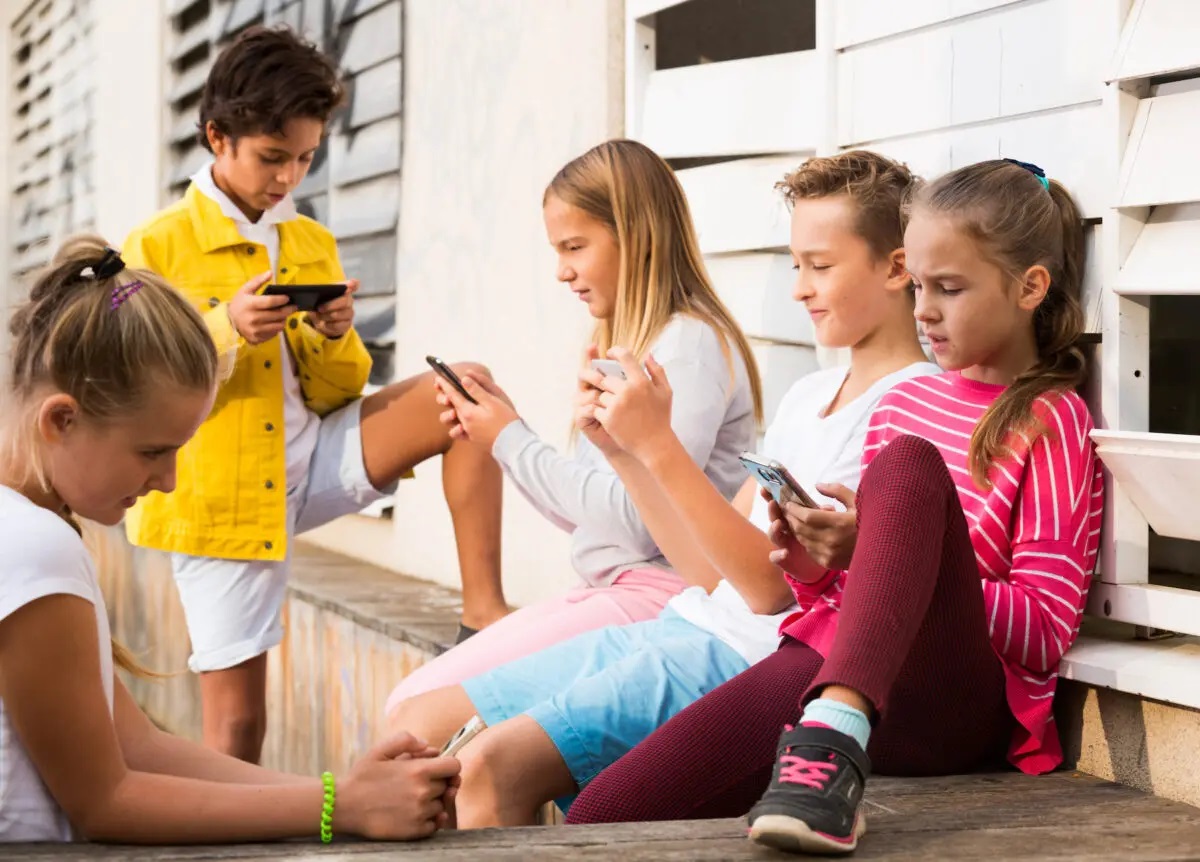
New Jersey’s K-12 public schools have officially implemented a statewide ban on mobile phones for the current academic year. According to a law signed by former Governor Phil Murphy in January 2026 before leaving office, all public, charter, and Renaissance schools are required to prohibit students from using smartphones, tablets, smartwatches, and other internet-connected devices from the first bell of the day to the last bell (Bell-to-Bell).
The details of the ban’s implementation are determined by each school district. Some schools require students to place their phones in magnetic lock pouches in the morning and only unlock them after school; others instruct students to power off their phones and store them in lockers or backpacks. Due to Labor Day falling later this year on September 7, some schools started classes on September 1 (Tuesday) or September 2 (Wednesday), while others postponed their opening until the following week.
Education officials anticipate that the ban will help reduce disruptions, improve student focus and mental health. However, the full impact will need to be observed over the course of several months. Jeffrey Lane, an associate professor at the Rutgers School of Communication and Information, points out that the spirit of the ban is to completely remove phones from campus life, potentially altering children’s overall usage habits.
Democratic Governor Mikie Sherrill, who took office in January, expressed that her team had positive feedback from students and parents after meetings in the spring and summer. Students mentioned feeling “more free without constant phone contact” and became aware of the detrimental effects of overuse on their social and relaxation abilities. As a mother of four, Sherrill described the measure as a relief for herself, stating that “everyone needs a break.”
The law passed almost unanimously in the state legislature with only 3 out of 120 members opposing it. Prior to the ban taking effect, Sherrill signed the New Jersey Kids Code Act, which limits media platforms from designing features that continuously attract young users and requires the highest privacy settings for underage users by default. Additionally, Meta (the parent company of Facebook) reached a settlement agreement with multiple states including New Jersey to implement daily usage limits and notification pauses for Facebook, Instagram, and Threads starting next year.
Currently, approximately 20 states in the US have implemented bans on cellphone use in schools, including California, Florida, Ohio, South Carolina, and Virginia. The New Jersey law allows for exceptions in cases of emergencies, translation services, or when phones are part of the curriculum.
The state Department of Education has issued guidelines and FAQs for school districts to reference, but enforcement methods are not uniformly mandated. The US Department of Education (DOE) released FAQs and guidance for school officials over the summer.
Betsy Ginsburg, Executive Director of the Garden State Coalition of Schools, hopes that the ban will reduce classroom disruptions, cyberbullying, and improve student mental health. She stated, “Students will start communicating face-to-face rather than through their phones.” Ginsburg noted that the trend of increased phone usage due to remote learning during the pandemic has carried over into the reopening of schools.
Some parents express concerns about not being able to contact their children during emergencies, such as extreme weather or campus safety incidents. Ginsburg emphasizes that school districts have a responsibility to notify parents via phone or text during lockdowns, and safety experts recommend that students refrain from using phones during lockdowns to ensure the school’s ability to maintain safety.
Research conducted by Lane for the state Department of Education revealed that nearly 40% of adolescents spend up to 4 hours per day on social media. Sleep deprivation, lack of focus, and physical inactivity are common concerns shared by parents and teenagers. The majority of parents agree on the need to limit phone usage, with only a few believing that schools should have no restrictions. He cautions that for some parents accustomed to contacting their children during school hours, the ban represents a cultural shift, but also an opportunity to redesign daily life and change their relationship with phones and social media.
(*This article was adapted from reporting by New Jersey Monitor.*)