
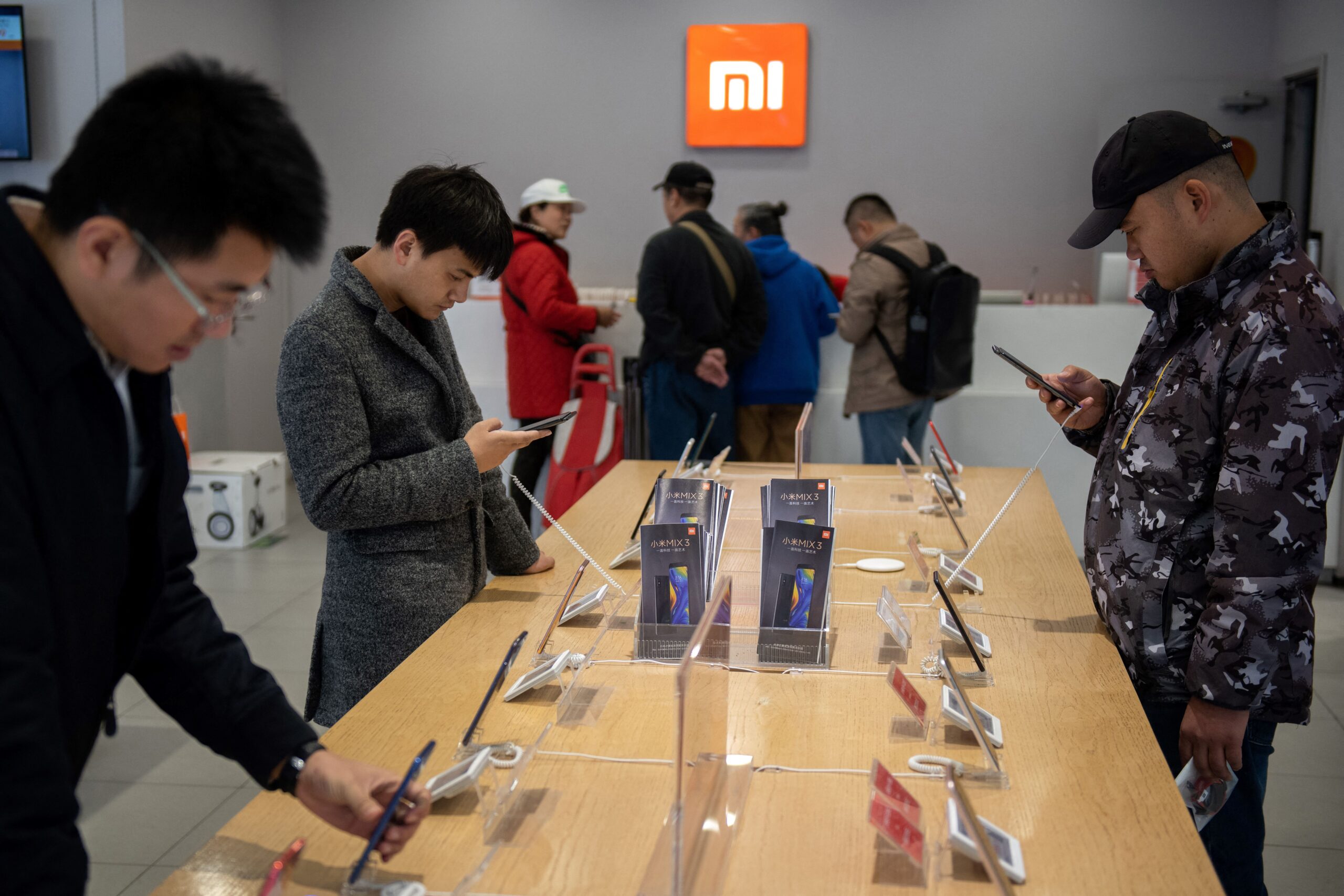
Recently, mobile phones in mainland China have collectively raised their prices, causing potential customers who were preparing to buy a new phone to hesitate. Many people who were planning to upgrade their phones have paused their plans, leading to a noticeable decrease in foot traffic at mobile phone stores. This news quickly became a hot topic on September 4th.
On September 1st, several Chinese mobile phone manufacturers collectively increased the prices of some of their phones, including brands like Xiaomi, Huawei, and Honor. The price hikes ranged from over 200 yuan to as high as 1,000 yuan for some flagship models.
After the price hikes, the market’s response was strong. According to a report by Sina Finance’s news column “BUG Column” on September 1st, employees at offline stores of Huawei, Xiaomi, Honor, and other brands mentioned that the recent increase in prices has impacted both foot traffic and sales in the past few days. To ensure sales, some stores revealed, “Due to the recent price updates, some system prices are not yet fully locked. If you make a purchase now, you can still get the original price, but this time window is very short.”
Following the price hikes, many potential customers looking to upgrade their phones have put their plans on hold, with a common sentiment of “only replace when necessary” becoming prevalent among ordinary consumers. One consumer expressed, “After waiting for half a year, it seems I have to wait another half year. The old phone at home is still good enough.”
Reports indicate that phone hardware is already durable enough, and the incremental improvement in user experience with a new phone during daily use is limited. Coupled with the increase in budget thresholds due to price hikes, these factors are changing consumer behavior regarding phone upgrades, leading to a continuous extension of the average phone upgrade cycle among mainland users.
While mobile phone prices are rising, the production output of mobile phones in mainland China is decreasing, with the mobile phone market continuing to contract. IDC data from the second quarter of 2026 shows a year-on-year decrease of 4.3% in shipments in the Chinese smartphone market, marking a fifth consecutive quarter of decline.
Guo Tianxiang, the research manager of IDC China, believes that as the low-cost inventory materials purchased by various manufacturers earlier are gradually depleting, cost pressures will intensify in the second half of this year. It is anticipated that the year-on-year decline in shipment volume in the Chinese smartphone market may expand to around 20% in the latter half of 2026. In 2027, it is expected that storage prices will not see significant declines, and the overall market will continue to face serious challenges.
According to a report by “Jiangnan Metropolis News” on September 1st, Huawei increased the prices of several phone models by 1,000 yuan; Xiaomi raised prices for models like the Redmi K90 series and Redmi Turbo 5 Max by amounts ranging from 200 yuan to 500 yuan; and the price hikes for Honor’s Power2 and Magic8 series ranged from 300 yuan to 600 yuan.
Investigations by “BUG Column” at various offline stores of Xiaomi, Honor, and others revealed that Huawei had the highest price increase, ranging from 800 yuan to 1,000 yuan; followed by Honor with an increase of about 500 yuan; and Xiaomi had relatively lower price hikes, ranging from 300 yuan to 500 yuan.