
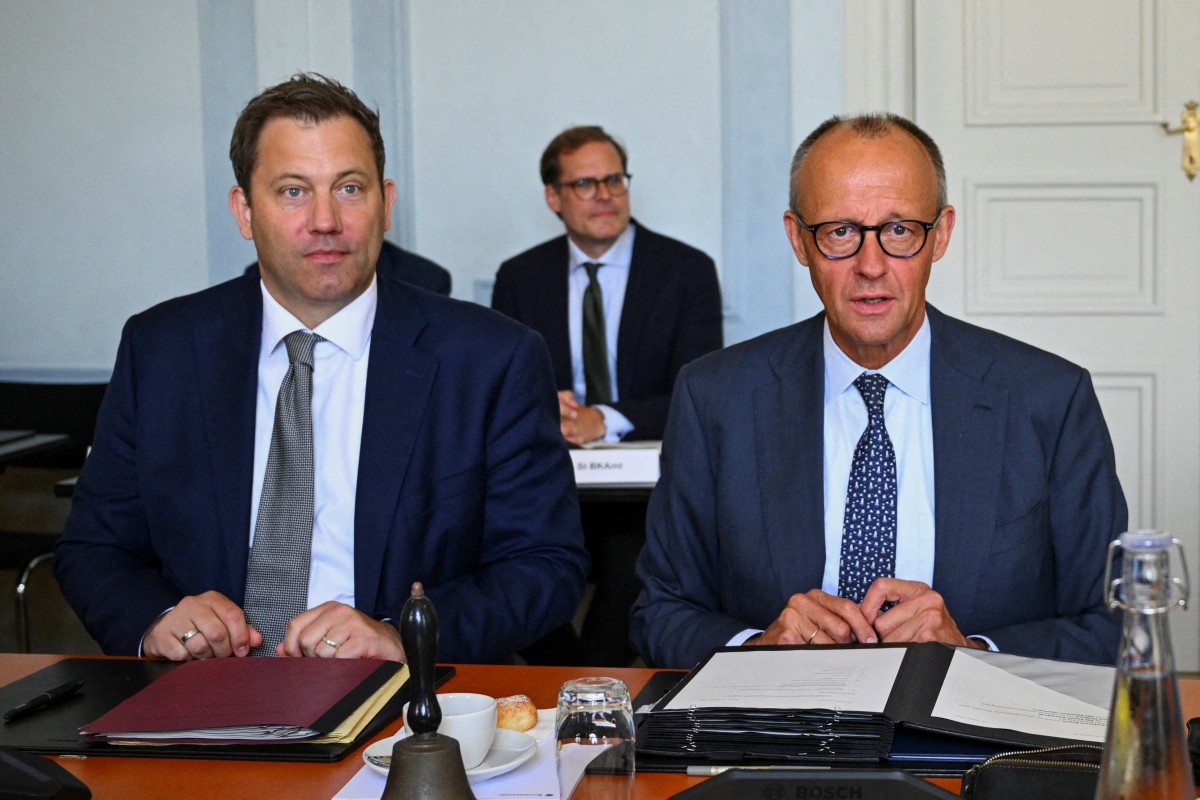
Recently, the European Union has taken a tougher stance on trade with China, and even traditionally cautious Germany has begun to adjust its policies. German Deputy Chancellor and Finance Minister Lars Klingbeil stated on September 1 that Germany is considering adopting stronger measures to address China’s unfair trade practices and protect German and European industries.
According to reports from Deutsche Presse-Agentur, while visiting the BMW factory in Spartanburg, South Carolina, Klingbeil stated that the German government is not seeking confrontation with China, but if China “no longer acts according to the rules,” Germany must adjust its position.
He mentioned that the perspective of the German manufacturing industry towards competition with China is changing, with more and more companies holding a more cautious attitude towards the Chinese market and trade environment. This has prompted Berlin to consider adopting clearer and tougher measures.
EU leaders will hold a European Council summit on October 15-16 to discuss global trade imbalances, with the imbalance in China-EU trade being one of the key issues. The German government is currently studying response measures and plans to form a policy position before the summit.
Klingbeil revealed that the measures under discussion in Germany may include imposing additional tariffs on certain Chinese products, such as hybrid cars; while also requiring Chinese companies wishing to enter the German or European markets to adopt joint venture models, with majority control maintained by European companies to protect key technologies and proprietary knowledge.
Another potential policy direction is to promote “priority procurement of European products” to support more German and European domestically produced products in public procurement.
Klingbeil stated that once the German government reaches consensus on the relevant proposals, they will work to implement these measures at the EU level.
In recent years, industries in Germany such as automotive and mechanical manufacturing have faced increasing competitive pressure from Chinese companies. Europe has accused China of distorting market competition through extensive government subsidies, overcapacity, and low-priced exports, while European companies face more restrictions when entering the Chinese market.
Klingbeil had publicly stated in late August that Germany cannot continue to maintain a completely open market policy unilaterally in the face of changing trade competition conditions in other countries. He believes that Germany needs to enhance the competitiveness and risk resilience of important industries like steel and automotive.
Germany has traditionally been cautious about imposing stricter trade restrictions on China, partly out of concern that Beijing might retaliate, especially affecting industries like the German automotive sector that heavily rely on the Chinese market. However, this position has recently been evolving as the competitiveness of Chinese companies rises and concerns among German businesses intensify.
In recent months, the government led by Chancellor Friedrich Merz has been gradually adjusting its China policy, emphasizing dealing with trade imbalances while maintaining open trade and dialogue, and enhancing the protection of German and European industries.
On August 26, following the conclusion of a federal cabinet meeting, Merz stated that he has requested the cabinet to quickly compile and study potential measures to address global trade imbalances and prepare for discussions at the October EU summit. He noted that attitudes within the German business community are changing, and government action is needed.
Data from the Federal Statistical Office of Germany shows that in 2025, Germany had a trade deficit with China of approximately 89.3 billion euros, higher than around 66.9 billion euros in 2024, further widening the deficit. In the same year, the EU had a trade deficit with China of around 360 billion euros, averaging nearly 1 billion euros per day.
In June of this year, EU leaders began strategic discussions on global macroeconomic imbalances, with a particular focus on the trade imbalance between Europe and China, deciding to continue discussions on these issues at the October summit.