
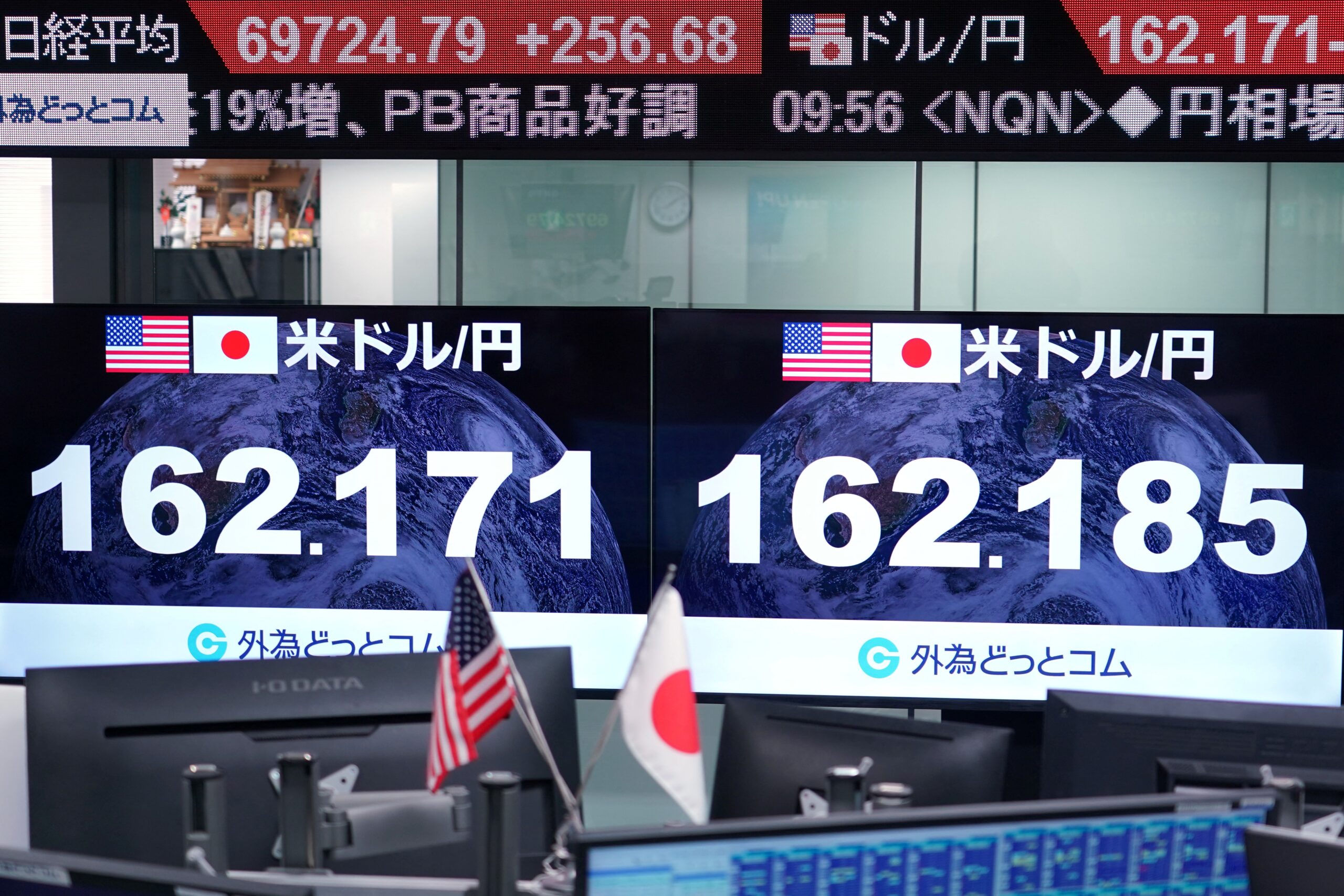
The United States Secretary of the Treasury, Scott Bessent, stated on Sunday (August 30) that the recent trend of the Japanese yen is “fairly well-controlled” and there has not been any disorderly volatility. Last Friday, the yen briefly dropped below the 160 yen per US dollar mark, once again drawing attention from the market.
Bessent, interviewed by Reuters in Asheville, North Carolina, expressed his belief that the Bank of Japan should accelerate its pace of interest rate hikes to curb the depreciation of the yen. He believes that under the support of Prime Minister Sanae Takai, Bank of Japan Governor Kazuo Ueda will “do the right thing.”
He plans to meet with Governor Ueda during the G20 Ministerial Meeting of Finance and Central Bank Governors in Asheville from August 31 to September 1. Bessent mentioned his 15-year acquaintance with Ueda, praising him as an excellent economist whose market judgments are underestimated.
He also pointed out that Japan has already “overcome” deflation, shifting its economic policy focus from “Abenomics,” which aimed to escape deflation, to a strategy emphasizing strategic investments, economic growth, and deregulation, known as “Takai-nomics.”
“Abenomics,” launched by the late Japanese Prime Minister Shinzo Abe in 2013, aimed to lift Japan out of long-term deflation through massive monetary easing, active fiscal spending, and increasing the potential for economic growth.
Bessent believes that the new policy is more favorable to shareholders, especially with significant relaxation in the labor market regulations, indicating a reduced government intervention in economic activities.
He suggested that Japan should “sit back and enjoy the success of Abenomics,” allowing the previous stimulative economic policies to continue to have an impact.
Data from the Japanese Ministry of Finance shows that the Takai Cabinet proposes a “responsibility-based aggressive fiscal policy,” with “crisis management investments” and “growth investments” as key pillars of economic policy, increasing investments in areas such as AI, semiconductors, defense, and energy to enhance Japan’s supply capabilities.
The yen has recently weakened again, with the US dollar falling below the 160 mark against the yen. This level is considered significant as it may prompt the Japanese government to intervene in the currency market once more.
On July 31, the US and Japan jointly bought yen in an uncommon move, attempting to prevent the selling of yen and Japanese government bonds, and further prevent spreading to global financial markets. Bessent had previously stated that the coordinated action was in response to the “disorderly” fluctuations in the exchange rate market.
Following the joint intervention, the US dollar against the yen briefly retreated to around 155, but the yen quickly came under pressure again, dropping below the 160 mark on August 28.
Reuters had previously reported that the yen’s weakness has pushed up Japanese import prices, exacerbating inflation pressure, while the slow pace of interest rate hikes by the Bank of Japan and the large interest-rate differentials between Japan and the US remain important factors putting pressure on the yen.
Amid the continued pressure on the yen, expectations for further interest rate hikes by the Bank of Japan are rising. Reuters reported in mid-August, citing sources familiar with the matter, that the Bank of Japan is considering raising rates as early as the policy meeting on September 17-18, and may accelerate the pace of hikes in the future, departing from the current pace of about twice a year.
An economist survey published by Reuters on August 25 showed that 57% of surveyed economists expect the Bank of Japan to raise interest rates in September, increasing the policy rate from the current 1% to 1.25%. The Bank of Japan had already raised the policy rate to 1% in June, reaching the highest level in 31 years.