
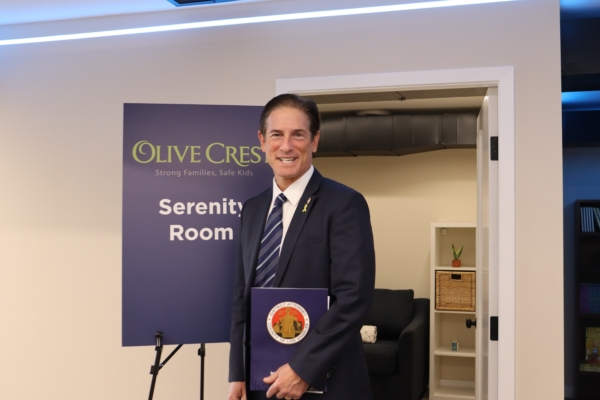
On August 20th, Los Angeles County Prosecutor Nathan J. Hochman announced in a press release that in order to encourage whistleblowers to come forward, the 16 charges against Los Angeles Police Department (LAPD) officer Daniel Flores have been reduced to misdemeanors. The court has approved judicial diversion for him.
During 2024, Flores secretly recorded 16 of his fellow officers in the office, totaling 122 conversations, with the colleagues involved claiming to be unaware of it. Some of the conversations included racist, sexist, and homophobic remarks. Since 1967, California law strictly prohibits the recording of confidential conversations without the consent of all parties involved, making his secret recording activities illegal.
“In making this decision, I carefully considered the opinions of the public, community groups, local government officials, and members of this office, especially concerns about felony charges potentially deterring potential whistleblowers,” Hochman stated. “While illegal eavesdroppers must still be held accountable, the ‘hard middle approach’ I have taken requires a constant reevaluation of prosecution actions for a balance and impact between punishing crime and encouraging reporting.”
Hochman added, “Law enforcement officers should and must be held to a higher standard of accountability, but I do not in any way want this case to impede legitimate reporting. The behavior of some LAPD officers who have made racist, sexist, and homophobic comments is outrageous and must be thoroughly exposed, with the disciplinary proceedings for the officers involved being reasonable and fair.”
In January 2024, Flores worked in the department responsible for conducting background checks for the LA Police Department applicants. In January 2025, the internal affairs department of the police force discovered these secret recordings. On July 31, 2026, 44-year-old Flores was charged with 16 felony counts of illegal eavesdropping or recording of confidential communications, with a potential maximum sentence of 13 years in prison and fines if convicted.
In June 2026, Flores filed a lawsuit for a “hostile workplace” environment, claiming that recording conversations of colleagues was part of a “legitimate investigation” into racist, sexist, and homophobic remarks. On August 10th, he pleaded not guilty to all 16 charges in court, and his defense attorney subsequently requested the judge to approve a one-year judicial diversion program.
Currently, the charges against Flores have been reduced to 16 misdemeanors, and the judge has also approved the judicial diversion program. If Flores complies with all legal requirements during this period and successfully completes the diversion program, the court will dismiss the case upon completion.
“As a local prosecutor, one of my responsibilities is to strike a balance between holding people accountable and ensuring fairness. I believe that the ‘hard middle approach’ taken in this case clearly sends a message that illegal eavesdropping will be prosecuted while also ruling out the possibility of serving time in state prison, thus achieving the best outcome for the situation,” Hochman said.
The California Invasion of Privacy Act (CIPA) established in 1967 sets the most stringent “all-party consent” system in the US, requiring notification and consent from all participants before recording (whether express or implied). While California has laws protecting whistleblowers, they cannot override CIPA.
In addition to California, 8 states in the US implement the “all-party consent” system, including Florida, Illinois, Maryland, Massachusetts, Montana, New Hampshire, Pennsylvania, and Washington, each with varying specifics.
On the other hand, most states in the US, such as Texas, operate under the “one-party consent” principle, where as long as one party (including the person recording) is aware and consents to the conversation being recorded, it is permitted, with each state having its own regulations in this regard.