
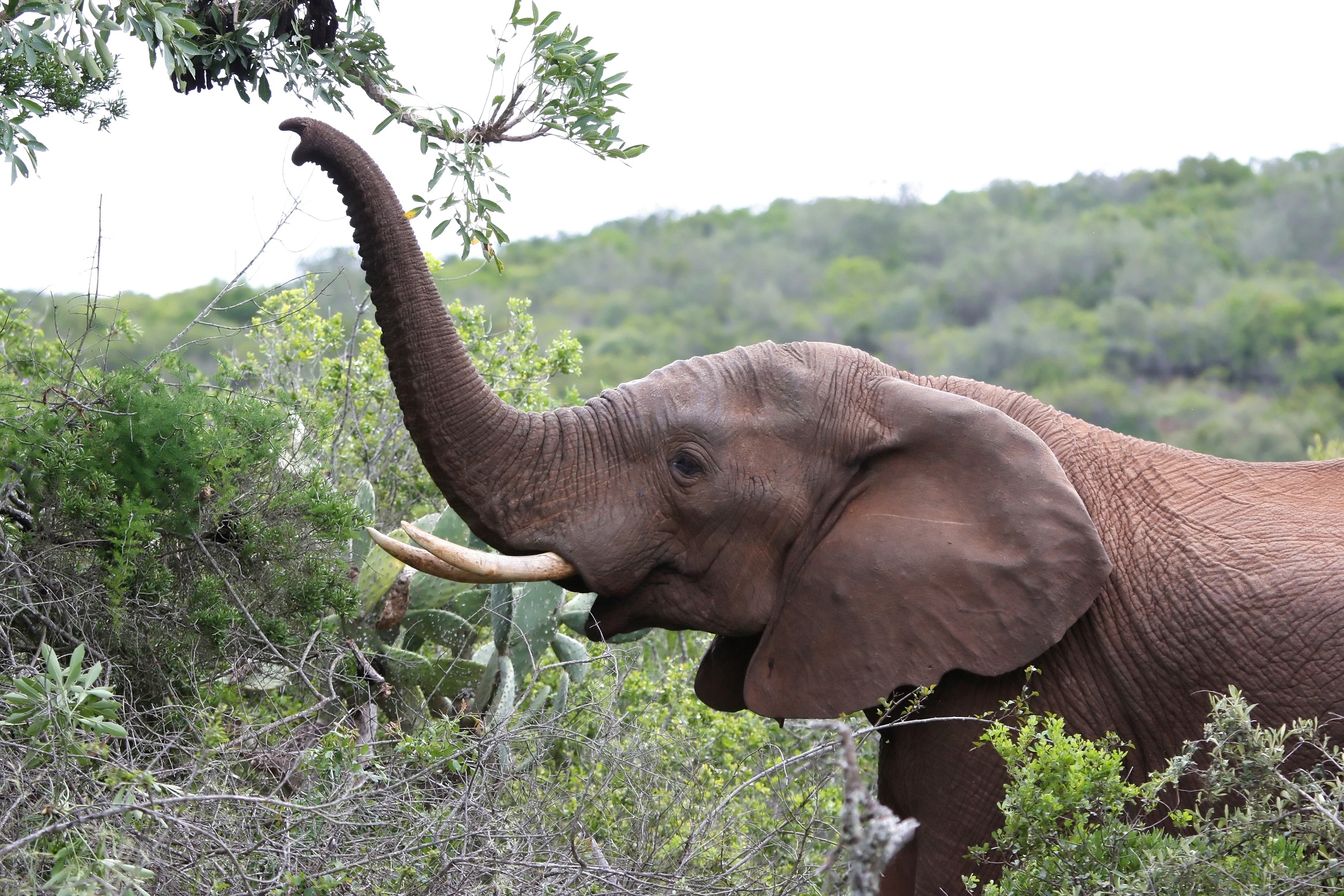
A wildlife communicator has revealed that a mother elephant in Sri Lanka was responsible for the deaths of four people. Following communication with the elephant, the reasons behind the incidents were understood.
The woman named Dunja Will, also known as the “Outback whisperer” on Instagram, where she has amassed a following of 67,000 followers. She claims to be able to communicate with animals, whether dead or alive.
In a post shared last month, she mentioned being invited to visit an elephant sanctuary in Sri Lanka, where she uncovered the reasons behind a mother elephant’s attacks that led to the deaths of four individuals.
During her 5-day visit to the sanctuary, she communicated with all eight elephants there to understand their stories and needs, including one named Rani, the mother elephant reportedly responsible for the deaths.
When she first saw Rani on the initial day, she sensed its despair as it leaned its head against a support post.
Ignoring warnings from the local elephant handlers that Rani was dangerous, Dunja approached, determined to hear its side of the story.
When she asked Rani why it had killed four people, the elephant’s response was, “I don’t just go off and kill for no reason.”
Providing context, Dunja explained that captive female elephants often struggle to reproduce due to their ability to control their reproductive cycles. They can decide when to conceive, and pregnancy only occurs when all conditions are ideal.
Rani shared with Dunja that it had experienced two miscarriages, an emotional blow for an animal that values familial bonds deeply.
Pointing to the location of the stillborn calves, Rani showed Dunja where the emotional pain lingered, reacting when approached there.
Over 25 years ago, Rani suffered these losses and is still grieving, repeatedly pulled back into work without time to process the traumas.
Despite the ongoing pain, Dunja believes that knowing the reasons behind Rani’s behavior is a crucial step in understanding the elephant better. Every animal’s reactions are rooted in reasons, often unknown to humans who rush to judgment without understanding.
In Sri Lanka, some captive elephants are kept by private individuals or Buddhist temples, with some involved in cultural events like parades, a practice viewed by some as torturous for the animals.
National Geographic magazine notes that elephants are mainly classified into Asian and African species. The Asian elephants have three surviving subspecies – Sumatran elephants, Indian elephants, and Sri Lankan elephants. However, the numbers of these elephants within their habitat are dwindling across Asia, where they once roamed.
Asian elephants consume up to 300 pounds of food daily, growing up to 2.25 to 5.5 tons in weight. On average, wild Asian elephants can live up to 60 years.