
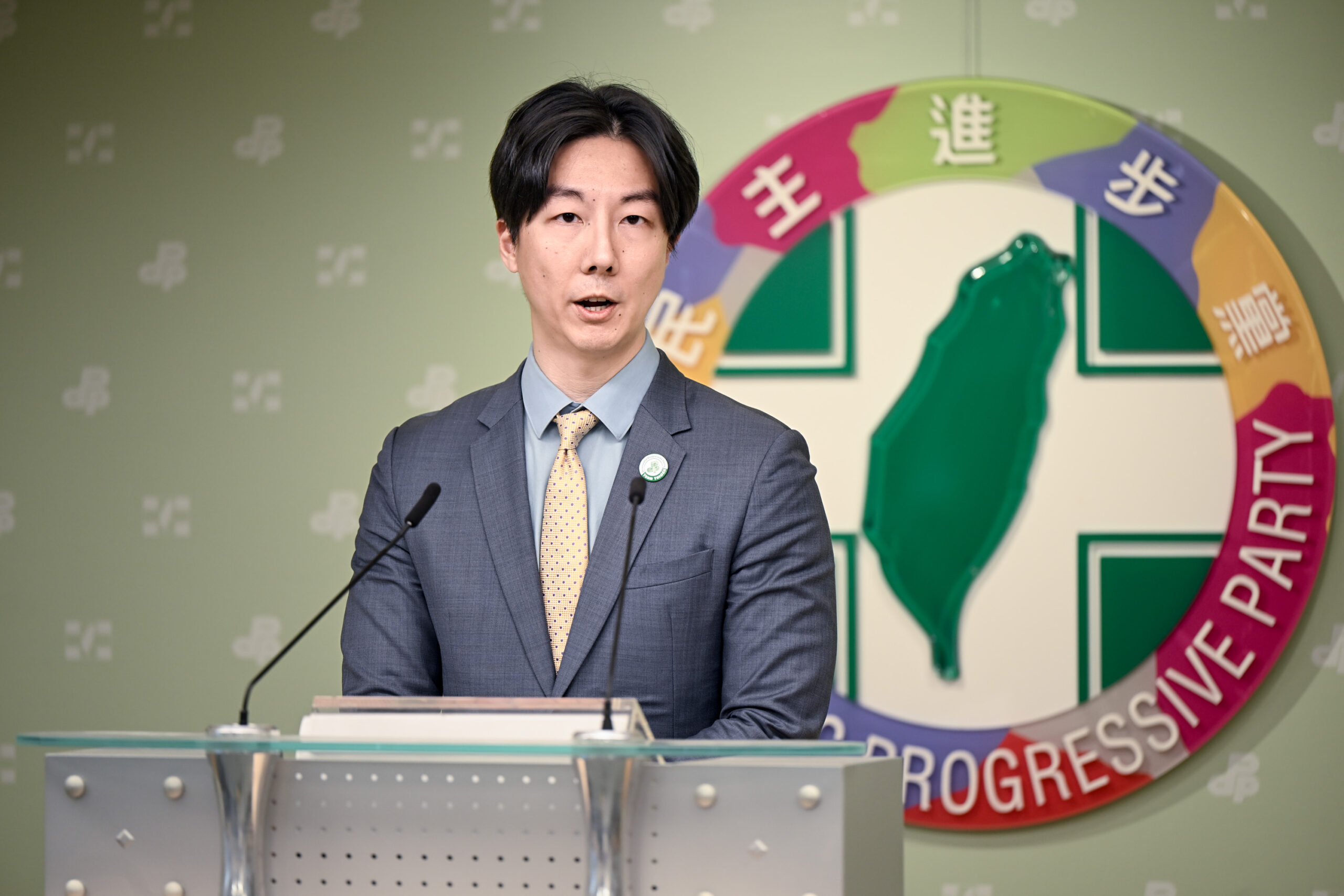
The Chinese Communist Party (CCP) claimed on September 30 that it was the “cornerstone of resistance during the War of Resistance Against Japan,” accusing the Democratic Progressive Party (DPP) of distorting the history of the anti-Japanese war. DPP spokesperson Wu Zheng responded, stating that the people of Taiwan are well aware of the history of World War II, and that the role of the CCP during the resistance was “one part anti-Japanese, two parts coping, and seven parts development,” yet now they are attempting to distort and manipulate the past historical trajectory.
Regarding the discussions between the Chinese and US leaders on the history of World War II and narratives related to the CCP, there have been criticisms of deliberately erasing the role of the Republic of China, the spokesperson for the CCP’s Taiwan Affairs Office, Zhang Han, stated during a routine press conference on September 30 that during the resistance, the Chinese Communist Party “formulated correct strategic strategies, opened up vast rear battlefield areas, and became the cornerstone of insisting on the resistance”…
On the afternoon of September 30, the DPP held its Central Standing Committee meeting, and DPP spokesperson Wu Zheng gave interviews to the media afterwards. In response to the CCP’s Taiwan Affairs Office referring to the CCP as the cornerstone of the resistance and accusing the DPP of spreading a specific historical perspective and distorting history, Wu Zheng expressed that the people of Taiwan are very familiar with the history of World War II as they grew up, including the role of the CCP during World War II and the resistance period. Everyone has heard the phrase “one part anti-Japanese, two parts coping, and seven parts development,” which is a familiar part of history in every street and alley in Taiwan.
Wu Zheng pointed out that DPP Chairman Lai Ching-te also explained to the people of the country last year that they had taken note of the CCP spreading erroneous historical narratives internationally, attempting to distort and manipulate the past historical trajectory, which the DPP had previously warned the people of the nation about.
Wu Zheng said, “The Flying Tigers” were a historical collaboration between the United States and the Republic of China during World War II, “and this fact is beyond doubt,” as for the one-sided dissemination and confusion of historical facts internationally by the CCP, recently including (the Republic of China’s) representative to the United States, David Young, Deputy Minister of Foreign Affairs Wu Zhizhong, and others, have also responded and explained the CCP’s inaccurate narrative.
Wu Zheng stated that the DPP will continue to closely monitor the CCP’s ongoing attempts to weaken Taiwan and the Republic of China through propaganda warfare and cognitive warfare internationally.
Regarding the War of Resistance Against Japan, CCP leader Xi Jinping once stated that victory was achieved under the anti-Japanese national united front promoted by the CCP. The Mainland Affairs Council has previously emphasized that during the War of Resistance Against Japan, the government and all the people and soldiers of the Republic of China made countless sacrifices and contributions, ultimately achieving victory in the resistance. However, the CCP only sought to expand and consolidate its power, without making any contribution to the war.
The Mainland Affairs Council pointed out that according to statistics from the Japanese Ministry of Health and Welfare in 1964, the total number of Japanese soldiers who died in mainland China, Hong Kong, and Manchuria during the war was approximately 502,400; General He Yingqin, who served as the Commander-in-Chief of the Chinese Nationalist Army during the resistance, recorded in his work “The Eight-Year War of Resistance” that over 480,000 Japanese soldiers died in China during the resistance. The Republic of China government clearly documented all 22 major battles of the resistance, while the CCP, on the other hand, cannot even list the major battles they initiated or participated in or how many enemies they defeated in each battle.