
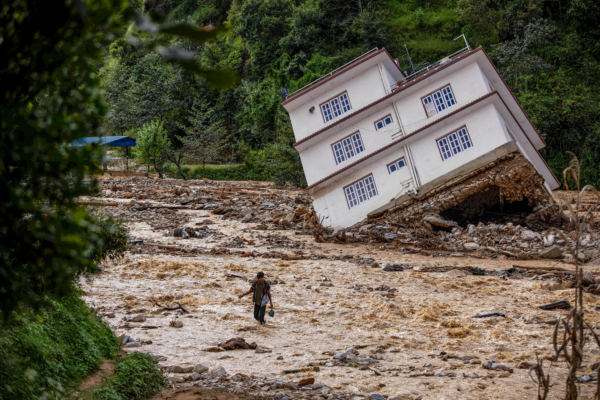
In a tragic turn of events, a devastating glacial collapse along the Nepal-China border near Tibet recently triggered destructive flash floods and mudslides, resulting in the deaths of hundreds of people and over a thousand individuals reported missing. Half a world away in New York City, a distressed female doctor is urgently calling out for help on a global scale, as her elderly parents were traveling along the route to Mount Kailash pilgrimage and are now unaccounted for in the disaster area, plunging her into what she describes as the darkest moment of her life.
Dr. Radhika Sharma, currently residing in New York, shared that her 65-year-old father and 64-year-old mother embarked on a pilgrimage trip to the Himalayan mountains during their vacation. As of the time of writing, she posted on X platform pleading, “I still haven’t found my parents… please provide any information.”
According to Dr. Sharma, around 8 a.m. local time on Wednesday, August 26th, shortly after crossing the border checkpoint between Nepal and China’s Tibet at Kyirong, her parents completely lost contact with the outside world—just 40 minutes after their passage, a ferocious mudslide engulfed the entire valley.
“This has been perhaps the longest and most painful 24 hours for my brother and me,” Dr. Sharma choked up during media interviews. In her quest to locate her parents, she issued urgent pleas for help on social media platforms like X and Instagram, urging anyone with resources or connections in the local rescue teams, hospitals, or communities in Nepal and Tibet’s Kyirong to reach out to her.
Weather and geological experts have pointed out that the catastrophe’s origin was not initially suspected to be an earthquake but a massive glacial rupture at high elevations in the Himalayas. A glacier broke and collapsed from a height of about 5200 meters, carrying an immense amount of debris into the Lhende River, triggering a cascading dam failure and instantly forming a terrifying mudslide peak.
The Trishuli River, meeting the Lhende River, saw its water levels surge over 8 meters in just 30 minutes. The floodwaters and mudslides destroyed over 40 kilometers of roads, 19 bridges, and engulfed countless homes along with residents, leaving many survivors stranded up mango trees awaiting rescue.
According to the latest statistics from the Nepal Tourism Board and local police, this transnational disaster continues to escalate. Nepal has confirmed at least 353 fatalities and 826 missing persons; on the Chinese side at the Kyirong border in Tibet, 558 individuals are reported missing as well.
Nepalese authorities have confirmed that the hundreds of missing foreign tourists come from over 30 countries, including at least 65 American citizens (with some reports suggesting nearly 90 affected Americans).
The U.S. Department of State and the U.S. Embassy in Nepal have stated that they are actively assisting in search and rescue efforts, verifying tourist lists, and have not yet received confirmed reports of American casualties. Rescue teams have successfully evacuated 27 foreign tourists, including a couple in their fifties from the U.S., from the hardest-hit Rasuwa district via helicopters. The U.S. Department of State has deployed a disaster response coordinator to the scene and allocated $500,000 in emergency aid, providing shelters and health supplies.