
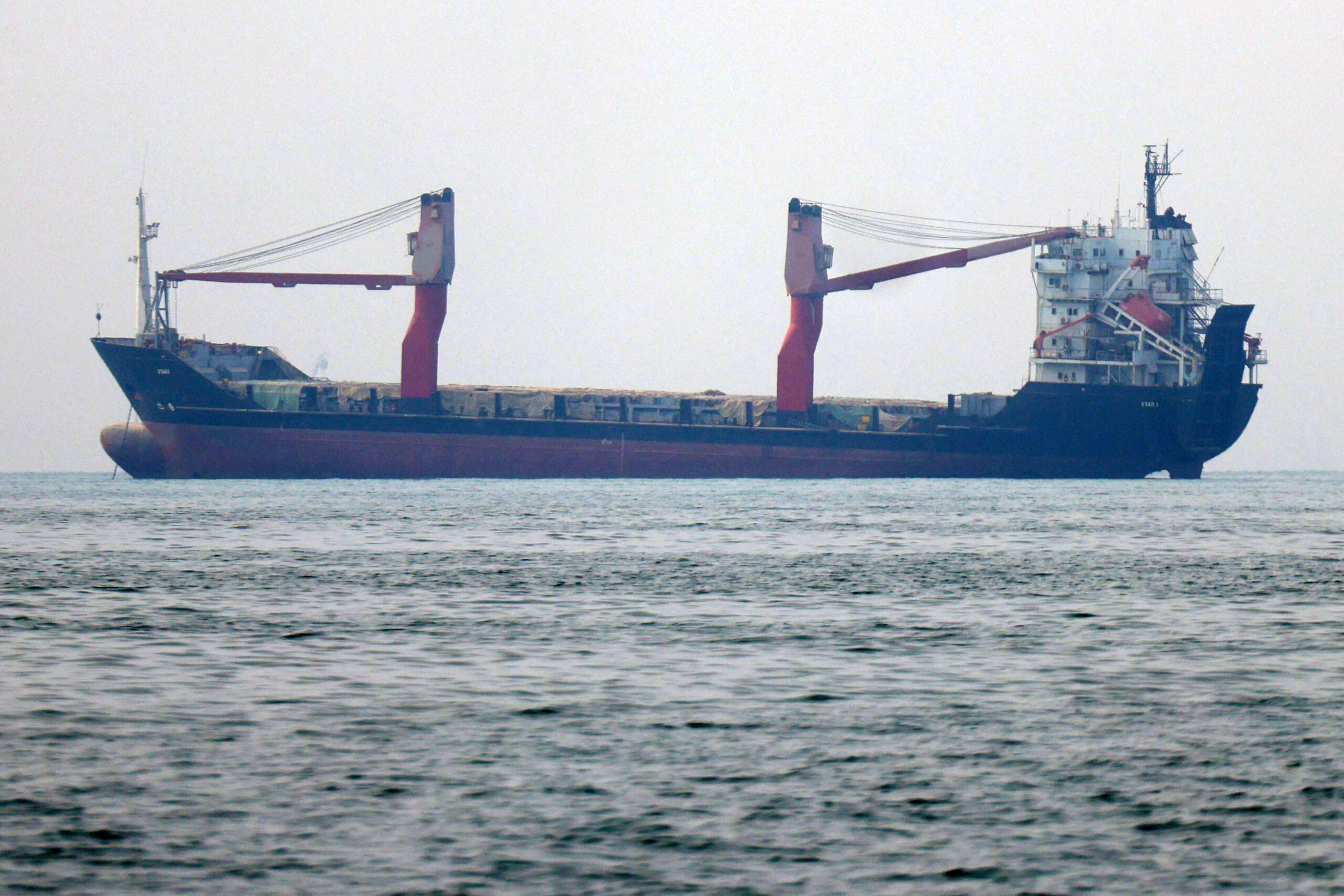
The latest statistical data shows that crude oil exports from major oil-producing countries in the Middle East have significantly rebounded in September. The volume of crude oil transported through the Hormuz Strait has also increased, indicating a gradual recovery in oil transportation in the Middle East.
Preliminary statistics from shipping data agency Kpler indicate that Saudi Arabia, the UAE, Iraq, Oman, Qatar, Kuwait, and Iran are expected to export approximately 16.328 million barrels of crude oil per day in September. This marks a new high since the end of February when the US launched a military strike against Iran, but still lower by about 3.2 million barrels compared to the pre-conflict levels in February, representing about 80% of the pre-conflict levels.
According to Kpler’s statistics, the volume of Middle Eastern crude oil transported through the Hormuz Strait in September was around 9.719 million barrels per day. Some oil-producing countries are utilizing ship-to-ship transfer and lightering operations to reduce the need for large oil tankers to pass directly through high-risk maritime routes. Data also suggests that some vessels turn off their Automatic Identification System (AIS) when passing through high-risk waters, indicating that the actual passage volume may be higher than publicly tracked data.
Saudi Arabia has been a key driver behind this recent increase. The country’s crude oil exports in September are expected to recover to approximately 5.4 million barrels per day, significantly higher than the 2.446 million barrels in August. The export volume from the Ras Tanura port in September rose to around 3.25 million barrels per day, compared to just 0.929 million barrels in August. Last week, a total of 19 Very Large Crude Carriers (VLCCs) departed from the Hormuz Strait, each carrying approximately 2 million barrels of Saudi crude oil.
Saudi Arabia previously utilized the East-West oil pipeline traversing the Arabian Peninsula to transport some of its crude oil to ports along the Red Sea coast, reducing dependence on the Hormuz Strait. Following an attack on the pipeline on September 10, some oil transport was disrupted, leading Saudi Arabia to increase crude oil exports transiting through the Hormuz Strait. Subsequently, the transportation through the pipeline and loading operations at the Yanbu port along the Red Sea coast have gradually resumed.
However, maritime security risks persist. The UK Maritime Trade Operations office (UKMTO) has recently reported incidents of ships being attacked or encountering suspicious activities near the Hormuz Strait. High risks have driven up oil tanker freight rates, with the daily charter rate for Very Large Crude Carriers briefly reaching around $1.2 million. Despite security measures such as US military aerial escort, the number of vessels (mostly oil tankers) passing through the strait dropped significantly towards the end of September.
International oil prices remain elevated. On September 29, Brent crude futures prices saw a decline of 2.5%, closing at $102.59 per barrel, though still significantly higher than pre-conflict levels. The prices have risen by over 10% since the beginning of September.
(*This article references reports from Reuters*)