
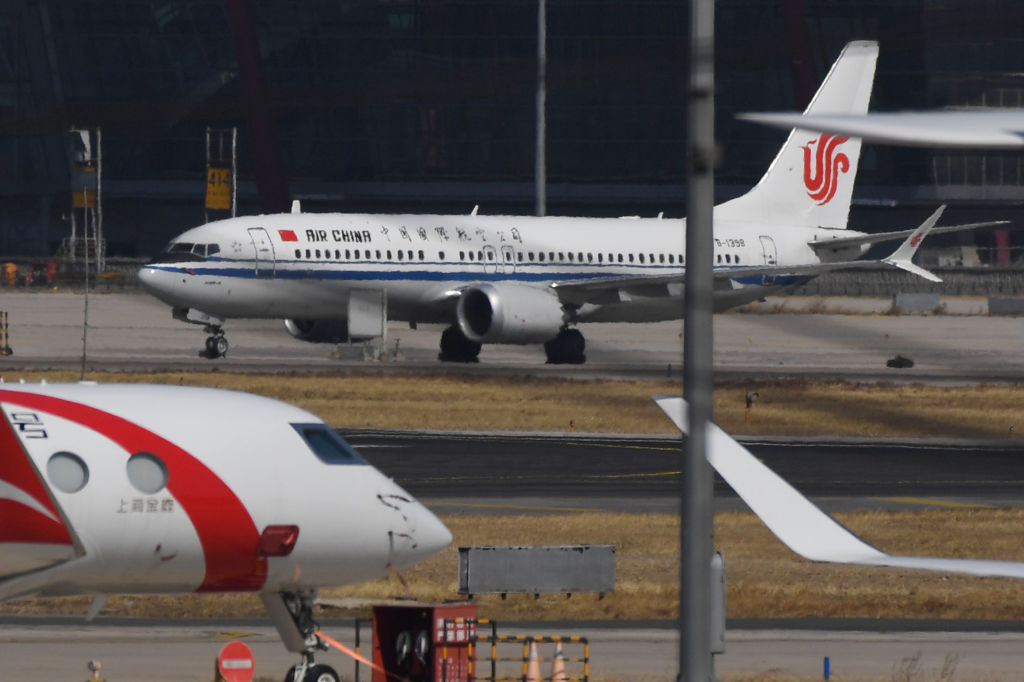
Several Chinese airlines saw a collective decline in performance in the first half of the year, not just the three major state-owned airlines but also many local backbone airlines, all of which incurred substantial losses totaling 12.34 billion yuan. Industry analysts attribute the decline in airline performance to high oil prices and a weakening demand for domestic air travel.
In recent days, the three major state-owned airlines in China have successively released their financial reports for the first half of the year, all reporting increased losses compared to the same period last year.
Air China reported a revenue of 89.268 billion yuan in the first half of the year, a year-on-year increase of 10.54%, with a net loss of 2.286 billion yuan.
China Eastern Airlines recorded a revenue of 74.234 billion yuan, an 11.09% increase year-on-year, with a net loss of 2.179 billion yuan.
China Southern Airlines achieved a revenue of 94.679 billion yuan, up 9.72% year-on-year, but suffered the highest net loss of 3.696 billion yuan among the three major airlines.
Collectively, the three major state-owned airlines incurred losses amounting to 8.161 billion yuan.
It’s not just the state-owned giants; local backbone airlines also couldn’t escape the downturn.
According to financial reports, Shenzhen Airlines reported a loss of 1.049 billion yuan in the first half of the year, Shandong Airlines suffered a 1.241 billion yuan loss, and Sichuan Airlines recorded a loss of 1.889 billion yuan, all exceeding 1 billion yuan. Combined with the three major airlines, the total net loss for the six airlines in the first half of the year reached 12.34 billion yuan.
So, what led to the severe downturn in the performances of these six major airlines?
According to reports from mainland media, Chinese airlines generally attribute their losses to the sharp rise in fuel costs. Air China previously mentioned that, influenced by conflicts in the Middle East, jet fuel prices have been running at high levels for an extended period, significantly squeezing profit margins. Fuel procurement is the biggest cost for airlines. Since March, aviation kerosene prices have surged from around 5,600 yuan per ton to about 9,800 yuan, a 75% increase.
In addition to high oil prices, the demand for domestic air travel has also weakened. Reuters reported that aviation data agency “Flight Butler” predicts that Chinese airline passenger volume will decline by 3.6% year-on-year in July to August, reaching 142 million passengers, potentially marking the first summer travel contraction since 2022.
Data shows that from July 1 to 14, the daily flight volume of Chinese airlines decreased by 2.2% year-on-year, with domestic flights down by 1.8% and international flights by 3.6%; the average economy class ticket price was 831 yuan, a 1.2% decrease year-on-year and 6.1% lower than in 2019.
According to a report by “First Financial,” data from online travel platform “Qunar Travel” shows that the average price of domestic air tickets in the first week of July decreased by nearly 20% compared to the same period last year, with some flight routes even cheaper than high-speed rail tickets. For example, on July 2, a tax-included ticket from Beijing to Wuhan was 450 yuan, 80 yuan lower than a high-speed rail ticket; a round-trip tax-included ticket from Beijing to Ningbo was less than 1,000 yuan, while a high-speed rail ticket was close to 1,400 yuan.